Biography
Condry Ziqubu
The Alexandra township, north of Johannesburg, hosted an explosive music scene in the 1980s where funk met synths. Condry Ziqubu forged a unique style there: a guitarist whose catchy riffs served as the foundation for lyrics that, under the guise of celebration, spoke of the daily struggles under apartheid.
In Brief
| Name | Condry Skorokoro Ziqubu |
| Birth | 28 July 1951, Alexandra, Johannesburg (South Africa) |
| Field | Guitarist and singer; bubblegum disco, mbaqanga, Afro-fusion |
| Notable Works | “Gorilla Man”, Skorokoro, Pick Six, Magic Man |
| Groups | The Flaming Souls, Harari, Lumumba, Caiphus Semenya & Letta Mbulu |
| Status | Living (confirmed in the press in 2021) |
Key Dates
| Year | Event |
|---|---|
| 1951 | Born on 28 July in Alexandra |
| Late 1960s | First steps with The Flaming Souls and The Anchors; at 18, already a composer on the album Alex Soul Menu |
| Early 1970s | Founded the Flaming Ghettoes, gaining solid road experience |
| 1980 | Tragic death of his son in Botswana; initiation as a sangoma in KwaZulu-Natal |
| 1981–1984 | Joined Harari, one of the greatest South African groups; tour in Botswana |
| 1985 | Tour in the United States with Harry Belafonte, Caiphus Semenya and Letta Mbulu |
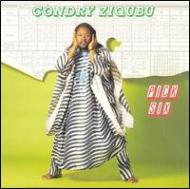
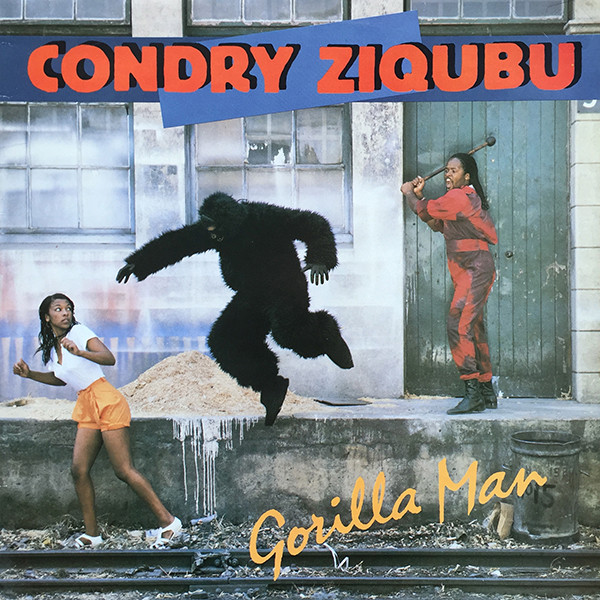
| 1986 | “Gorilla Man”, his first solo hit; subsequent albums: Pick Six (1988), Magic Man (1989) |
| 1985–1992 | Contributions to the Buwa project; monitored by apartheid police, accused of links to the CNA |
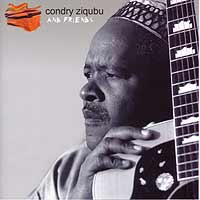
| 2003 | Condry Ziqubu and Friends; creation of CZ Productions (gospel studio) |
| 2021 | EP Gorilla Man reissued on vinyl by Afrosynth Records |
A Journey of Tragedy and Resilience
Condry Ziqubu grew up in Alexandra, one of the largest townships in South Africa. He learned guitar from his older brother, Zizi, and frequented the Thabisong Youth Club. Around 1968–69, he joined the Flaming Souls and was among the composers of the album Alex Soul Menu. He then moved to the Anchors, a group led by drummer-comedian Collins Mashigo, before founding his own The Flaming Ghettoes — formations that offered him precious learning on stage and on tour.
A personal tragedy shaped his destiny. During a tour in Botswana in 1980, his young son died suddenly. Ziqubu saw this as a sign from his ancestors and went to KwaZulu-Natal to be initiated as a sangoma, traditional healer. Unlike those who abandon music, he transformed this vow into a creative engine.
In 1981, he joined Harari — the afro-fusion group that dominated the South African scene at the time. He toured South Africa and neighboring countries, gaining notoriety. In 1984, his performance in Botswana caught the attention of Caiphus Semenya. The latter entrusted him with the mission to assemble a backing group to accompany him and his wife, the singer Letta Mbulu. In 1985, Ziqubu embarked on a tour in the United States with Belafonte. He then participated in the Buwa project, a musical cycle of cultures traversing Nigeria, Ghana, Zambia and the border states.
These frequent movements attracted the attention of apartheid authorities. “When we returned to South Africa, we had problems… the police came to my house,” he reports. His passports were confiscated, he was interrogated and photographed. The intervention of his label’s lawyers got him released — but his surveillance persisted.
By the end of the 1980s, Ziqubu achieved his solo success. “Gorilla Man” (1986), whose 20-second intro describes a street predator in Johannesburg, became his first real hit. He followed up with Pick Six (1988), an album tackling gender violence head-on — a rare angle in South African disco — and Magic Man (1989), pure entertainment offered as an escape from the realities of apartheid. “Condry Ziqubu used metaphors in his lyrics like many other artists, but stood out mainly for the freshness of his style and his desire to get people dancing,” notes critic François Renoncourt.
Major Works
| Work | Year | Why it’s essential |
|---|---|---|
| “Gorilla Man” (EP) | 1986 | First solo success; metaphorical text on urban violence, reissued 2021 |
| Pick Six (album) | 1988 | Tackles gender violence head-on — rare in South African disco |
| Magic Man (album) | 1989 | Pure entertainment: escape music under apartheid |
| Condry Ziqubu and Friends | 2003 | Post-apartheid collaborative project; pivot to gospel and production |
Legacy and Influence
The enthusiasm of the 1980s remained for Ziqubu a fleeting success. “I was called once by Peter Gabriel, then I thought my career was about to take off internationally… But ultimately, for a reason that escapes me, the enthusiasm faded,” he recounts. After the end of apartheid, he continued in parallel with Semenya and Mbulu, occasional solo concerts and gospel production via CZ Productions.
His late rediscovery was orchestrated by Afrosynth Records, which released in February 2021 an EP bringing together “Gorilla Man”, “Confusion (Ma Afrika)”, “Phola Baby” and “Everybody Party”. The reissue, distributed worldwide by Rush Hour (Amsterdam), allowed a new generation to discover that Ziqubu is an indispensable figure of South African bubblegum disco, a bridge between the soul of the 1960s and the funk disco of the 1980s, of which “the tributaries of influence still flow in our music, our culture and our memories,” concludes writer Lindiwe Mngxitama.
Sources and References
- Lindiwe Mngxitama, “Bubblegum disco era icon Condry Ziqubu’s ‘Gorilla Man’ | an Afrosynth release”, Bubblegum Club, https://archive.bubblegumclub.co.za/pop-archives/bubblegum-disco-era-icon-condry-ziqubus-gorilla-man-an-afrosynth-release/, accessed 6 November 2025.
- “Ziqubu, Condry (Skorokoro)”, SA Music, http://www.music.org.za/artist.asp?id=164 (biography by Steve Gordon, Jan. 2004), accessed 6 November 2025.
- “Bubblegum icon Condry Ziqubu returns”, Mail & Guardian, 10 April 2021, https://mg.co.za/friday/2021-04-10-bubblegum-icon-condry-ziqubu-returns/, accessed 6 November 2025.
- Condry Ziqubu Discography, Discogs, https://www.discogs.com/fr/artist/407355-Condry-Ziqubu, accessed 6 November 2025.
- François Renoncourt, “Condry Ziqubu, the King Kong of South African disco”, Pan African Music Magazine, 16 December 2020, https://pan-african-music.com/condry-ziqubu-gorilla-man/, accessed 6 November 2025.
- “Condry Ziqubu”, Wikipedia in Zulu, https://zu.wikipedia.org/wiki/Condry_Ziqubu, accessed 6 November 2025.