Biography
Dénagan Janvier Honfo: The Beninese percussionist who brought vodun to Germany
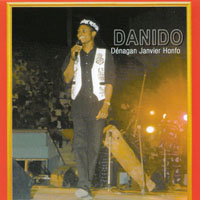
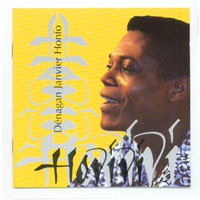
Dénagan Janvier Honfo, nicknamed “Aziza” — which means “the genius of inspiration” — was a percussionist, singer, composer, and choreographer from Benin. Born in Benin in 1967, he dedicated his career to carrying the musical heritage of his country, steeped in vodun rhythms — a traditional religion of the coastal peoples of West Africa centered on the worship of ancestors and natural forces — to Europe. His unique journey, between Porto-Novo and Germany, illustrates the ability of diasporic artists to weave cultural bridges between Africa and the world1.
In brief
| Full name | Janvier Dénagan Honfo |
| Pseudonym | “Aziza” (“the genius of inspiration”) |
| Birth | March 12, 1967, Porto-Novo, Benin |
| Death | November 22, 2021, Germany |
| Nationalities | Beninese (until 1999), German |
| Activities | Singer, percussionist, composer, actor, choreographer, music therapist |
| Genre(s) | African traditional music, variety music, afro-pop |
| Active period | 1995–2021 |
Key dates
| Year | Event |
|---|---|
| 1967 | Birth in Porto-Novo, Benin, to parents who remained anonymous |
| 1995 | Start of professional activity; release of the first album |
| 1997 | Release of Bolo Mimi; participation in international festivals |
| 1999 | Loss of Beninese nationality by request; acquisition of German nationality |
| 2003 | Release of Kiki Kana and collaboration with the group Azuka |
| 2021 | Death on November 22 in Germany, at the age of 54 |
| 2022 | Posthumous release of Kini Kana on Audiomack |
Beninese origins and training in the sound of the drum
Dénagan Janvier Honfo was born on March 12, 1967, in Porto-Novo, the administrative capital of Benin, at the heart of a region where the gun-gbe language — the national language spoken in the Ouémé department — shapes daily culture2. His first name, “Dénagan,” means “an individual will survive” in gun-gbe, an omen that seems to have guided a whole life dedicated to cultural transmission. From childhood, he frequented the great local percussionists of Benin, immersed in a sonic universe where oral tradition and ritual music merge. In Beninese culture, an artist perceived as “chosen by God” — as they say in Benin — embodies a vocation that goes beyond simple artistic calling.
His music, which he once called “a trance mission,” draws on this traditional baggage to explore the rhythms of vodun, this ancestral religion of the Fon and Ewe peoples of Benin whose pulses irrigated, via the slave trade, Haitian compas, Trinidadian calypso, Brazilian macumba, and Cuban santeria. Dénagan thus weaves a sonic bridge between West Africa and Europe, blending melancholy and optimism in a style that plunges the listener into a universe that is both ancestral and contemporary3.
International revelation and evolution
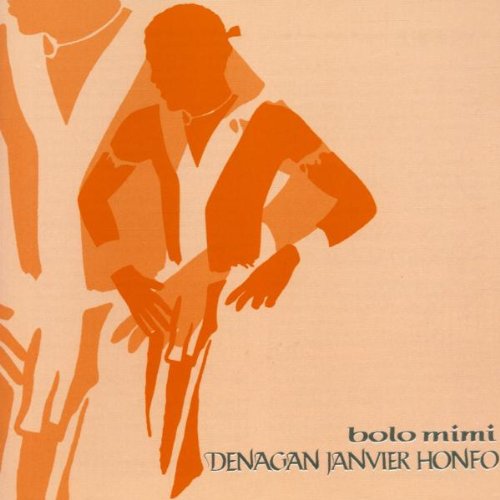
Dénagan Janvier Honfo settled in Germany at the beginning of the 1990s and gradually developed a multidisciplinary art: percussion, singing, composition, choreography, and music therapy4. In 1994, Aziza was released, his first album, which blends Beninese peasant morality and vodun mysticism. This is followed by Bolo Mimi in 1997, where he refined his personal percussion technique, and then Kebele, babalola percussions in 1998, an album entirely dedicated to percussion.
His recognition went beyond West African borders when he participated in several international festivals, including the prestigious UNESCO culture festival in Paris. In 2003, he released Kiki Kana, an album in which he integrated electric guitars, brass instruments, rhythmic programming, and vocal harmonies, while preserving the vodun roots that make up his identity. The same year, he collaborated with the afro-pop group Azuka on a joint album5.
Major works
| Work | Year | Why it is essential |
|---|---|---|
| Aziza | 1994 | First album; fusion of peasant morality and vodun mysticism |
| Bolo Mimi | 1997 | Refinement of personal percussion technique |
| Kebele, babalola percussions | 1998 | Album entirely dedicated to percussion in all its splendor |
| Kiki Kana | 2003 | Opening toward afro-pop with guitars, brass, and programming |
Legacy
Dénagan Janvier Honfo leaves behind a discography of six albums and a career that carried Beninese percussion onto international stages2. His work, marked by symbolism and parables, touched listeners in Benin, Europe, and beyond. His participation in the UNESCO culture festival testifies to institutional recognition of his contribution to global cultural diversity.
After his death in November 2021, his music continues to resonate: the posthumous album Kini Kana was released in January 2022 on Audiomack, proving that the “genius of inspiration” — the meaning of Aziza — does not stop with the life of those who embodied it.
Sources and references
-
Wikipedia, “Janvier Dénagan Honfo”, accessed October 29, 2026 ↩︎
-
Afrisson, “Dénagan Janvier Honfo”, 2007, accessed October 29, 2026 ↩︎ ↩︎
-
Wikidata, “Janvier Dénagan Honfo (Q109705255)”, described as a singer, percussionist, composer, and music therapist of Beninese origin, accessed October 29, 2026 ↩︎
-
Persee / Hommes et Migrations, “Benin. Denagan Janvier Honfo, Aziza (METRA 0198 C)”, March–April 1997, accessed October 29, 2026 ↩︎
-
Audiomack, “Aliho by Denagan Janvier Honfo”, album Kini Kana, January 28, 2022, accessed October 29, 2026 ↩︎