From vòdún to afrobeat: Benin, a small nation with great music
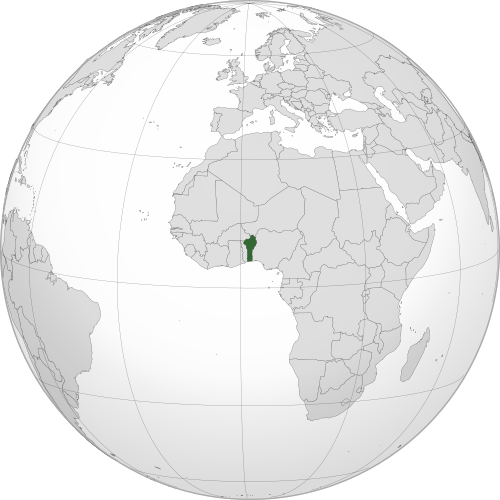
From the ceremonial drums of Abomey to the international studios in Paris and Los Angeles, the musical history of Benin is that of a country that has never stopped reinventing its traditions1. This small West African coastal state, bordered by Togo and Nigeria, produces artists today who shape global world music — but its heritage rests on much older roots, deeply anchored in the fon2, nago and mahi cultures.
From royal rituals to modern orchestras
The traditional scene
Before the French colonization of the late 19th century, the territory that would become Benin hosted several distinct musical styles, each linked to an ethnic group. Fon music, which developed around the royal court of Abomey, the historical seat of Dahomey, paced ceremonies with jingles and calabashes. The Nago from the west played a style similar to Nigerian sakara, using drums, sanzas and a gode (a single-stringed violin). The Mahi used wooden zithers and clappers, while the Somba blended male vocals with flutes and rattles3.
This diversity constitutes the rhythmic foundation that still runs through all contemporary Beninese music. The zinli, for example, traditionally paces Abomey ceremonies — there are five variants, the most popular remaining that played for kings. Today, zinli is pop: Alekpehanhou is its undisputed king4.
Post-independence and Congolese inspiration
Independence in 1960 opens a bubbling period. Like other Francophone countries of West Africa, Benin absorbs the overwhelming influence of Congolese sound — this fusion of African rumba, Cuban cha-cha and local guitarism born in Brazzaville and Kinshasa5. Cotonou sees the birth of the first modern orchestras, which mix Ghanaian highlife, French cabaret, American funk and traditional rhythms.
In 1955, Ignace de Souza (born in 1937), a young saxophonist trained in fon traditions, left Benin for Ghana. He stayed there for ten years, playing with the Ghana Rhythm Aces, forming the Black Santiagos in 1964 and rubbing shoulders with names like Fela Kuti and Geraldo Pino. Returning to Cotonou in 1970, he remains a central figure of an emerging scene6.
Did you know? The Poly-Rythmo de Cotonou Orchestra recorded about 500 tracks in the 1960s-1980s, making it one of the most prolific groups in 20th-century Africa. For decades, these records remained unfindable — until European labels began reissuing them7.
The Kérékou era: between censorship and rebirth
The musical wall (1972–1989)
In 1972, General Mathieu Kérékou took power and established a Marxist-Leninist regime named the People’s Republic of Benin. He closed vòdún temples8, restricted religious ceremonies and imposed curfews that suffocated the nighttime musical scene9.
Yet, Kérékou was a great patron of popular music — particularly the Orchestre de Poly-Rythmo de Cotonou. Founded in 1968 by Mélomé Clément, this orchestra developed its own style: heavy, danceable funk imbued with vòdún ritual rhythms, Nigerian highlife, Afro-Cuban jazz and American rock10. The Sunday Times described them as “one of the greatest funk bands in the world”11.
Poly-Rythmo’s music also carried communist messages adapted to vòdún rhythms, marking a turning point in Beninese musical history: the political reappropriation of sacred traditions12.
Other figures of the 1970s
Other artists emerged during this period. Pedro Gnonnas y sus Panchos produced “Feso Jaiye”, a hit performed at the 1973 African Games13. Nel Oliver, breaking with his roots, emerged in France in 1976 with an afro-akpala-funk fusion blending Anglophone and African influences14. Sagbohan Danialou, a multi-instrumentalist from Porto-Novo, transformed vòdún ritual rhythms like kakagbo into accessible popular music15.
World stars from Benin
Angélique Kidjo: the voice of the continent
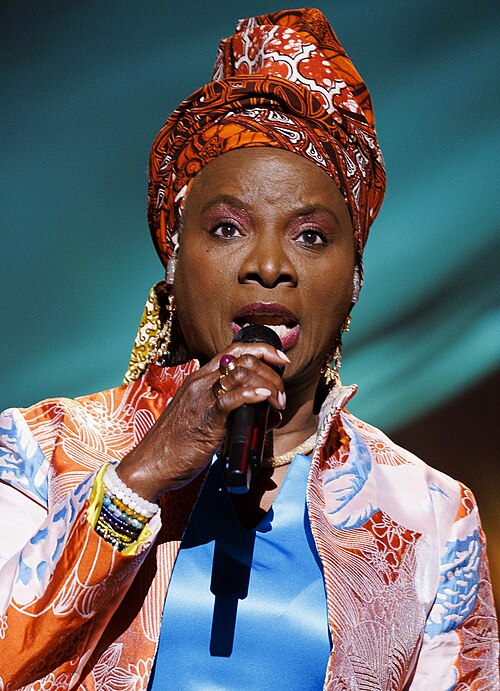
Angélique Kidjo, born in 1960 in Ouidah, is perhaps the most famous Beninese artist in the world. After a political coup in 1983, she left Benin for Paris, then the United States, and developed a career spanning four decades16. Her twentieth album HOPE!! (2026), co-written with Pharrell Williams and featuring Quavo and Ayra Starr, echoes Mother Nature (2021), which earned her a fifth Grammy Award17.
In 2023, she received the prestigious Polar Music Prize from Sweden, becoming the third African artist to win it18. In 2026, she became the first artist of African origin to receive a star on the Hollywood Walk of Fame19. Beyond her music, Kidjo founded the Batonga Foundation for girls’ education in Africa and is an UNICEF ambassador20.
Lionel Loueke: Herbie Hancock’s guitarist
Lionel Loueke (born in 1973 in Cotonou) became one of the most influential jazz guitarists of his generation. First a percussionist, he discovered the guitar at 17 after hearing George Benson. After studies in Abidjan, Paris, Berklee and the Thelonious Monk Institute of Los Angeles, he joined Herbie Hancock’s sextet and accompanied him on world tours21.
His album Karibu (2008) on Blue Note Records blends post-bop jazz harmonies with West African traditions. He also collaborated with Wayne Shorter, Terence Blanchard, Santana, Sting, and Angélique Kidjo herself22.
Wally Badarou: the conductor of the diaspora
Wally Badarou (born in 1955 in Paris to Beninese parents) became a legendary session pianist and keyboardist. A member of Level 42 in the 1980s, he played with Grace Jones, Mick Jagger, Fela Kuti, Manu Dibango, and recorded at Chris Blackwell’s Compass Point studios23. He co-founded the African Music Academy in 201424.
The contemporary renaissance
Today’s artists
After the 1990 democratic transition, Benin experienced a cultural renaissance. Vòdún became one of the country’s three official religions, and the Vòdún Festival, held every January 10th, attracts visitors from around the world25.
The contemporary scene unfolds across several currents:
Roots-pop artists remain deeply popular. Anice Pépé, Norberka (the only major traditional singer acclaimed), Gbeze Zegue-Zougou (master of tchinkoumé) and Alekpehanhou string together concerts, albums, and appearances on national television26.
The Gangbé Brass Band, founded in 1994 by eight musicians from Cotonou, fuses jazz and vòdún rhythms in a big-band brass format—trumpet, trombone, tuba, West African percussion. “Gangbé” means “the sound of metal” in Fon. The group released five albums between 1998 and 2015 and toured globally, with collaborations such as “Ouidah Spiritual” alongside Lionel Loueke27.
Afro-fusion is developing with artists like Conex and Don, the Cotonou duo that blends rap, afropop, and ritual percussion in a multilingual style (Fon, French, English), and Vano Baby, an emerging pop artist who made waves with “Do Bandit Min” (2025)28. On Spotify, Gnonnas Pédro remains the most-listened-to Beninese artist in the world29.
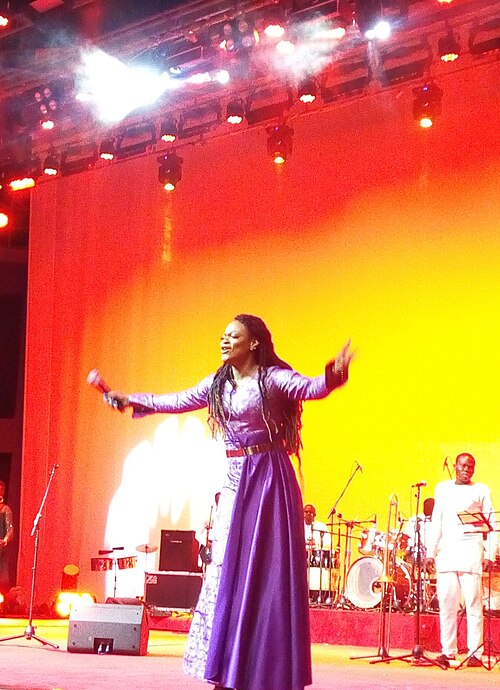
Beninese hip-hop—Secteur Trema, King Jerry Bee, Dibi Dobo—relies on local languages and youth networks to spread. Gospel and evangelical music also build their own audience, through congregations and major stages30.
Cotonou, the musical metropolis
Cotonou is no longer just the capital of the archive—what remains for many international listeners as the center of 1970s Beninese funk. Today, active clubs, festivals, and artists produce a sound entirely distinct from reissue compilations. Rap, gospel, afropop, and DJ sets coexist in a vibrant, diverse scene31.
A legacy that continues to shine
Benin’s musical history is that of a country that managed to transform every constraint into a resource. Vòdún rhythms, once persecuted and then officialized, have become the nation’s musical identity. Stars who left for abroad—Kidjo, Loueke, Badarou—brought the sound of their homeland back to global stages. And new artists, heirs to this history, continue building the bridge between Abomey’s drums and Cotonou’s clubs.
As a Beninese musician wrote about her practice: “Just because we sing in Fon doesn’t mean we can’t speak to the world.”32
Notes
-
Sarah Politz, Transforming Vòdún: Musical Change and Postcolonial Healing in Benin’s Jazz and Brass Band Music (University of Michigan Press, 2023), https://library.oapen.org/handle/20.500.12657/64041 ↩︎
-
Ronnie Graham, Stern’s Guide to Contemporary African Music, vol. 1, pp. 154-156 (Zwan Publications, 1988) — chapter Bénin ; François Bensignor, Les Musiques du monde, ch. 3 : Ouest-Afrique (Larousse, 2002). ↩︎
-
Ibid. ; consulted at https://musics.bluetreeaudio.com/countries/benin/artists-and-live-music. ↩︎
-
Afropop Worldwide, “Five Stars: A Benin Roots-Pop Primer”, https://www.afropop.org/articles/five-beninois-roots-pop-artists-to-watch ↩︎
-
François Bensignor, Les Musiques du monde, ch. 4 : Afrique centrale (Larousse, 2002) ; Benny Bender, Sweet Mother: Modern African Music, ch. 2 (University of Chicago Press, 1991). ↩︎
-
Ronnie Graham, Stern’s Guide to Contemporary African Music, pp. 154-156 (Zwan Publications, 1988) ; Sarah Politz, Transforming Vòdún (University of Michigan Press, 2023), https://library.oapen.org/handle/20.500.12657/64041 ↩︎
-
Wikipedia, “Music of Benin”, https://en.wikipedia.org/wiki/Music_of_Benin ; Guardian, “Benin’s Orchestre Poly-Rythmo in Europe at last” (14 January 2010), https://www.theguardian.com/music/2010/jan/14/orchestre-poly-rythmo-benin-funk ↩︎
-
Sarah Politz, Transforming Vòdún (University of Michigan Press, 2023), https://library.oapen.org/handle/20.500.12657/64041 ↩︎
-
Ibid. ; Wikipedia, “Music of Benin”, https://en.wikipedia.org/wiki/Music_of_Benin ↩︎
-
Ibid. ; Guardian, “Benin’s funk heroes: Orchestre Poly-Rythmo in Europe at last” (20 March 2011), https://www.theguardian.com/music/2011/mar/20/benin-orchestre-poly-rythmo ↩︎
-
New York Times, “From West Africa, a Recipe for Spicy Trans-Atlantic Funk” (13 July 2010), cited in Wikipedia “Music of Benin” ↩︎
-
Sarah Politz, Transforming Vòdún (University of Michigan Press, 2023), https://library.oapen.org/handle/20.500.12657/64041 ↩︎
-
Wikipedia, “Music of Benin”, https://en.wikipedia.org/wiki/Music_of_Benin ↩︎
-
Ibid. ↩︎
-
Afropop Worldwide, “Nicolas Moncadas’ Orogod Vòdun and Sagbohan Danialou”, https://www.afropop.org/wp/16682/nicolas-moncadas-orogod-vodun-and-sagbohan-danialou/ ↩︎
-
Vilcek Foundation, “Angélique Kidjo”, https://vilcek.org/prizes/prize-recipients/angelique-kidjo/ ↩︎
-
Angélique Kidjo, “Career Highlights”, https://www.kidjo.com/career-highlights — album HOPE!! (2026), Grammy 2021 for Mother Nature ↩︎
-
CNN, “Angélique Kidjo becomes the third artist from Africa to be awarded prestigious music prize” (28 March 2023), https://www.cnn.com/2023/03/28/africa/angelique-kidjo-polar-music-prize-spc-intl/index.html ↩︎
-
Angélique Kidjo, “Angélique Kidjo makes Hollywood Walk of Fame history” (August 2026), https://www.kidjo.com/career-highlights ↩︎
-
Ibid. ; Angélique Kidjo, “Biography”, https://www.kidjo.com/biography ↩︎
-
Berklee Today, “Out of Africa” (winter 2009), https://berklee.edu/berklee-today/winter-2009/cover-story/out-of-africa ; Wikipedia, “Lionel Loueke”, https://en.wikipedia.org/wiki/Lionel_Loueke ↩︎
-
AllMusic, “Lionel Loueke”, https://allmusic.com/artist/loueke-mn0000226516 ↩︎
-
The Guardian, “Mick Jagger was surprisingly hard-working: the all-star life of synth whiz Wally Badarou” (20 November 2023), https://www.theguardian.com/music/2023/nov/20/mick-jagger-was-surprisingly-hard-working-the-all-star-life-of-synth-whiz-wally-badarou ↩︎
-
IFC Creative Development, “Wally Badarou on his Fusion Legacy and Copyright Advocacy”, https://www.ifc.org/en/podcasts/creative-development/2024/wally-badarou-on-his-fusion-legacy-and-copyright-advocacy ↩︎
-
Sarah Politz, Transforming Vòdún (University of Michigan Press, 2023), https://library.oapen.org/handle/20.500.12657/64041 ↩︎
-
Afropop Worldwide, “Five Stars: A Benin Roots-Pop Primer”, https://www.afropop.org/articles/five-beninois-roots-pop-artists-to-watch ↩︎
-
World Music Central, “Artist Profiles: Gangbé Brass Band”, https://worldmusiccentral.org/artist-profiles-gangbe-brass-band/ ; Wikipedia, “Gangbé Brass Band”, https://en.wikipedia.org/wiki/Gangb%C3%A9_Brass_Band ↩︎
-
Afrotonic Vibes, “Conex et Don: The Dynamic Duo of Benin”, https://afrotonicvibesmusic.com/conex-et-don-the-dynamic-duo-of-benin ↩︎
-
Soundcharts, “Top Artists from Benin by Spotify Monthly Listeners”, https://soundcharts.com/en/artists/spotify-monthly-listeners/country/benin ↩︎
-
BlueTreeAudio, “Beninese Musicians Today: Angélique Kidjo, Women Artists and Live Music”, https://music.bluetreeaudio.com/countries/benin/artists-and-live-music ↩︎
-
Ibid. ; Wikipedia, “Music of Benin”, https://en.wikipedia.org/wiki/Music_of_Benin ↩︎
-
Paraphrase of a statement by a Beninese musician cited in Sarah Politz, Transforming Vòdún (University of Michigan Press, 2023), https://library.oapen.org/handle/20.500.12657/64041 ↩︎