Biography
Zeynab Habib: the Yoruba voice modernizing Beninese tradition
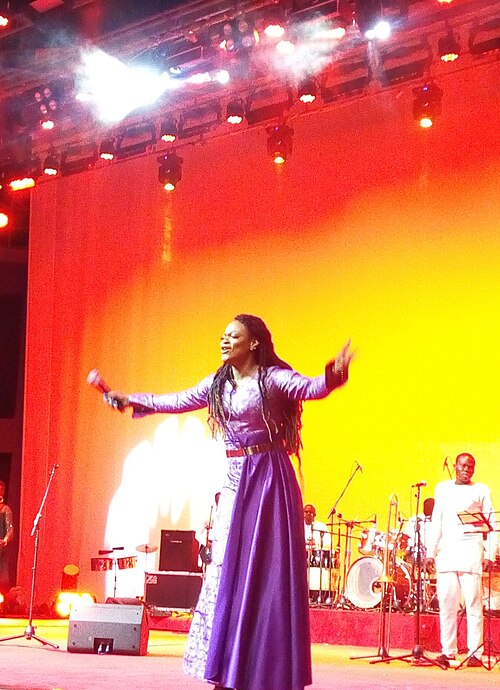
Born in Côte d’Ivoire in 1975 and raised in Benin among more than sixteen siblings, Zeynab Habib left her studies to follow a musical calling that would take her from the stages of Cotonou to Africa’s biggest venues, from the Kora Award to UNICEF, passing through Bolodjo, that Yoruba dance she transformed into a cultural phenomenon.1
Composer, interpreter and UNICEF Goodwill Ambassador for Benin since 2007, she puts her voice at the service of Yoruba culture and the cause of children2.
In brief
| Full name | Oloukèmi Zeynab Abibou |
| Date of birth | 25 September 1975 |
| Place of birth | Abidjan, Côte d’Ivoire |
| Nationality | Beninese |
| Ethnic origin | Yoruba |
| Origin | Sakété, Benin |
| Genre(s) | World music, R’n’B, Afrobeats, traditional Yoruba music |
| Roles | Singer, composer, interpreter |
| Distinctions | Kora Awards 2005 (Best Female Artist of West Africa) |
Key dates
| Year | Event |
|---|---|
| 1975 | Birth of Oloukèmi Zeynab Abibou in Abidjan |
| 1993 | Leaves Allada College for music |
| 1995 | Meets Super Quartz, start of career |
| 2002 | Release of first album Intori |
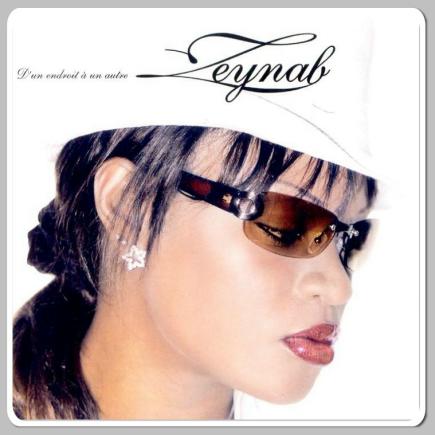
| 2004 | D’un endroit à l’autre with Lokua Kanza |
| 2005 | Victory at the Kora Awards |
| 2007 | National Goodwill Ambassador of UNICEF in Benin |
| 2011 | Release of third album Olukémi |
| 2016 | Comeback with “I no go die” |
| 2017 | Co-creation of a song against child marriage |
| 2021 | “On force pas l’amour” with Fanicko |
From Karaoke to international stages
Oloukèmi Zeynab Abibou grew up in a large Muslim family, eighth of a sibling group of more than eighteen children3. Her father is an electronics engineer and her mother a merchant. From childhood, she became passionate about school music competitions. In 1993, at sixteen, she enrolled in the Collège d’Éducation Générale d’Allada but eventually abandoned her studies to dedicate herself to music. The turning point came in 1995, during the cultural days of school competitions, where she discovered the Super Quartz orchestra4. She hosted a karaoke bar at the Alex Hotel in Cotonou, then joined the group to rub shoulders with many international artists.
A voice at the service of Yoruba culture
In 2002, Zeynab released Intori — which means “Why” in Yoruba — a first album of fourteen tracks5. In 2004, D’un endroit à l’autre, also composed of fourteen tracks, benefited from the collaboration of Congolese singer Lokua Kanza. The track “Enfant” featured on this album was nominated in two categories at the Kora Awards in South Africa. The consecration arrived in 2005, when she won the trophy for Best Female Artist of West Africa at the Kora Awards6.
Return and renewal
After Olukémi in 2011, Zeynab experienced a period of musical retirement7. She made a notable comeback in 2016 with “I no go die,” which reached number one on iTunes in several African countries. She embarked on a European tour and opened the concert for Maître Gims in Ouagadougou. In 2017, she co-created with Angélique Kidjo a song denouncing child marriage, produced by UNICEF alongside seven other Beninese artists. From 2020 to 2022, she multiplied collaborations: nomination for the Afrimma Awards with “Waa” featuring Togolese Santrinos Raphael, followed by the singles “On force pas l’amour” with Fanicko, “Gentleman,” and “Finale” in 2022.
Major works
| Work | Year | Why it is essential |
|---|---|---|
| Intori | 2002 | First album, a “why” on Yoruba identity — nominated for Kora Awards |
| D’un endroit à l’autre | 2004 | Collaboration with Lokua Kanza, nominated twice at the Kora Awards |
| Olukémi | 2011 | Third album, critical success with tracks that became classics |
| “I no go die” | 2016 | Comeback, number one iTunes Africa, springboard for a European tour |
| “On force pas l’amour” | 2021 | Collaboration with Fanicko, popular hit marking a strong return |
Legacy
Zeynab Habib carries on her shoulders the density of a vast and millenary Yoruba culture. She chose not to take refuge in a frozen folklore but to transform Guèlèdè and Bolodjo into vehicles for contemporary creation. Through her commitment to UNICEF, she showed that music is a weapon against injustice. In 2017, in a video produced by UNICEF, she sang: “A little girl is still a child. She cannot be a mother or a bride. Let her grow to live a fulfilled life.”2
With more than 51 singles and three albums, Zeynab Habib continues to make African stages dance1.
Sources and references
-
Africa24 TV, Benin: portrait of the artist, composer and interpreter Zeynab Habib, 2022 ↩︎ ↩︎
-
BBC World Service, This Is Africa — Zeynab Abib, BBC Afrique programme ↩︎ ↩︎
-
Afrikans In The Diaspora, episode 28: Zeynab Habib, 8 May 2021 ↩︎
-
Journal de la musique béninoise, Zeynab Habib biography, 19 August 2022 ↩︎
-
Wikipedia, Zeynab Habib, encyclopedia article ↩︎
-
Afrikans In The Diaspora, episode 28: Zeynab Habib, 8 May 2021 ↩︎
-
UNICEF, Angélique Kidjo and Beninese stars against child marriage, 20 July 2017 ↩︎