Biography
Grace Évora: the voice of cabo-zouk
In 1999, a track titled “Lolita” emerged from the catalog of an obscure Cape Verdean singer outside diaspora communities and transformed into a hymn. Grace Évora, whose real name is Gracindo Évora, a drummer turned singer, contributed to inventing cabo-zouk (a style born from the marriage between Antillean zouk and Cape Verdean rhythms), elevating his island, São Vicente, to the international stage1.
In brief
| Full name | Gracindo Évora |
| Stage name | Grace Évora |
| Birth | February 2, 1969, Salamansa, São Vicente, Cape Verde |
| Nationality | Born Cape Verdean, naturalized Dutch |
| Field | Singing, drums, composition |
| Styles | Zouk, cabo-zouk, coladeira, kizomba |
| Iconic works | “Lolita”, “El é Sabim”, “Coração Blues”, “Bia” |
| Founding groups | Livity, Splash! |
Key dates
| Year | Event |
|---|---|
| 1969 | Birth in Salamansa, São Vicente island, Cape Verde |
| ~1977 | Family emigrates to Rotterdam, Netherlands |
| 1987 | Invitation as drummer with group Livity |
| 1993 | Recording of track “Bia” with Livity, first success |
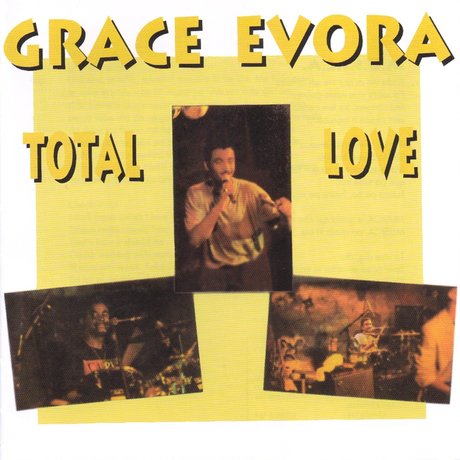
| 1994 | First solo album “Total Love” |
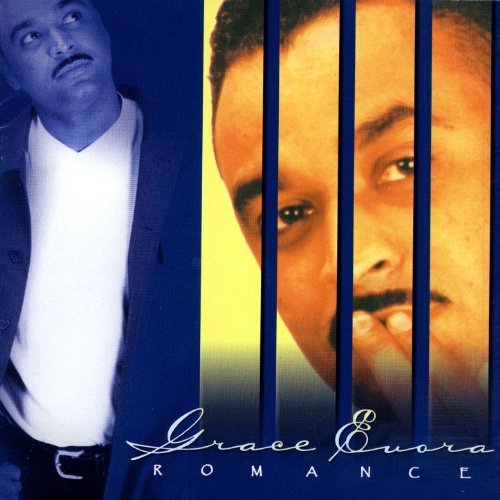
| 1999 | Release of “Romance” and hit “Lolita” |
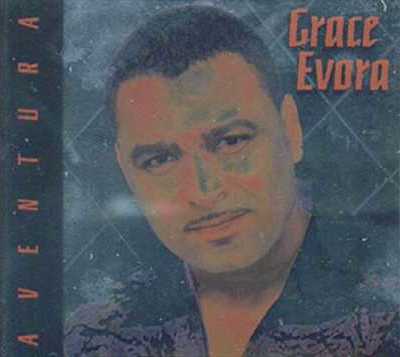
| 2003 | Album “Aventura”, international consecration |
| 2010 | Live album recorded in Rotterdam |
| 2013 | Three awards at Cabo Verde Music Awards (CVMA) |
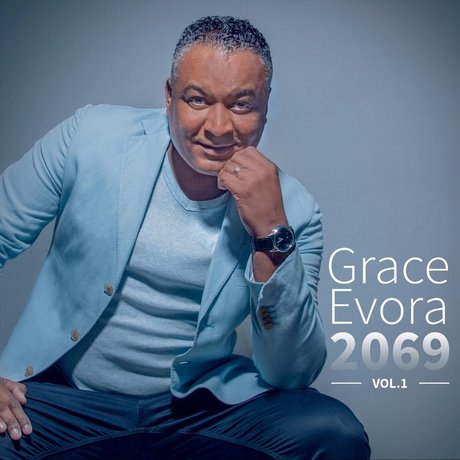
| 2017 | Release of “2069”, return with an updated sound |
| 2018 | Decoration with Medalha de Mérito da Cultura |
| 2025 | Announcement of volume 2 of “2069” and new singles |
From islands to the Netherlands: the origins
Gracindo Évora grew up in a musical household2. His family, widely recognized in the Cape Verdean music scene in Rotterdam, instilled in him an early taste for sounds. As an adolescent, he participated in the city’s municipal music training project and took his first public steps as a replacement for the drummer of the group Sun of Cap. The turning point occurred in 1987 when he was invited to join Livity as a drummer—a group that, among PALOP communities (Portuguese-speaking African countries), enjoys a reputation comparable to that of Kassaw.
Livity and Splash!: the musical forge
Livity opened a path for Grace as a singer; the group entrusted him with a track on his second album: “Bia” (1993) became a love at first sight and revealed a voice with a distinctive timbre3. Grace spent seven years with Livity, accumulating travels and lessons, citing Boy Gé Mendès, Ildo Lobo, and Bana as influences.
He then joined Splash!, which he helped found4. The group remained united for fourteen years and released five albums. Throughout the 1990s, Splash! and the artists in his circle created cabo-zouk: Antillean zouk dominated the international market, and Cape Verdean musicians adapted it by infusing their rhythms (coladeira, kuduro), forging a distinct style.
Solo career and international recognition
Parallel to his work with Splash!, Grace embarked on a solo career. “Total Love” (1994) revealed “Coração Blues”, “Total Love 2” (1996) confirmed it, and “Romance” (1999) propelled “Lolita”—his greatest written success—to global kizomba stages. The track crossed decades: in the early 2000s, in Angola venues, the audience sang “Lolita” louder than the artist himself5. Followed by “Aventura” (2003) with “El é Sabim” and “Aportunidad”, a live album in Rotterdam (2010), and “2069” (2017), which updated his sound.
A continuous workshop
Grace Évora lives in the United States but continues to tour through Cape Verdean communities in Europe, Angola, Mozambique, and beyond3. Regarding the challenges of the digital age, he is lucid: “What the human being does has another life, another taste.” In December 2025, Grace announced to Expresso das Ilhas the preparation of volume 2 of “2069”, expected for April 2026. The album adds to a parallel project named Músicas de Cabo Verde, which brings together morna, coladeira, batuque, and other traditional genres of the archipelago.
Major works
| Work | Year | Why it is essential |
|---|---|---|
| “Total Love” | 1994 | First solo album; reveals “Coração Blues”, a piece signed by Boy Gé Mendès and a true identity card |
| “Romance” | 1999 | Pivot album; contains “Lolita”, the global kizomba hymn and most requested track in concerts |
| “Aventura” | 2003 | “El é Sabim” and “Aportunidad”; consecrates Grace on the Anglophone and Lusophone markets |
| “2069” | 2017 | Return of an artist who updates his sound without renouncing his roots |
| “Bo Ki Mi Kre” (feat. Amely) | 2022 | Afrobeat collaboration proving his ability to evolve without diluting himself |
Legacy
Grace Évora is one of the founding figures of cabo-zouk, an hybridation that profoundly marked modern Cape Verdean music6. At 50, in 2019, he celebrated 30 years of career before a conquered Lisbon audience. In 2013, he won three trophies at the Cabo Verde Music Awards (CVMA) and, in 2018, received the Medalha de Mérito da Cultura Cabo-verdiana. He contributed to making “Lolita” an international classic, playing a role similar to that of Antillean zouk in the 1990s for the diaspora.
Sources and references
-
Caboverde Info, Gracindo Evora (Grace Evora), caboverde-info.com, accessed November 2, 2026 ↩︎
-
Cabo Verde e a Música, Grace Évora, caboverdeamusica.online ↩︎
-
Expresso das Ilhas, Grace Évora: Uma vida dedicada à música, expressodasilhas.cv, December 13, 2025 ↩︎
-
Saida Dance, Grace Évora, an international singer from Cabo Verde, saidadance.com ↩︎
-
DW Afrique, Músico cabo-verdiano Grace Évora celebra 30 anos de carreira, dw.com, October 27, 2019 ↩︎