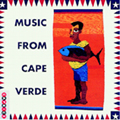
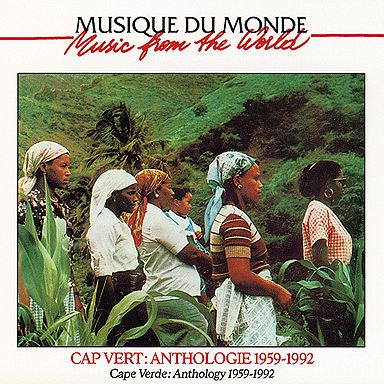
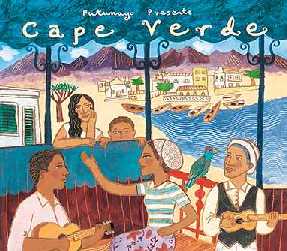
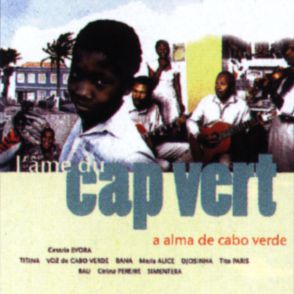
Musical History of Cape Verde
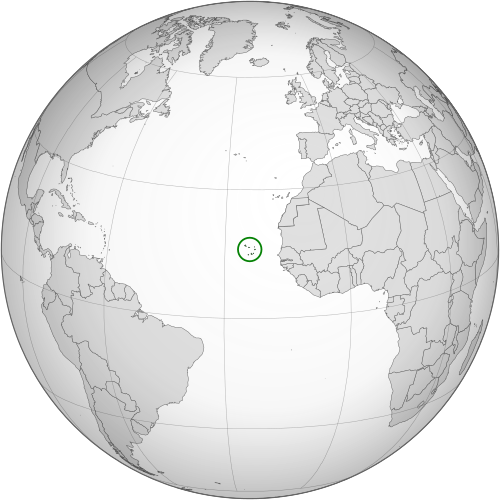
In the Atlantic Ocean, four hundred kilometers from the coast of Senegal, an archipelago of ten islands produced one of Africa’s most identifiable musics: the morna, a slow and melancholic song in Cape Verdean Creole that speaks of love, exile, and sodade — a word with no exact equivalent in French, designating a nostalgia so profound it becomes almost physical 1. Its international ambassador, Cesária Évora, died in 2011. Cape Verde’s musical heritage continues to transform and conquer a new generation.
From Islands Without Official Music to National Genres
The islands of Cape Verde formed eight million years ago through volcanic activity from a hotspot in the Atlantic. Inhabited starting in the fifteenth century by Portuguese colonists brought along with African slaves, the islands quickly became a crossroads of triangular trade 2. The music born from this mixture was immediately creolized — the word “creole” designates here a linguistic and cultural blend, distinct from the language itself, kriolu.
At the end of the nineteenth century, two genres emerged. The morna, first joyful on the island of Boa Vista, transformed in São Vicente into a more dramatic song, with a slow rhythm, in four-time measure, dominated by the minor key. Eugénio Tavares, poet of Boa Vista, composed lyrical texts that became the absolute reference. As explained in the UNESCO nomination dossier: “he is the spiritual father of the morna, the one who gave it its current melodic and poetic form” 3. The guitar, introduced to Cape Verde at the beginning of the nineteenth century, became the preferred instrument, accompanied by the cavaquinho (a small four-stringed instrument of Portuguese origin) and the violin.
In the 1930s, the morna gave birth to the coladeira, a faster, sensual and humorous genre, designed for dance 4. More joyful, it nonetheless did not lose the emotional depth of the Creole: the two genres still coexist today as the two faces of Cape Verdean identity.
Did you know? “Funaná” might come from “fungagá”, a local word designating a popular dance. But some researchers lean towards a contraction of two characters from the legend: Fúna, the accordion player, and Naná, his wife, a ferrinho player 5.
Colonization, Repression and the Revenge of Funaná
While the morna and coladeira, influenced by European and Brazilian musics, were accepted by the colonial elite, the funaná, born in the rural interior of Santiago, was despised. The Portuguese colonial power considered it “African” — and therefore inferior 6. Authorities gradually banned this genre in the cities. For decades, the funaná was practiced only in the fields, to the sound of the diatonic accordion (gaita) and the ferrinho, a wooden blade struck and rubbed with a knife to produce the rhythm 7. The gaita parties — “accordion dances” — were confined to the countryside.
Repression did not kill the genre. It confined it, and it survived in the villages of the island of Santiago, carried by musicians like Codé di Dona, Sema Lopi and Tchota Suari, whose names remain in oral memory but whose recordings were reached only belatedly 8.
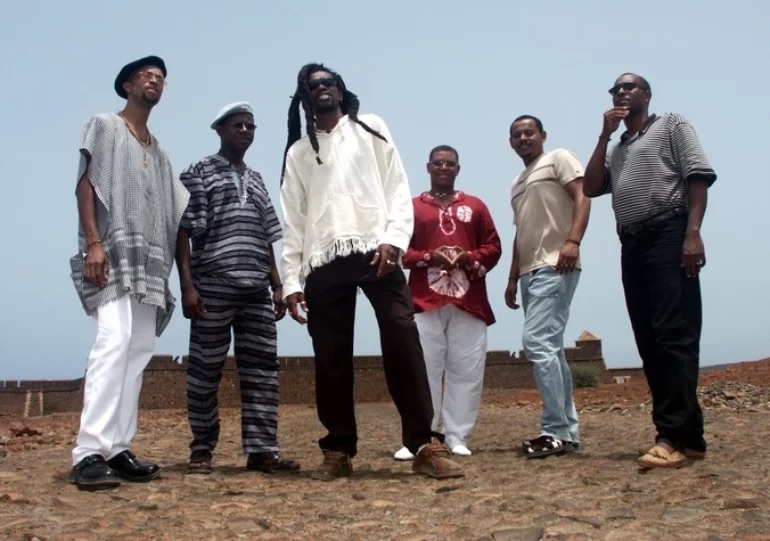
Independence, obtained in 1975 after the struggle led by the PAIGC (African Party for the Independence of Cape Verde and Guinea-Bissau), changed everything. In the air of “re-Africanization” blowing over the continent, rural popular traditions were rehabilitated. In 1978, Katchás (Carlos Alberto Martins, 1951-1988) founded the group Bulimundo. The group took rural funaná, transposed it onto electric instruments — drums, bass, keyboards, saxophone — and made it danceable for the urban clubs of Praia and Mindelo 9. “It is the greatest conquest of Cape Verdean music in its process of evolution,” wrote a journalist of the time 10. The funaná exploded out of its peasant framework and conquered other islands, immigrant communities in Europe, and higher social strata.
Bulimundo attracted into its orbit traditional composers like Codé di Dona and Sema Lopi, who finally recorded their works. Other groups followed: in the 1980s, Finaçon fused funaná and coladeira into a style called “funacola”. In the 1990s, Ferro Gaita relaunched a faster funaná, with accordion as soloist, ferrinho, bass and electronic drums 11. The rhythm accelerated, from 131 beats per minute for traditional funaná to over 160 for contemporary digital versions.
The Coronation of Cesária Évora
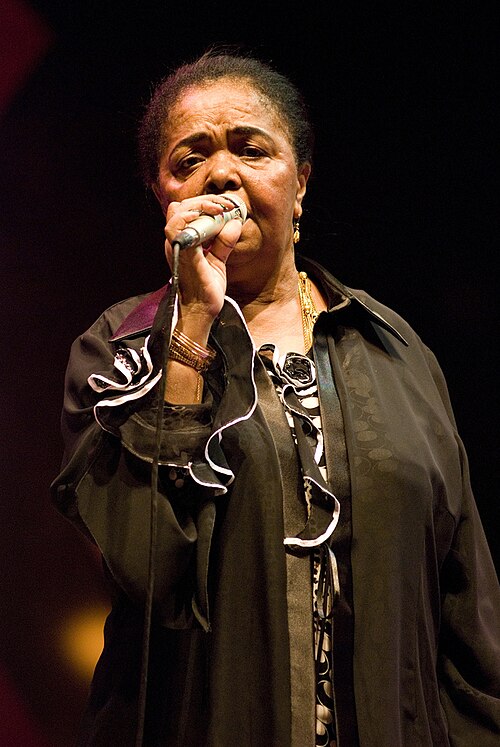
If funaná conquers the dancefloors, morna conquers the world thanks to one voice: that of Cesária Évora, born on August 27, 1941 in Mindelo, on the island of São Vicente 12. She only began singing seriously at the age of thirty, in bars in Mindelo where she worked as a waitress. The albums « La Diva aux pieds nus » (1988) and « Mar Azul » (1991) achieved moderate success. It was « Miss Perfumado » (1992) that propelled her: the album, which contains the iconic track « Sodade », sold over 300,000 copies and made Évora an international star 13.
Her nickname « barefoot diva » comes from a simple comfort decision: one evening, her feet hurt, she took off her shoes, and advertisers turned the gesture into a trademark 14. Évora herself explained that it was simply for her comfort and in reference to her first album. It is said that her fans filled her shoes with tips.
In 1995, the album « Cesária », released with the American label Nonesuch Records, earned her first Grammy Award nomination. In 2004, « Voz d’Amor » (Voice of Love) won the Grammy for « Best Contemporary World Music Album » 15. She received a total of six nominations, including one KORA Award in 1997, and was made a Commander of the Order of Prince Henry by Portugal and a member of the French Legion of Honour. Despite this global recognition, she refused to settle in Europe and returned daily to Mindelo, her native island. « I am Cape Verdean before being a star », she would repeat 16.
“Sodade”, her most famous song, became the anthem of the Cape Verdean diaspora. The word sodade is a Creole variant of Portuguese saudade — that feeling of longing, nostalgia, and regret mixed with love — and refers to families separated by emigration: a reality that affects more than half of the Cape Verdean population, of whom only one third still lives in the archipelago 17. Madonna herself has performed « Sodade » live at almost every concert of her Madame X tour (2019-2020), often in duo with Cape Verdean singer Dino D’Santiago 18.
On December 17, 2011, Cesária Évora died at the age of 70 in São Vicente, following respiratory failure and hypertension 19. Six hours before her death, she was still receiving visitors at her home in Mindelo, smoking and smiling.
Morna Protected by UNESCO and the Diaspora as an Engine
In 2019, morna was inscribed on the UNESCO Representative List of the Intangible Cultural Heritage of Humanity 20. The application dossier highlights a decisive fact: the diaspora played a central role in documenting, collecting data on, and disseminating morna as a pillar of Cape Verdean identity 21. This phenomenon is not unique to Cape Verde: 90% of Cape Verdean recording studios are located in France, the Netherlands, Portugal, or the United States 22. Rotterdam, a Dutch port city, hosts the third largest Cape Verdean community in the world (nearly 20,000 people) and is nicknamed « the tenth island of Cape Verde » by its inhabitants. It was there that morna and funaná were performed in « night spaces » as a space of cultural resistance during the struggle for independence 23.
UNESCO recognition strengthened transmission mechanisms: workshops, festivals, competitions (« Todo Mundo Canta », first published in 1982), private morna schools, and even training programs in Catholic and Nazarene churches 24.
The Young Generation: Living Tradition, Not a Museum
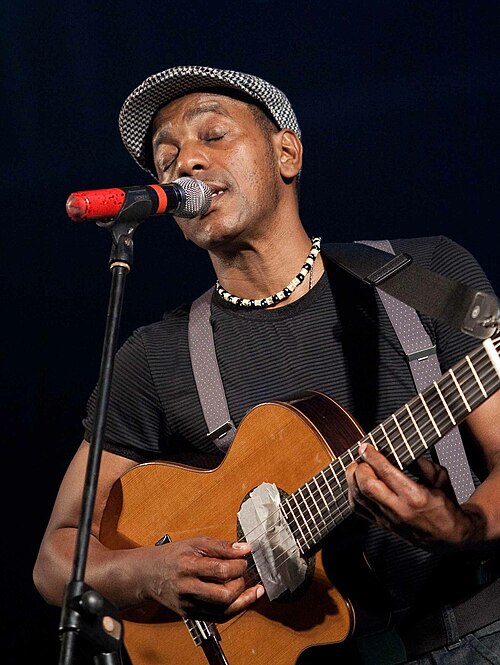
Today, the Cape Verdean scene is a construction site 25: artists rooted in traditions that were once banned, while transforming them through digital influences and migration. Carisa Dias, whose father Amadeu Dias was a singer in the 1980s, released her first album by reinterpreting her own compositions and those of her father, blending morna and pop 26. Fidju Kitxora, born in the Portuguese diaspora, explores in « Racodja » (2024) the feeling of meeting his family for the first time 27. Carmen Souza, based in France, blends morna, funaná, and mazurka with jazz accents 28. Scúru Fitchádu pushes funaná towards electronic and abrasive territories 29.
For these artists, it is not about « preserving » tradition. It is about living it. « Tradition does not survive through preservation. It survives through transformation », explains one of the newcomers 25. Cape Verde is not a museum.
Sources
-
UNESCO, “Morna, musical practice of Cabo Verde”, nomination dossier, 2018, https://ich.unesco.org/en/RL/morna-musical-practice-of-cabo-verde-01469, accessed 22 October 2026. ↩︎
-
Glaúcia Nogueira, “Music in Cabo Verde”, Oxford Research Encyclopedia of African History, 26 May 2021, https://academic.oup.com/edited-volume/61663/chapter/553447182, accessed 22 October 2026. ↩︎
-
Ibidem. ↩︎
-
“Music of Cape Verde”, Wikipedia, https://en.wikipedia.org/wiki/Music_of_Cape_Verde, accessed 22 October 2026. ↩︎
-
Instituto do Património Cultural, “Funaná”, https://ipc.cv/en/patromonio-imaterial/funana/, accessed 22 October 2026. ↩︎
-
Glaúcia Nogueira, op. cit. ↩︎
-
“Funaná”, Cabo Verde & Its Music – A Virtual Museum, https://eng.caboverdeamusica.online/funana/, accessed 22 October 2026. ↩︎
-
“Do ‘badju di gaita’ ao funaná-soukouss”, Revista Brasileira de Estudos da Canção, vol. 5, 2014, https://rbec.ect.ufrn.br/data/_uploaded/artigo/N5/RBEC_N5_A7.pdf, accessed 22 October 2026. ↩︎
-
“Funaná”, Cabo Verde & Its Music – A Virtual Museum, op. cit. ↩︎
-
Gonçales, 1994, cited in “Do ‘badju di gaita’ ao funaná-soukouss”, op. cit. ↩︎
-
Ibidem. ↩︎
-
Jon Pareles, “Cesária Évora, Queen of Morna Singing, Dies”, The New York Times, 18 December 2011, https://www.nytimes.com/2011/12/19/arts/music/cesaria-evora-morna-singer-from-cape-verde-dies.html, accessed 22 October 2026. ↩︎
-
Wikipedia, “Cesária Évora”, https://en.wikipedia.org/wiki/Cesária_%C3%89vora, accessed 22 October 2026. ↩︎
-
“Shocking Omissions: Cesária Évora’s ‘Cesária’”, NPR, 8 November 2017, https://www.npr.org/2017/11/08/562575877/shocking-omissions-ces-ria-voras-ces-ria, accessed 22 October 2026. ↩︎
-
Grammy.com, “Best Contemporary World Music Album”, 2004, https://www.grammy.com, accessed 22 October 2026. ↩︎
-
“Cesária Évora – Charactorium”, https://charactorium.com/en/character/cesaria-evora, accessed 22 October 2026. ↩︎
-
“Popular music and cultural identity in the Cape Verdean post-Colonial diaspora”, Etnográfica, vol. 20, 2016, https://journals.openedition.org/etnografica/2952, accessed 22 October 2026. ↩︎
-
Wikipedia, “Cesária Évora”, op. cit. ↩︎
-
Pareles, op. cit. ↩︎
-
UNESCO, “Morna, musical practice of Cabo Verde”, op. cit. ↩︎
-
Ibidem. ↩︎
-
“Popular music and cultural identity in the Cape Verdean post-Colonial diaspora”, op. cit. ↩︎
-
“Night spaces and stories of the Cape Verdean diaspora in the Netherlands”, Culture and Music Review, 2023, https://intellectdiscover.com/content/journals/10.1386/cjmc_00058_1, accessed 22 October 2026. ↩︎
-
UNESCO, “Morna, musical practice of Cabo Verde”, op. cit. ↩︎
-
“The Ongoing Transformation of Cabo Verdean Music”, Bandcamp Daily, 20 August 2026, https://daily.bandcamp.com/scene-report/the-ongoing-transformation-of-music-from-cabo-verde-review, accessed 22 October 2026. ↩︎ ↩︎
-
Ibidem. ↩︎
-
Ibidem. ↩︎
-
Ibidem. ↩︎
-
Ibidem. ↩︎