Biography
Hamza El Din: The master of the oud who brought Nubia to the world
In September 1978, under a total lunar eclipse, an Egyptian oud player performed on the steps of the Great Pyramid of Giza alongside the Grateful Dead. Hamza El Din — born in the Nubian village of Toshka, an engineer by training — had just completed the final leg of a journey that took him from the banks of the Nile to Tokyo, and from Rome to Berkeley.
In brief
| Full name | Hamza El Din (حمزة علاء الدين) |
| Birth | July 10, 1929, Toshka, Egypt (Nubia) |
| Death | May 22, 2006, Berkeley (California), United States |
| Domain | Oud, percussion (tar), singing |
| Genre | Nubian music — musical traditions of Nubia, an ancient region in North Africa along the Nile |
| Notable works | Escalay: The Water Wheel, Eclipse, A Wish |
| Honors | Precursor of “world music”; influence acknowledged by American minimalist composers |
Key dates
| Year | Event |
|---|---|
| 1929 | Birth in Toshka, in Egyptian Nubia |
| 1934 | Relocation to Cairo following the displacement of Nubians caused by the Aswan Dam |
| 1950s | Electrical engineering studies; work on Egyptian railways |
| 1961–1962 | Musical studies at the Accademia Nazionale di Santa Cecilia (Rome) |
| 1964 | First album Music of Nubia (Vanguard); appearance at the Newport Folk Festival |
| 1968 | Escalay: The Water Wheel on Nonesuch, produced by Mickey Hart of the Grateful Dead |
| 1978 | Concert at the Giza Pyramids with the Grateful Dead |
| 1981 | Relocation to Tokyo; teaching at the University of Tokyo; study of the biwa |
| 1992 | Collaboration with the Kronos Quartet on Pieces of Africa |
| 2006 | Death in Berkeley, California |
Origins, turning point, and international consecration
Hamza El Din was born on July 10, 1929, in the village of Toshka, in Egyptian Nubia. Nubia is a millennial land, an ancient African kingdom that served as a crossroads of civilizations since the 4th millennium BCE. His father was an electrician, and it is natural that young Hamza turned to this profession. He enrolled at King Fouad University in Cairo to study electrical engineering, then worked on the Egyptian railways.
The turning point came in 1934, when the construction of the first Aswan Dam forced his family to leave Toshka. Rising waters swallowed Nubian lands: temples, villages, and farmlands. Hamza, drawn to music, discovered legendary figures of Egyptian song on the radio — Umm Kulthoum and Mohamed Abdalwahab — and began playing the tar, a circular drum, before turning his attention to the oud, the short-necked Arabic lute, an instrument completely unknown in Nubian tradition.
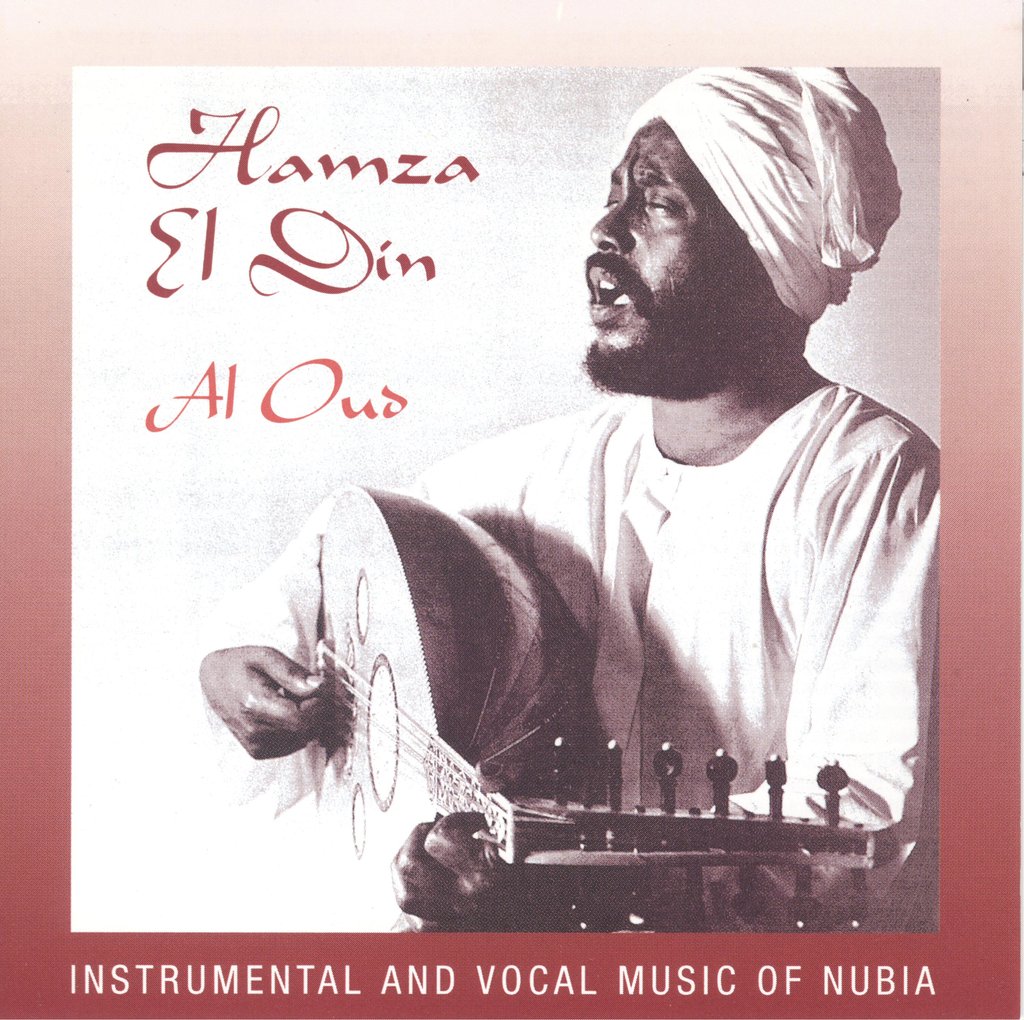
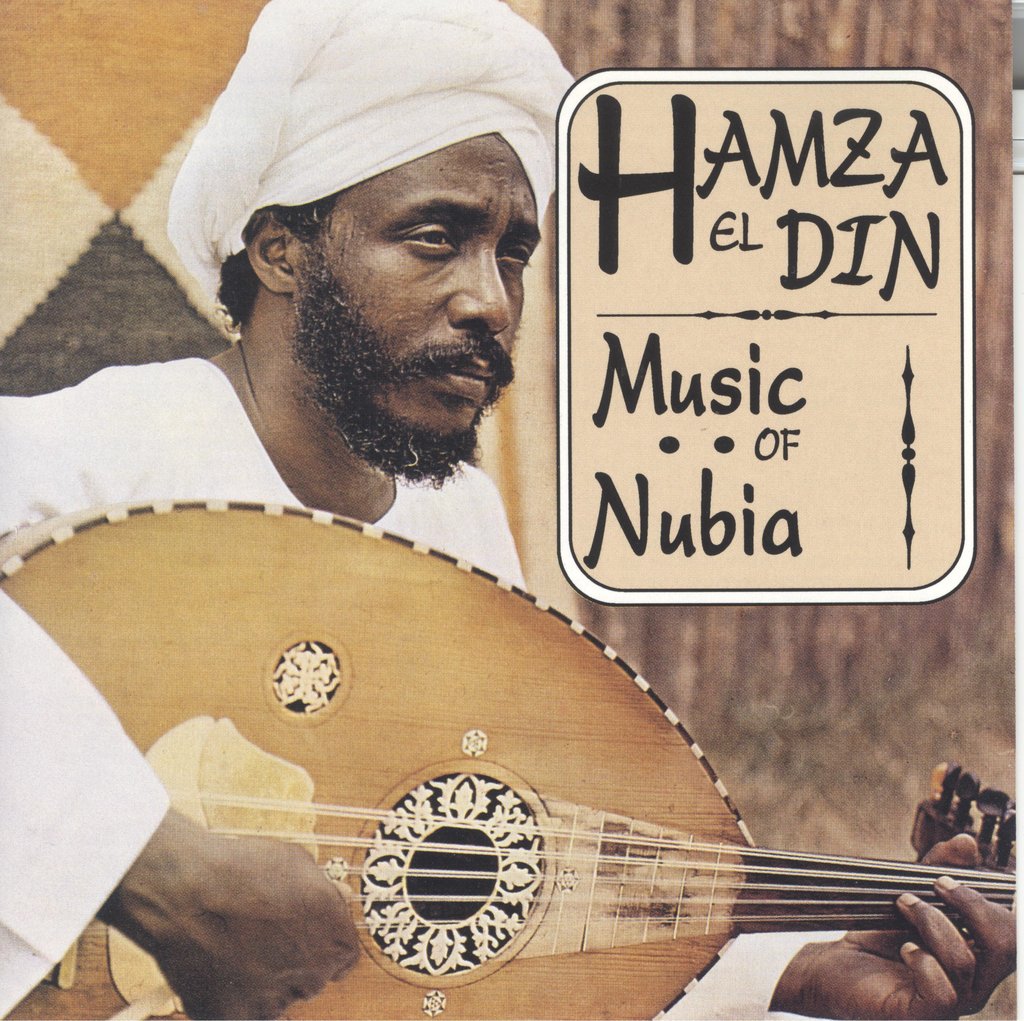
He studied classical Arab music at the Ibrahim Chafiq Institute, then received an Italian scholarship to continue his studies at the Accademia di Santa Cecilia in Rome. An American student, Geno Foreman, impressed by his music, passed it on to Joan Baez, who sent it to Bob Dylan. The effect was immediate. In 1962, Hamza settled in New York; in 1964, his first album Music of Nubia was released on the Vanguard label, followed by Al Oud in 1965.
His meeting with Mickey Hart, drummer of the Grateful Dead, was decisive. Hart produced in 1971 Escalay: The Water Wheel, published by Nonesuch. This album is considered one of the first “world music” records to reach a broad Western audience. Steve Reich and Terry Riley cited him as an influence. In 1978, Hamza participated in the Grateful Dead’s Egyptian concerts — the most memorable taking place under an eclipse at the Giza Pyramids.
After a brief period in Sudan, Hamza settled in the United States. He taught ethnomusicology at Ohio University, Seattle, and Austin. In 1981, a fellowship from the Japan Foundation brought him to Tokyo, where he lived until the mid-1990s. There he studied the biwa, a Japanese lute, became a professor at the University of Tokyo, and published his autobiography in Japanese. It was in Tokyo that he met his future wife, Nabra.
Major works
| Work | Year | Why it is essential |
|---|---|---|
| Escalay: The Water Wheel | 1971 | First Nubian world music record to reach a broad Western audience; influence on American minimalism |
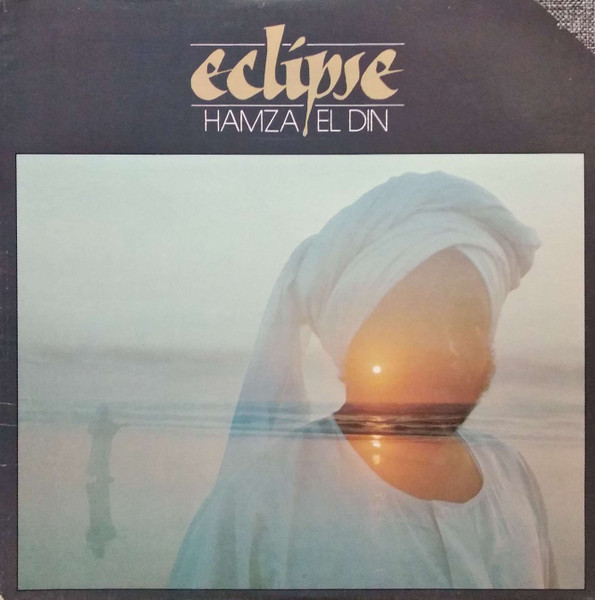
| Eclipse | 1978 | Confirmation of his cosmopolitan dimension; reissued by Rykodisc, it revived his visibility in the United States |
| Music of Nubia | 1964 | First album; brought the sounds of nascent Nubia to the international folk scene |
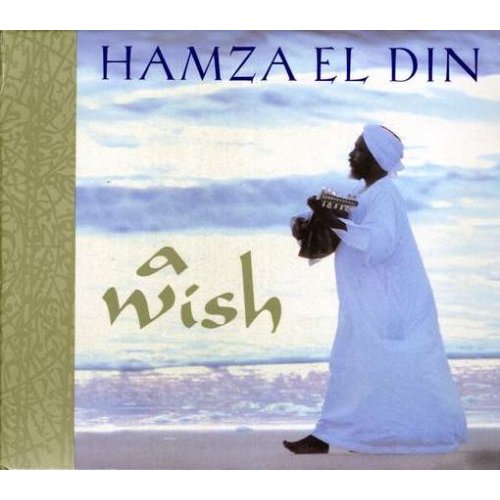
| A Wish | 1999 | Last album released during his lifetime; melancholic return to Nubian origins and submerged landscapes |
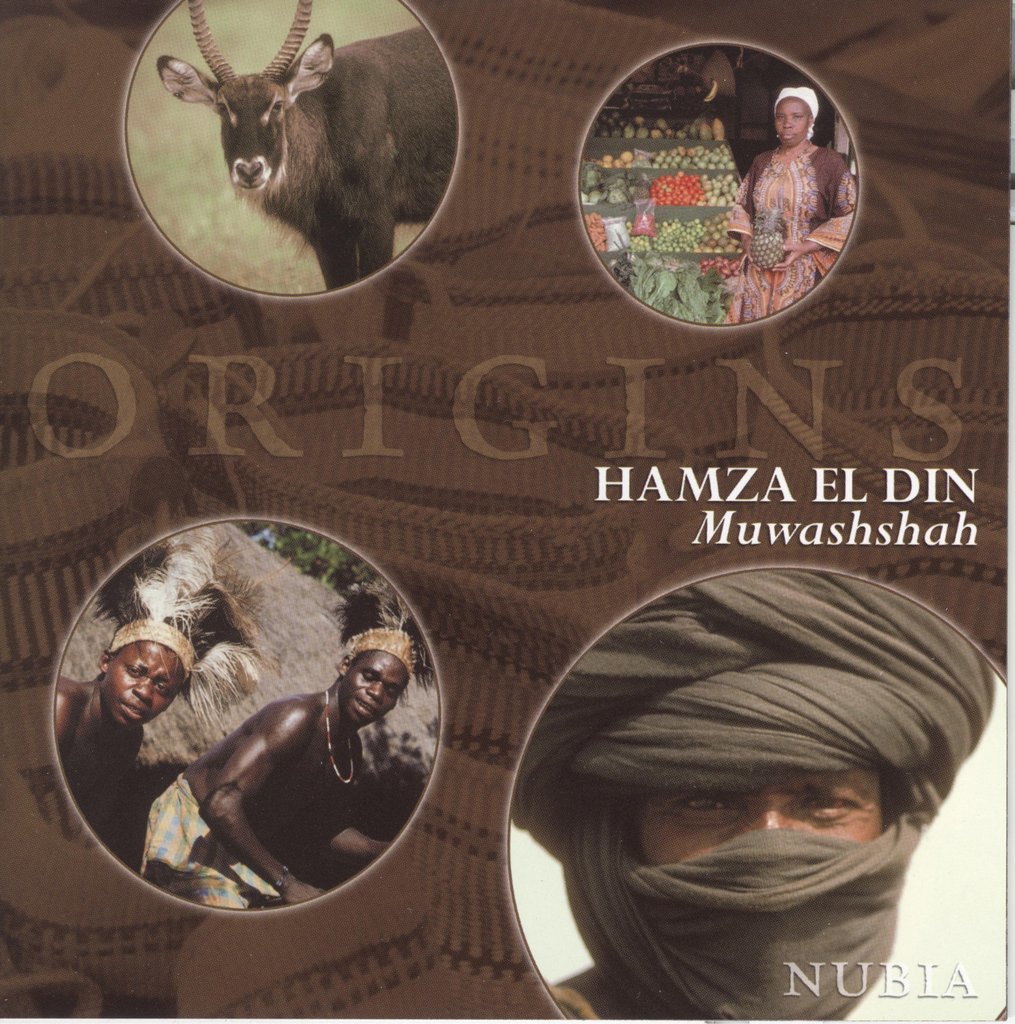
| Muwashshah | 1995 | “Gala 2000,” a “letter of forgiveness to the earth” for environmental degradation |
Legacy
Hamza El Din is universally recognized as the father of modern Nubian music. A precursor of “world music,” he was one of the first African artists to reach a Western audience. His approach — a virtuoso oud nourished by Nubian rhythms, enriched by Western and Japanese ensembles — remains a reference.
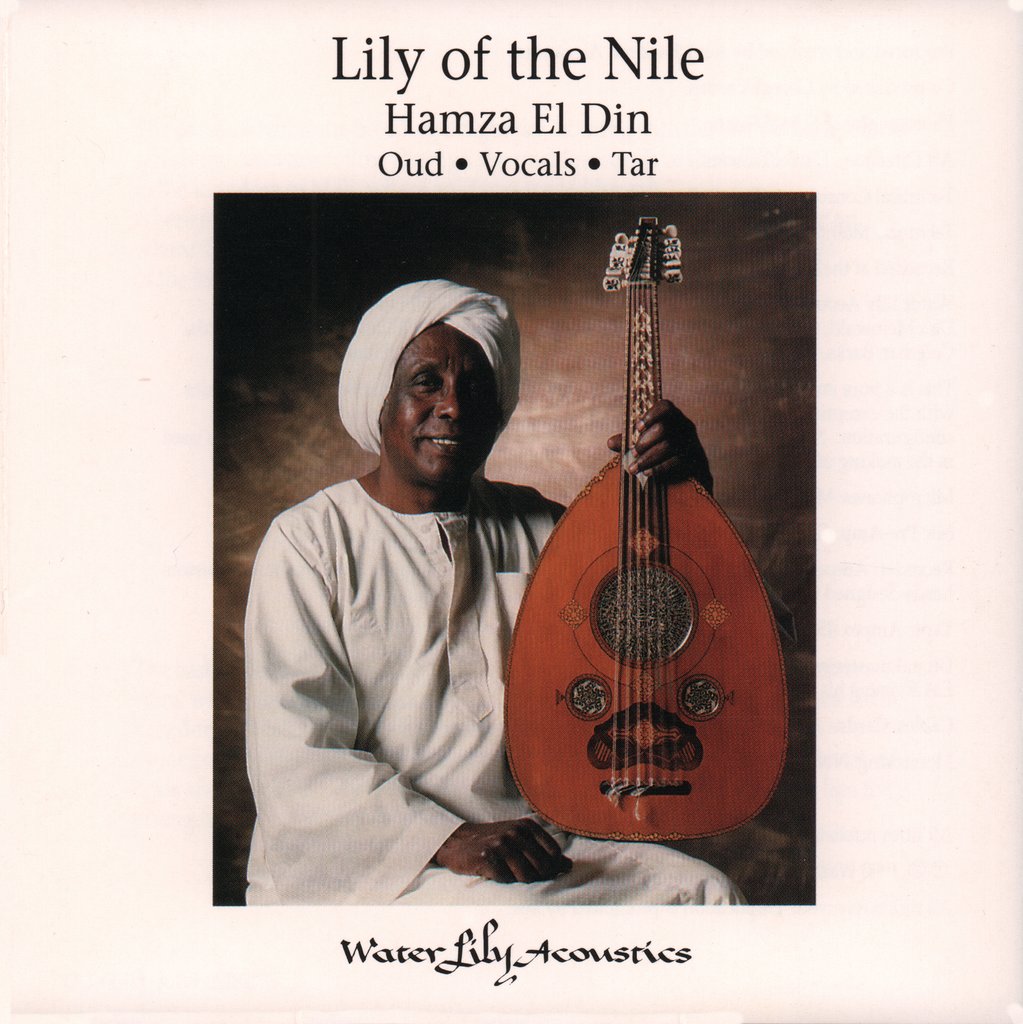
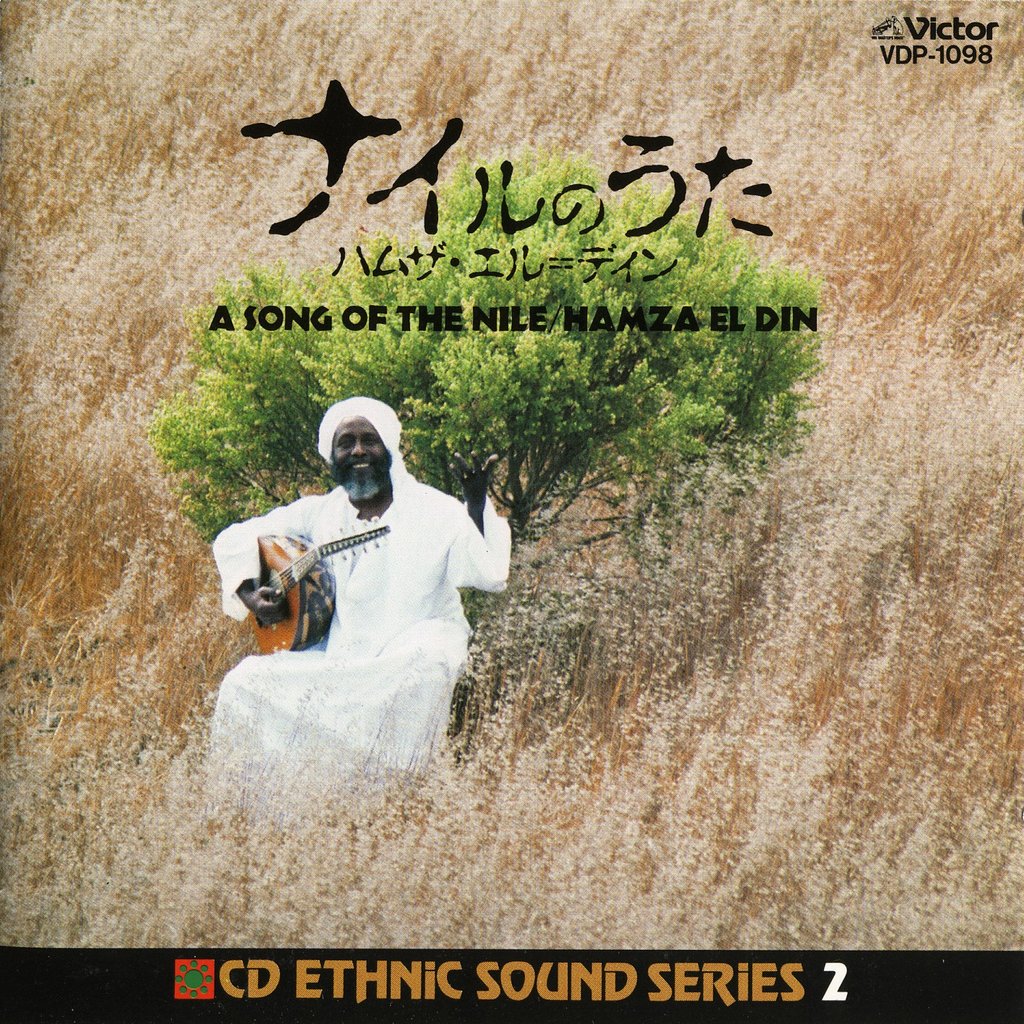
His music, played with his own hands while wearing a white tunic and turban, was a bridge between worlds. He is claimed by Nubians on both sides of the Egypt-Sudan border and remains, according to his last interview, “a Nubian musician playing these same themes for the whole world.”
Sources and references
- “Hamza El Din, 76, Oud Player and Composer, Is Dead”, The New York Times, https://nytimes.com/2006/05/25/arts/25din.html, accessed October 23, 2026.
- “Hamza El Din”, The Guardian, https://theguardian.com/news/2006/may/30/guardianobituaries.egypt, accessed October 23, 2026.
- “Hamza El Din, 76; Musician Popularized North Africa’s Ancient Traditional Songs”, Los Angeles Times, https://www.latimes.com/archives/la-xpm-2006-may-30-me-din30-story.html, accessed October 23, 2026.
- Hamza El Din, Britannica, https://britannica.com/biography/Hamza-El-Din, accessed October 23, 2026.
- Hamza El Din, Wikipedia, https://en.wikipedia.org/wiki/Hamza_El_Din, accessed October 23, 2026.
- « Hamza el Din », AllMusic, https://www.allmusic.com/artist/hamza-el-din-mn0000556242, accessed October 23, 2026.
- Hamza El Din, Qobuz, https://www.qobuz.com/us-en/interpreter/hamza-el-din/7615, accessed October 23, 2026.
- « Bay Area Musical Luminaries Plan a Tribute to Hamza El Din », San Francisco Classical Voice, https://www.sfcv.org/articles/feature/bay-area-musical-luminaries-plan-tribute-hamza-el-din, accessed October 23, 2026.
- « Musicians », Nubian Foundation, https://nubianfoundation.org/musicians, accessed October 23, 2026.