Biography
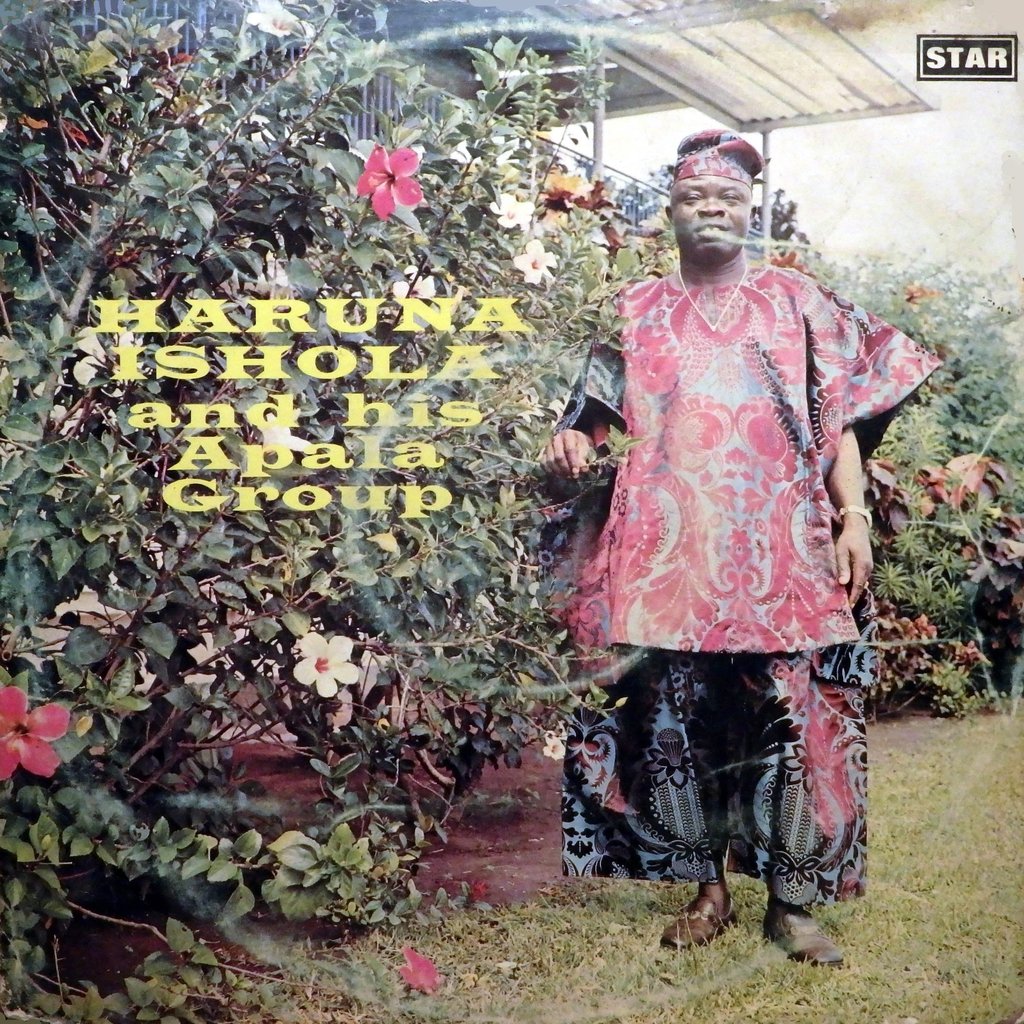
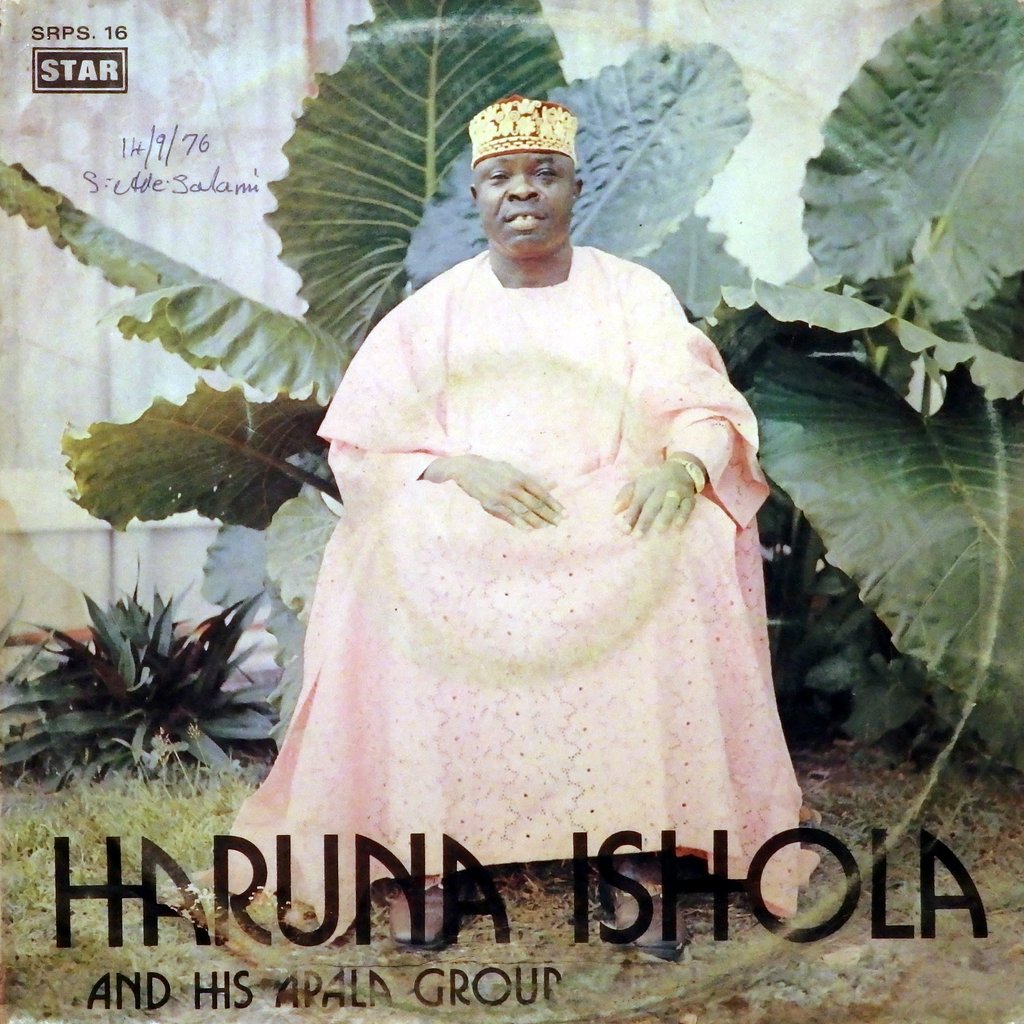
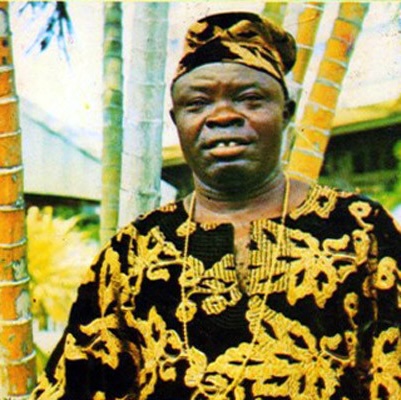
Haruna Ishola: the King of Apala
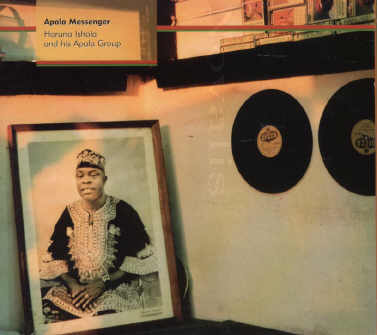
On the morning of July 23, 1983, the sky over Ijebu-Igbo turned. Haruna Ishola passed away, and with him, a giant of Nigerian music. For nearly four decades, this Muslim Yoruba musician shaped Apala — a percussive genre born from evening prayers in the mosques of Western Nigeria — and made it the pride of an entire continent. His voice, so powerful that whispers in the music industry said his praises could kill their recipient if not tempered, still resonates.
In Brief
| Full Name | Haruna Ishola Adebayo Bello |
| Nickname | “Baba Ngani Agba” (father of the agada drum) |
| Birth | 1919, Igbaire Oko-Sopin, Ijebu-Igbo (present-day Ogun State), Nigeria |
| Death | July 23, 1983, Ijebu-Igbo, Nigeria |
| Field | Apala (Muslim Yoruba music), traditional praises |
| Instruments | Agidigbo (thumb piano), talking drums, agogo, shekere |
| Notable Works | Oroki Social Club, Late Oba Adeboye |
| Honors | Member of the Order of the Niger (MON), 1981 |
Key Dates
| Year | Event |
|---|---|
| 1919 | Birth in Igbaire Oko-Sopin, Ijebu-Igbo (1918 according to Stern’s Guide) |
| ~1947 | Founding of the first Apala group in Osogbo; renamed the genre Apala |
| 1948 | First album, Late Oba Adeboye, on His Master’s Voice (HMV) |
| 1955 | Re-recorded version; major commercial breakthrough |
| 1962 | First LP: two sides, ten tracks |
| 1969 | Co-founding of STAR Records Ltd. with I.K. Dairo (first artist-owned African label) |
| 1971 | Oroki Social Club — over 5 million copies sold |
| 1979 | Opening of Phonodisk, studio and pressing plant in Ijebu-Igbo |
| 1981 | MON award presented by President Shagari |
| 1983 | Death in Ijebu-Igbo on July 23 |
From Mosques to Global Stages: The Genesis of a Style and Its Conquest
Born around 1919 in Yoruba land (present-day Ogun State), Haruna Ishola Adebayo Bello grew up in a culture where sacred music and drum language were intimately intertwined. His father initiated him into singing at a young age; his early death did not distance him from it. First trained in goldsmithing — a craft that taught him the patience of repeated gestures — Ishola turned to music in 1947, at twenty-eight years old, when he moved to Osogbo to found his first group. The style he transformed was called Oshugbo, Area, or, according to the family transmission of his son Musiliu, Ewele. Ishola hired a drummer, integrated talking drums into the repertoire, and baptized his new genre: Apala. Ishola’s Apala is built on the shekere (gourd with seeds), the agidigbo (hollow thumb piano, played by plucking or striking), the agogo (bells), the akuba, and two talking drums that punctuate every vocal phrase with a call-and-response — a hypnotic sound architecture where the ostinato of the agidigbo traces an unbroken line.
His first studio incursion, Late Oba Adeboye (1948, HMV), remained a commercial silence. Ishola did not lower his arms and toured the Nigerian Southwest, performing at Owambe parties — these gatherings of the Yoruba bourgeoisie — where his concerts sometimes lasted four to ten hours, seated surrounded by his troupe. Consecration arrived in 1955 when a plane crash struck Oba Adeboye: Ishola re-recorded his piece in mourning, and this version became a hit. From that day on, he was no longer the promising artist — he was the father of Apala.
What distinguishes Ishola is his systematic refusal of Western instruments: the Yoruba public perceived his music as an act of cultural resistance. His voice was his trademark — he sang Yoruba proverbs, quoted Quranic verses (Apala originally being a Muslim awakening music), and painted biting social portraits. On Gani Alarape, he sang “Bi ina ba wole, okunkun n la ti salo o. Ina ran ota lo ma jo” — in French: when light enters, it chases away the darkness; when fire burns, enemies are ignited. The album that exploded Apala to the general public was Oroki Social Club (1971, Decca Records), with over 5 million copies sold. The eponymous title pays homage to a prestigious political night-club in Osogbo, where Ishola performed before packed halls during four-to ten-hour sessions — the sixty-one founding members of the club, young supporters of Obafemi Awolowo opposed to the Akintola government, later became major figures in local politics.
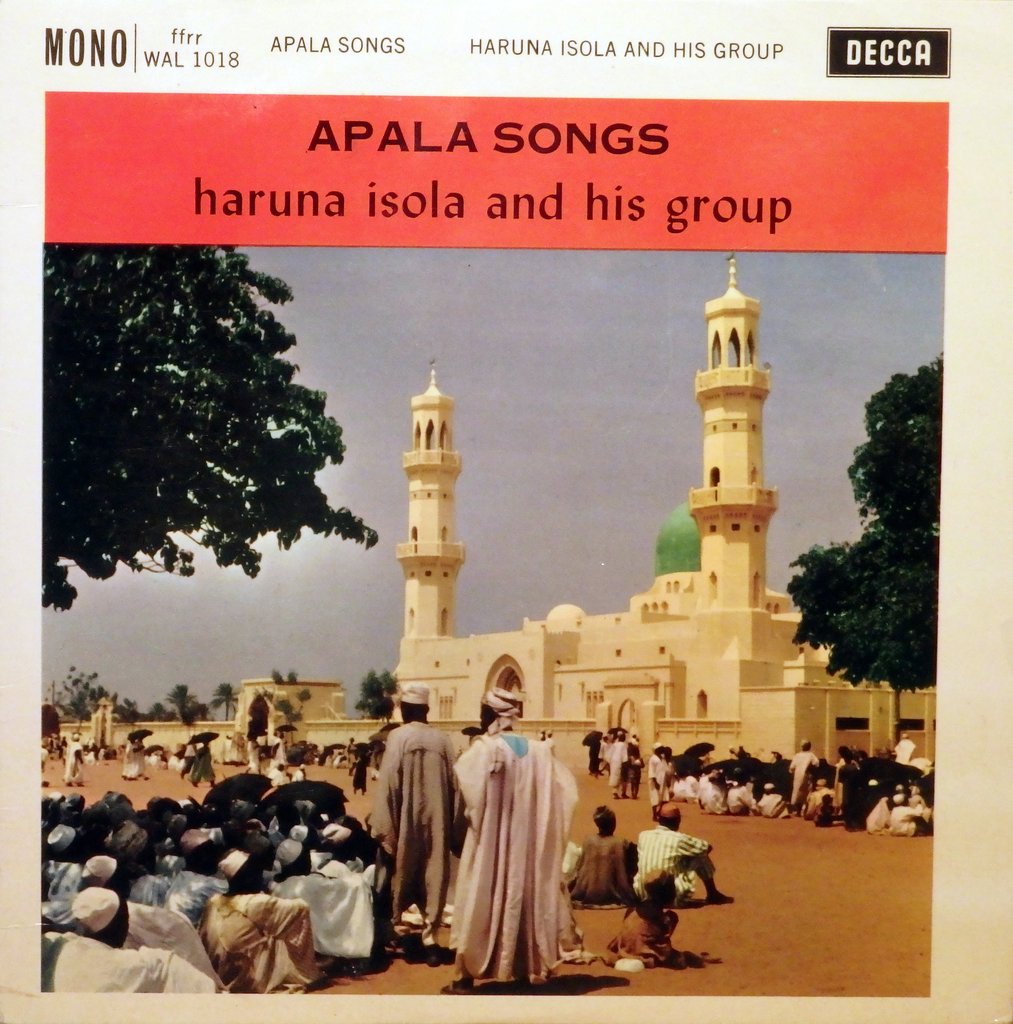
Ishola became one of the first Nigerian musicians to tour internationally — France, Sweden, United States, United Kingdom, Italy and West Germany. Upon his return from London, he recorded On My Way to London, with the verse “On my way to London ko s’ewu rara” (translated into French: on the way to London, no peril was to be feared). The success was such that British bankers welcomed him with gestures of welcome; he is said to be one of the richest musicians of his time in Nigeria. In 1969, with maestro Juju I.K. Dairo, he founded STAR Records Ltd. — the first African music label owned by artists. Productions were initially pressed by Record Manufactures Nigeria or Decca, before Ishola opened his own Phonodisk plant in 1979. His historical rival — Ayinla Omowura, his contemporary in Apala and Fuji — eventually recognized him as superior. In 1981, President Shehu Shagari awarded him the MON distinction.
Major Works
| Work | Year | Why It’s Essential |
|---|---|---|
| Late Oba Adeboye | 1948/1955 | The second recording reveals Apala to the general public |
| “Punctuality is the Soul of Business” | 1960 | First hit on Decca, laying the sonic foundations for the genre |
| Oroki Social Club | 1971 | Best-selling album (5+ million); vehicle for the Yoruba political movement |
| On My Way to London | mid-1970s | First international tour album, testimony of an African musician in the West |
Legacy and Influence
After Ishola’s death, Apala gradually declined in the 2000s amid the rise of Fuji and afrobeats. His son Musiliu Ishola carried on the torch, with Soyoyo (2000) reaching one million sales. Neo-Fuji artists such as Terry Apala, Qdot and Seyi Vibez continuously incorporate elements of Apala — rhythm and poetic use of Yoruba inherited from Ishola’s tradition. In 2019, Nigeria celebrated his centenary with national commemorations. His voice — the one that sang Yoruba proverbs, quoted the Quran and told young people to come dance Apala — remains a model for all Nigerian music.
Sources and References
- “Haruna Ishola”, Wikipedia, https://en.wikipedia.org/wiki/Haruna_Ishola, accessed November 5, 2026.
- “Haruna Ishola, the father of Apala music”, Pan African Music Magazine, https://pan-african-music.com/en/haruna-ishola-apala-music/, article from April 7, 2023, accessed November 5, 2026.
- Ronnie Graham, “Chapter 2: Nigeria”, Stern’s Guide to Contemporary African Music, pp.33–74, Zwan Publications (1988).
- “Apala Music Genre History and Style Description”, African Music Library, https://www.africanmusiclibrary.org/genre/Apala, accessed November 5, 2026.
- “Haruna Ishola Songs, Albums, Reviews, Bio & More”, AllMusic, https://www.allmusic.com/artist/haruna-ishola-mn0000668322, accessed November 5, 2026.
- Colin Larkin (ed.), The Guinness Encyclopedia of Popular Music, 1st ed., Guinness Publishing (1992), p.1237.
- “O N I G E W U R A: Death of a Musical Partnership”, Onigegewura.blogspot.com, October 6, 2017, https://onigegewura.blogspot.com/2017/10/death-of-musical-partnership-story-of.html, accessed November 5, 2026.