Biography
Houria Aïchi
In a stone courtyard in Batna, nestled in the Aurès mountains, women weave wool and sing at the same time. It was there, as a child, that Houria Aïchi learned the first Chaoui melodies, following her grandmother from house to house, then at the weddings and circumcisions of the village. Decades later, the singer who came to live in Paris returned to these same farmyards to record the voices she had collected as a treasure — and to offer them to the world in the form of albums that make the music of the Aurès a planetary heritage.
In brief
| Stage name | Houria Aïchi (حورية عايشي) |
| Birth | 1956, Batna, Aurès, Algeria |
| Field | Chaoui music (Berber music of Algeria) |
| Notable works | Chants de l’Aurès, Renayate, Les Cavaliers de l’Aurès |
| Honors | Honored guest at the Festival Au fil des voix (2013); collaboration with Ryuichi Sakamoto |
Key dates
| Year | Event |
|---|---|
| 1956 | Birth in Batna, in the Aurès, within a Chaoui Berber family |
| 1970s | Secondary studies in Constantine, university in Algiers, then psychology at the Sorbonne |
| 1984 | Unexpected invitation to the International Festival of Women Musicians in Paris: start of career |
| 1990 | First album, Chants de l’Aurès (Auvidis); participation in the soundtrack of Bernardo Bertolucci’s film A Tea in Sahara |
| 1996 | Release of Hawa (Auvidis); exploration of traditional Chaoui chants |
| 2001 | Khalwa, sacred chants of Algeria in collaboration with Henri Agnel: turning towards Sufism and dhikrs |
| 2008 | Les Cavaliers de l’Aurès (Harmonia Mundi) at the Festival Au fil des voix |
| 2013 | Renayate (Accords Croisés/Harmonia Mundi) — tribute to Algerian female singers; invitation to the Festival Au fil des voix |
| 2018 | « Houria Aïchi celebrates divine love » (La Vie) |
| 2023 | Collaboration with Ryuichi Sakamoto on Nuages, album Travesía (Milan Records) |
Origins and vocation: farmyard, chants, and an unexpected invitation
Houria Aïchi was born in 1956 in the Aurès, this mountainous massif in northeastern Algeria populated by Chaoui Berbers. She grew up in a communal courtyard where women wove, cooked, played theater, and sang. Her grandmother, a respected singer in the region, took her along to weddings and circumcisions. “My grandmother played a very, very important role in my musical education,” she explained in 2012. “She taught me to sing as a child: I accompanied her to weddings and circumcisions, with the other women.” Houria’s musical education was collective: she went from house to house, learning the tunes by heart.
A good student, Houria continued her studies in Constantine, then at the University of Algiers. In 1970, she went to Paris and enrolled at the Sorbonne to study psychology. She also taught sociology in France, never ceasing to sing — for her own pleasure and that of her friends. “After meals, people would always say: ‘Houria, sing us a song.’ To please my friends, I would oblige.”
It was precisely this habit that triggered her destiny. In February 1984, following a meal at a friend’s house in Paris, a woman she did not know approached Houria: “I am the director of the Second International Festival of Women Musicians in Paris, and I would like to invite you to participate.” The event was in June: four months to prepare a live show. Houria accepted. “By great luck, I said yes,” she would recount later.
From village to festivals: a career in expansion
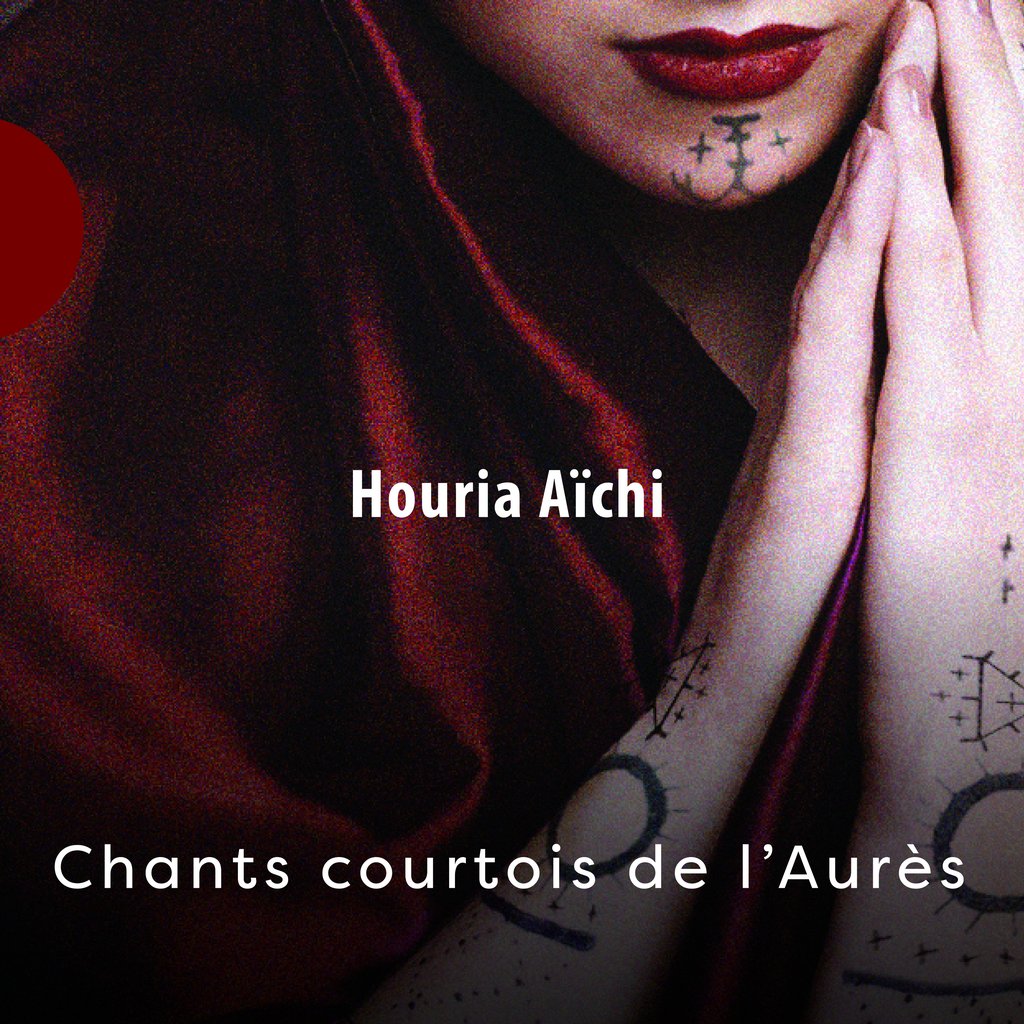
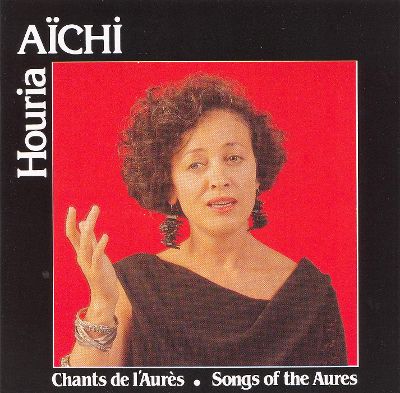
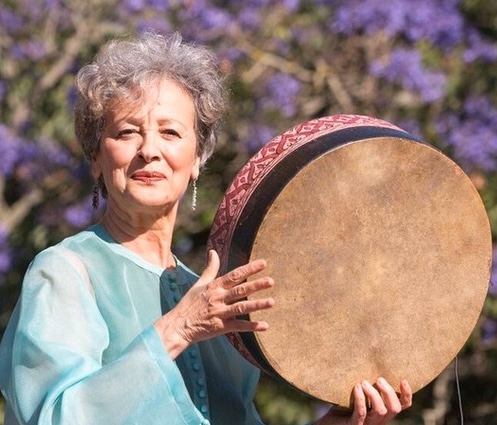
Houria’s first album, Chants de l’Aurès, was released in 1990 by Ethnic/Auvidis. It laid the foundations of her approach: chants she had learned as a child, lullabies and love poems of the mountain peasantry, accompanied by the gasba (traditional flute) and the bendir (frame drum). The same year, Bernardo Bertolucci called her for the soundtrack of A Tea in Sahara, a turning point that exposed her voice to an international audience.
But Houria Aïchi did not limit herself to the Aurès. She collected texts and music from the oral tradition — “I traveled to Batna, I visited neighbors and their families. In the afternoon, they would start singing: I recorded on my tape recorder and I left for Paris to work on the pieces.” — and contributed to spreading Chaoui sung poetry around the world. The singer performed in England, Scandinavia, Germany, Spain, Italy, France, and Canada.
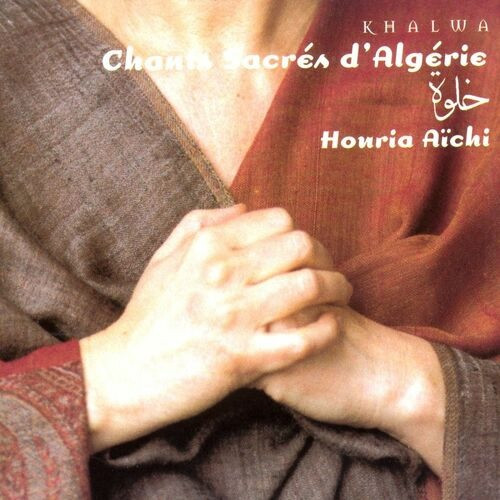
Her third album marked a stylistic turning point: Khalwa, sacred chants of Algeria (2001, Virgin Classics), recorded with Henri Agnel. The album delves into Sufi dhikrs, the themes of religious brotherhoods, and Algerian mystical poetry. “Today, Houria Aïchi lends her voice to the sacred repertoire of her country,” notes the Institut du monde arabe.
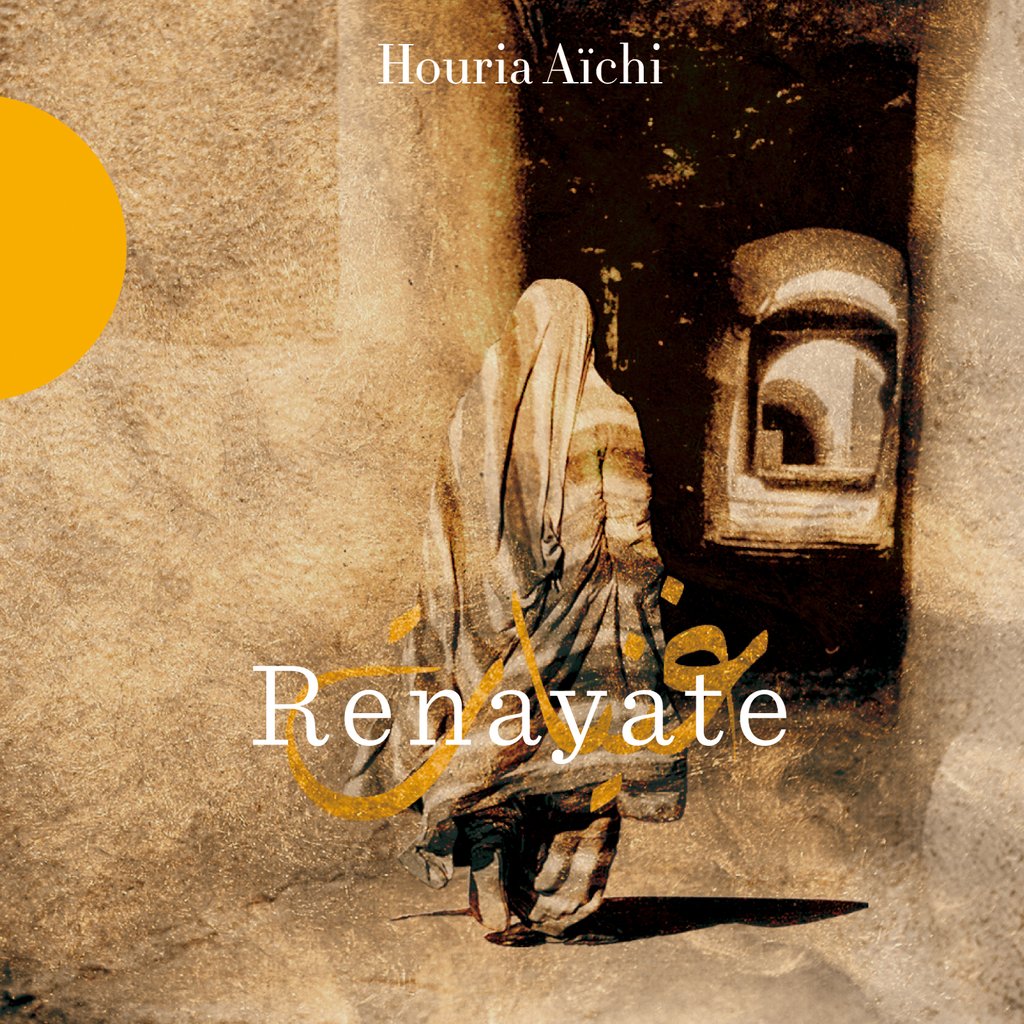
The evolution does not stop there. In 2013, the album Renayate (Accords Croisés/Harmonia Mundi) challenged the boundaries of Chaoui music: Houria pays tribute to great popular female singers from Algeria — Cheikha Rimitti, Saloua, Fadila d’Oran, Meriem Fekkaï — weaving a dialogue between urban music and mountain chants. “Between urban and rural music, there is no clear opposition,” she explains in an RFI interview. This same album gave birth to El Djoudour, a choreographed show designed with the Cie Abou Lagraa, broadcast from Paris to Amsterdam at the Nuits de Fourvière.
Major Works
| Work | Year | Why It’s Essential |
|---|---|---|
| Chants de l’Aurès | 1990 | First steps: lullabies, love poems, and Chaoui work songs |
| Khalwa | 2001 | Mystical turning point: Sufi dhikrs and sacred chants from Algeria |
| Les Cavaliers de l’Aurès | 2008 | Live concert at the Au fil des voix festival: chivalry and Chaoui melancholy |
| Renayate | 2013 | Intergenerational dialogue between great female voices from Algeria |
| Nuages (with Ryuichi Sakamoto) | 2023 | Bridge between Chaoui and minimalist Japanese electronic music |
Legacy and Influence
Houria Aïchi is today recognized as the direct heir of the Azriats — these “rebels,” these female troubadours who sang in the Aurès for centuries. Her approach to collecting and disseminating oral heritage has inspired a new generation of Algerian artists. The collaboration with Ryuichi Sakamoto on Travesía (2023) testifies to a planetary resonance: the music of the Aurès, carried by a voice that has crossed four decades, continues to find an echo on the most contemporary stages. “The people send everything they have,” she says, faithful to that court of Batna where she was “born to sing.”
Sources and References
- “Houria Aïchi”, Wikipedia in French, https://fr.wikipedia.org/wiki/Houria_A%C3%AFchi, accessed November 11, 2026.
- “Houria Aïchi”, Wikipedia in English, https://en.wikipedia.org/wiki/Houria_A%C3%AFchi, accessed November 11, 2026.
- Suleman Taufiq, “Interview with the Algerian Singer Houria Aïchi: Ambassador of Chaouia Culture”, Qantara.de, December 27, 2012, https://qantara.de/en/article/interview-algerian-singer-houria-a%C3%AFchi-ambassador-chaouia-culture.
- Anne-Laure Lemancel, “Houria Aïchi, Algeria in the feminine”, RFI Musique, February 13, 2013, https://musique.rfi.fr/actu-musique/musiques-monde/album/20130213-houria-aichi-renayate.html.
- “Sacred Chants – Institut du monde arabe”, IMARabe, https://www.imarabe.org/fr/agenda/spectacles/chants-sacres.
- “Houria Aïchi”, Deezer, https://www.deezer.com/fr/artist/1351268.
- “Ryuichi Sakamoto Curated By Iñárritu – Travesía”, Discogs, https://www.discogs.com/release/27270669-Ryuichi-Sakamoto-Curated-By-I%C3%B1%C3%A1rritu-Traves%C3%ADa.
- “MOVIMENTO : SPECIALE HOURIA AÏCHI”, France Culture, April 13, 2013, https://www.radiofrance.fr/franceculture/podcasts/movimento/movimento-speciale-houria-aichi-3544065.
- Anne Berthod, “Houria Aïchi celebrates divine love”, La Vie, January 3, 2018, accessed November 11, 2026.
- Nourredine Saadi, Houria Aïchi dame de l’Aurès, Chihab edition, Algiers, 2012.