Biography
Jocelyne Béroard
In brief
| Full name | Jocelyne Raphaëlle Béroard |
| Birth | 12 September 1954, Fort-de-France (Martinique) |
| Genre | Creole zouk, Caribbean music |
| Role | Singer, songwriter, actress |
| Group | Kassav’ (since 1983) |
| Signature works | Siwo, “Kolé séré”, Milans, Madousinay |
| Honours | Officer of the Legion of Honour (2014), Officer of Arts and Letters (2020) |
Key dates
| Year | Event |
|---|---|
| 1954 | Born in Fort-de-France, Martinique. Daughter of a dentist and an English teacher |
| 1972 | Scientific baccalaureate at age 17. Departure for metropolitan France |
| 1980 | Session at Lee « Scratch » Perry’s Black Ark studio in Kingston (Jamaica); first steps as a chorus member with Kassav' |
| 1982 | Triumph with Le Concerto pour la fleur et l’oiseau — 1st prize in Overseas song |
| 1983 | Definitive entry into Kassav’ as lead singer |
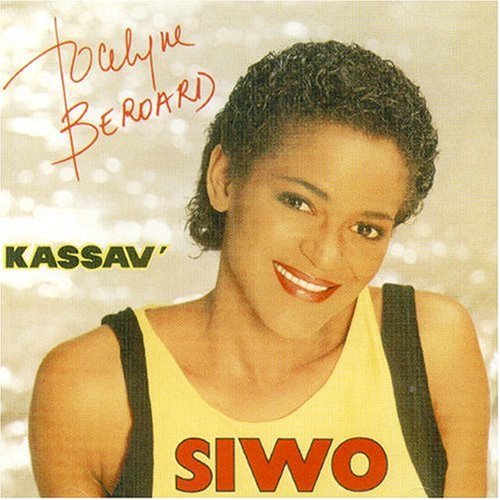
| 1986 | Double gold record for the album Siwo and the hit “Kolé séré” |
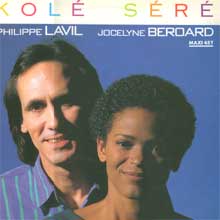
| 1988 | Duo with Philippe Lavil — cover of “Kolé séré”, 500,000 copies |
| 1999 | Knight of the Legion of Honour |
| 2009 | Concert at Stade de France: 65,000 spectators for Kassav’s 30th anniversary |
| 2014 | Officer of the Legion of Honour; autobiography Loin de l’amer |
| 2019 | Marriage with Jacob Desvarieux, co-founder and lifelong partner of Kassav' |
| 2020 | Officer of Arts and Letters |
Origins, inner revolutions: a child of Creole and silence
Jocelyne Raphaëlle Béroard grew up in the Petit Paradis neighbourhood of Schœlcher, Martinique, a local bourgeoisie concerned with distinction and education. Her mother taught English, her father practiced dentistry; French rigour permeated the home. But Creole existed only in the streets, as a language of insolence and laughter — one that no one dared to speak at the table. « Creole was spoken on the street. It was the language of swearing, a powerful language whose words, especially negative ones, immediately took on a stronger meaning », she would write in her autobiography, Loin de l’amer (Le Cherche Midi, 2022).
She was educated at the Cluny convent and then Lycée Annexe, earning a scientific baccalaureate at 17. Classical piano for seven years, swimming champion of Martinique and handball: no discipline left her indifferent. In 1972, she moved to Caen, where she enrolled in a pharmacy school. But it was in the lecture halls that her first revelation occurred: rubbing shoulders with African students opened her eyes to an africanity that the Martinican school had until then carefully ignored. « In the diaspora, I finally gained access to the rest of the world », she would confess years later.
The voice that invented zouk love: Kassav’, 40 years of explosion
In 1983, Jocelyne Béroard joined Kassav’. The group had existed since 1979. It had already laid the foundations of a new sound, emerging from Guadeloupean gwo ka and Martinican biguine, sung in Creole with an outrageous ambition: to conquer all of France. Jocelyne’s voice, immediately indispensable, embodied two faces of zouk: the sweetness of love ballads and the energy of party tracks. Pa bizwen palé, Mové jou, successes followed one another, driven by an electric sound unlike anything Paris had ever heard.
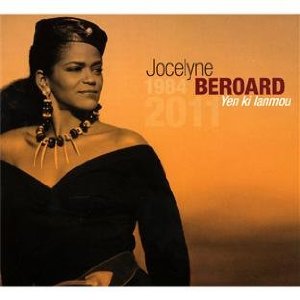
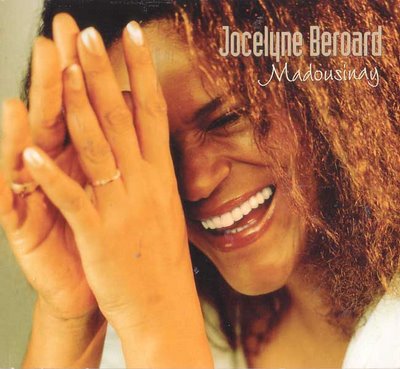
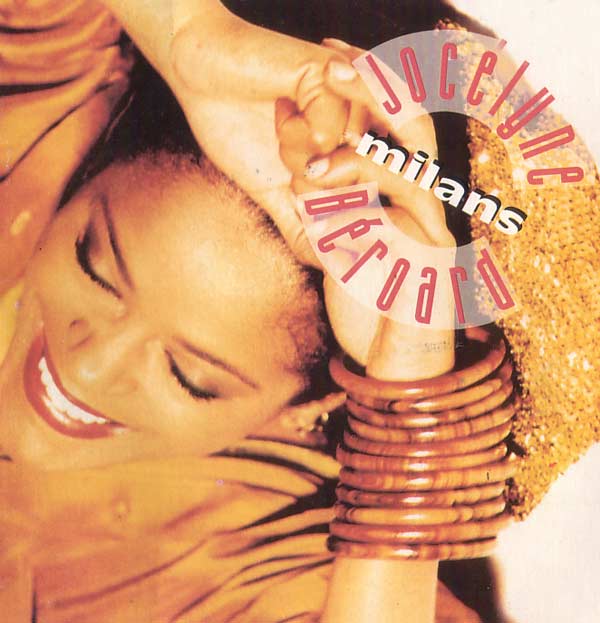
Her first solo album, Siwo, was released in 1986 and became the greatest discographic success ever achieved by a woman in the Caribbean: double gold record, certified in France. Milans (1991), produced by CBS, explored a more intimate writing; Madousinay (2004), signed EMI, blended zouk and jazz. In the meantime, the duo “Kolé séré” with Philippe Lavil (1986) — a reinvented cover of Kassav’s hit — infiltrated European speakers: 500,000 copies, a Creole phrase that became a generational hymn. Her musical sensibility asserted itself from the start — the zouk love she carried became the soundtrack of a generation. Forty years with Kassav’, more than 2,000 concerts in 84 countries, Stade de France in 2009 (65,000 spectators), Défense Arena in 2019, tours that swept across Africa, the USSR, Japan and Australia. In this group of exceptional longevity, Jocelyne Béroard eventually became its vocal signature. « Zouk became a means for many exiled islanders to endure life in France », she wrote. Zouk was not recognised by French media for its true worth: in 1985, « no TV spoke about our first Zénith, except a football show where we had a friend ».
Major works
| Work | Year | Why it is essential |
|---|---|---|
| Siwo | 1986 | First solo album, double gold record — greatest female discographic success in the Caribbean |
| “Kolé séré” (with Kassav') | 1984 | Foundational hit of zouk love, Creole phrase that became a generational hymn |
| “Kolé séré” (Lavil duo) | 1988 | Reinvented cover, 500,000 copies in Europe — entry of zouk into the hexagon |
| Milans | 1991 | Intimate exploration of zouk, signed CBS — artistic maturity in songwriting |
| Madousinay | 2004 | Zouk and jazz, signed EMI — moving return after a decade of absence |
Legacy and influence
Jocelyne Béroard was the first Caribbean woman to receive a gold record in France and, for many, the voice that opened the doors of zouk to the world’s ears. She is also the author of an uncompromising autobiography, where her relationship with her family history and the trauma of slavery finally finds its place. Officer of the Legion of Honour (2014) and Arts and Letters (2020), she remains a founding figure of Caribbean music and one of the few artists to have survived, on stage and in writing, the death of Jacob Desvarieux in 2021.
Sources and references
- « Jocelyne Béroard », Wikipedia in French, https://fr.wikipedia.org/wiki/Jocelyne_B%C3%A9roard, accessed on 4 November 2026.
- « Jocelyne Béroard », Wikipedia in English, https://en.wikipedia.org/wiki/Jocelyne_B%C3%A9roard, accessed on 4 November 2026.
- « Jocelyne Béroard: the iconic voice of Kassav’ and zouk », Inaya Zouk, https://www.inaya-zouk.com/jocelyne-beroard-biographie-kassav/, accessed on 4 November 2026.
- « Jocelyne Béroard », AZ Martinique, https://azmartinique.com/en/all-to-know/celebrities/jocelyne-beroard, accessed on 4 November 2026.
- « Kassav’s Jocelyne Béroard: 35 years of healing the world with zouk », RFI, https://www.rfi.fr/en/africa/20150301-kassavs-jocelyne-beroard-35-years-healing-world-zouk, accessed on 4 November 2026.
- « Jocelyne Béroard: Kassav, with its modernized traditional music, offered something unprecedented », Télérama, https://www.telerama.fr/musique/jocelyne-beroard-kassav-avec-sa-musique-traditionnelle-modernisee-proposait-quelque-chose-d-inedit-7011696.php, accessed on 4 November 2026.
- Jocelyne Béroard, Loin de l’amer, Le Cherche Midi, 2022.