Biography
Johnny Mbizo Dyani
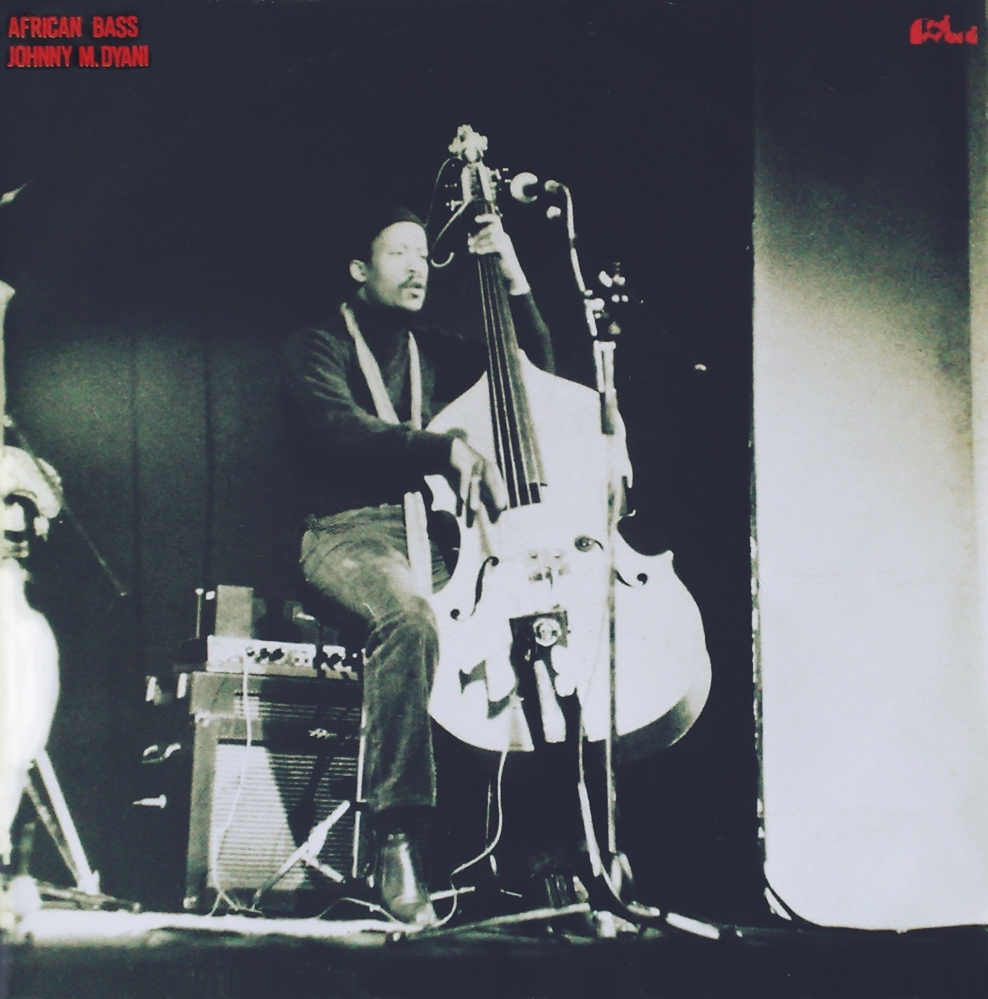
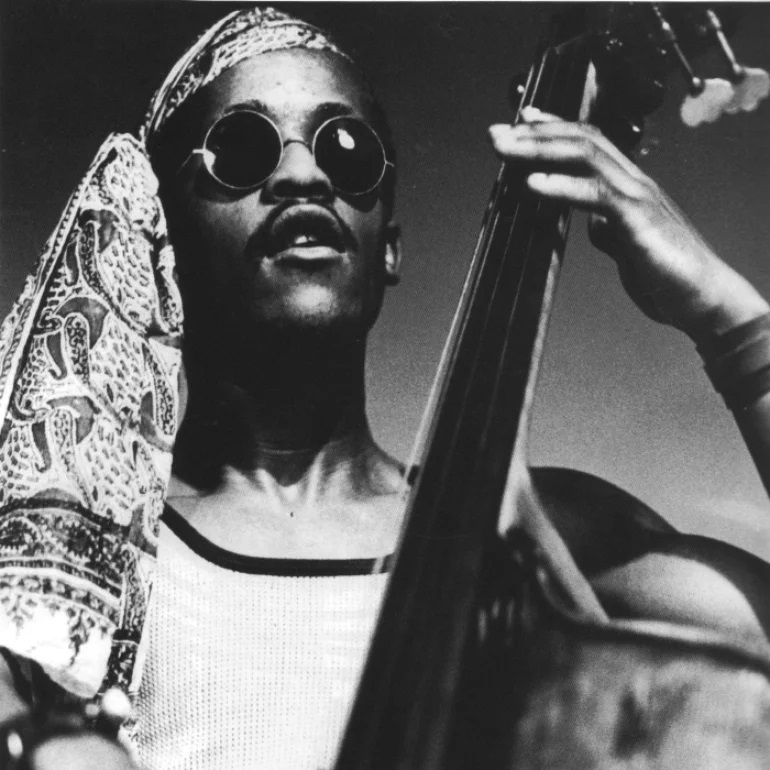
The concert hall empties. Johnny Mbizo Dyani puts away his double bass: he has just played “Wish You Sunshine”, a secular prayer where the lamentations of a community forced into silence resonate. Willisau, 1978. The South African exile artist transposes the rhythms of his Cape villages into flamboyant free jazz — a music born of tearing apart.
In brief
| Full name | Johnny Mbizo Dyani |
| Birth | 30 November 1945 (or 4 June 1947), Duncan Village, East London, South Africa |
| Death | 24 October 1986 (39 years), West Berlin, Germany |
| Field | Jazz — double bass, vocals, piano |
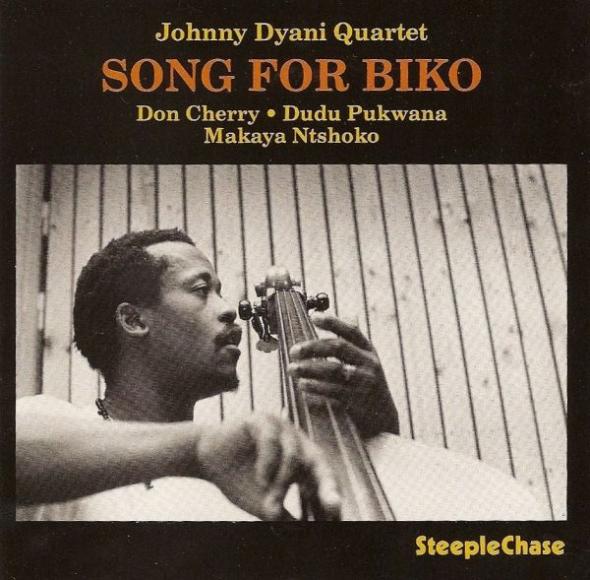
| Signature works | Good News from Africa, “Song for Biko”, Witchdoctor’s Son |
| Distinctions | Patron figure of South African jazz; posthumous tributes from Brötzmann, Dørge, David Murray |
Key dates
| Year | Event |
|---|---|
| 1945 (or 1947) | Birth in Duncan Village, East London, in the Eastern Cape province |
| 1962 | Joins the Blue Notes, first interracial jazz orchestra in South Africa |
| 1964 | Exile: the group flees apartheid and settles in Europe |
| 1966 | Tour of Argentina with Steve Lacy’s quartet, recording of The Forest and the Zoo |
| 1968–1971 | Collaboration with Don Cherry; residency at Dartmouth College (United States) |
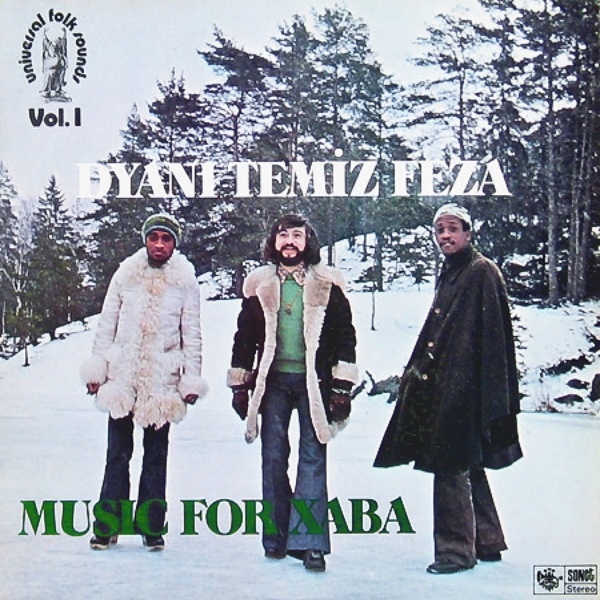
| 1972 | Co-founding of the trio Xaba with Mongezi Feza and Okay Temiz |
| 1973–1978 | Prolific period: Good News from Africa with Abdullah Ibrahim, albums on SteepleChase |
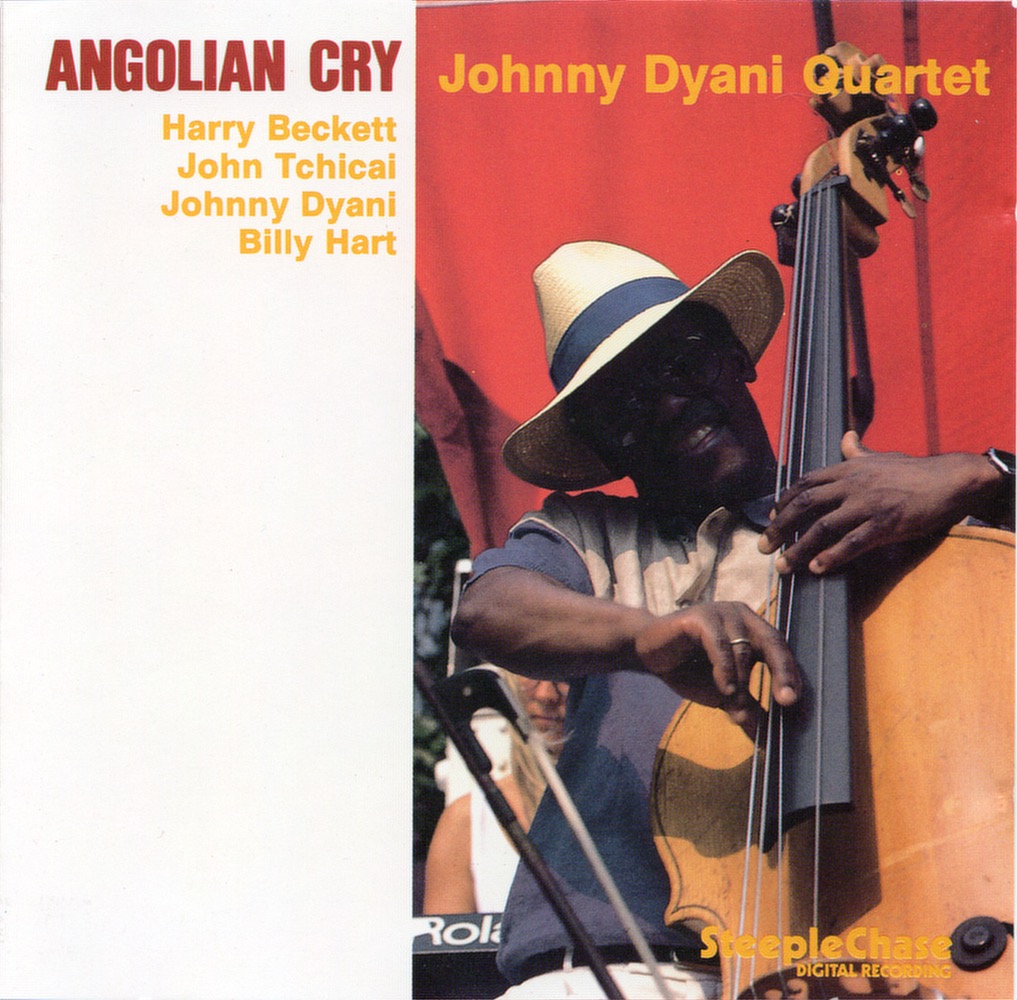
| 1983 | Recording of Angolian Cry (SteepleChase) in Denmark |
| 1986 | Death in West Berlin, ten days after collapsing on stage |
Origins and the art of uprooting
Johnny Mbizo Dyani grew up in Duncan Village, an East London township bathed in the sounds of Methodist churches and kwela, that South African dance jazz played on makeshift accordions. His first instrument was a second-hand piano; at eleven, he joined Tete Mbambisa’s vocal group. It was through contact with Mbambisa that Dyani discovered the double bass, which he chose at thirteen as his main instrument while retaining piano and vocals.
In 1962, Chris McGregor founded the Blue Notes, an integrationist jazz orchestra in a country that separated everything by law. With alto saxophonist Dudu Pukwana, trumpeter Mongezi Feza, and drummer Louis Moholo, Dyani forged a sound that blended American bop with the grooves of South African townships. In 1964, the Publications and Spectacles Act banned integrated groups. The group went into exile in Europe, abandoning family and reference points — the decision was made after an invitation to the Antibes Jazz Festival: they would not return. In cold Scandinavia, they stood guard in cafes and nightclubs.
Revelation and voice of exile
Once settled in London, at the famous Ronnie Scott’s, Dyani set himself free. He was no longer content to ensure the rhythm section: he invented a double bass style where every note bore the weight of the continent he had fled. Steve Lacy invited him to join his quartet and, in 1966, the group recorded The Forest and the Zoo in Argentina — an album where Dyani definitively abandoned the harmonic constraints of bop to explore visceral free jazz, a tense conversation between saxophone and double bass that howls the colors of a lost world.
In Europe, his trajectory accelerated. He played with John Stevens, Evan Parker, Peter Brötzmann, and Enrico Rava. He settled in Denmark in the 1970s, then joined Don Cherry from 1969 to 1971. In the dead of winter, he resided at Dartmouth College in New Hampshire, where he listened to the American free jazz scene and judged: “In Europe they admire Americans but they copy us — everything comes from Africa, and South African musicians are not strong enough in themselves.” (translated from English)
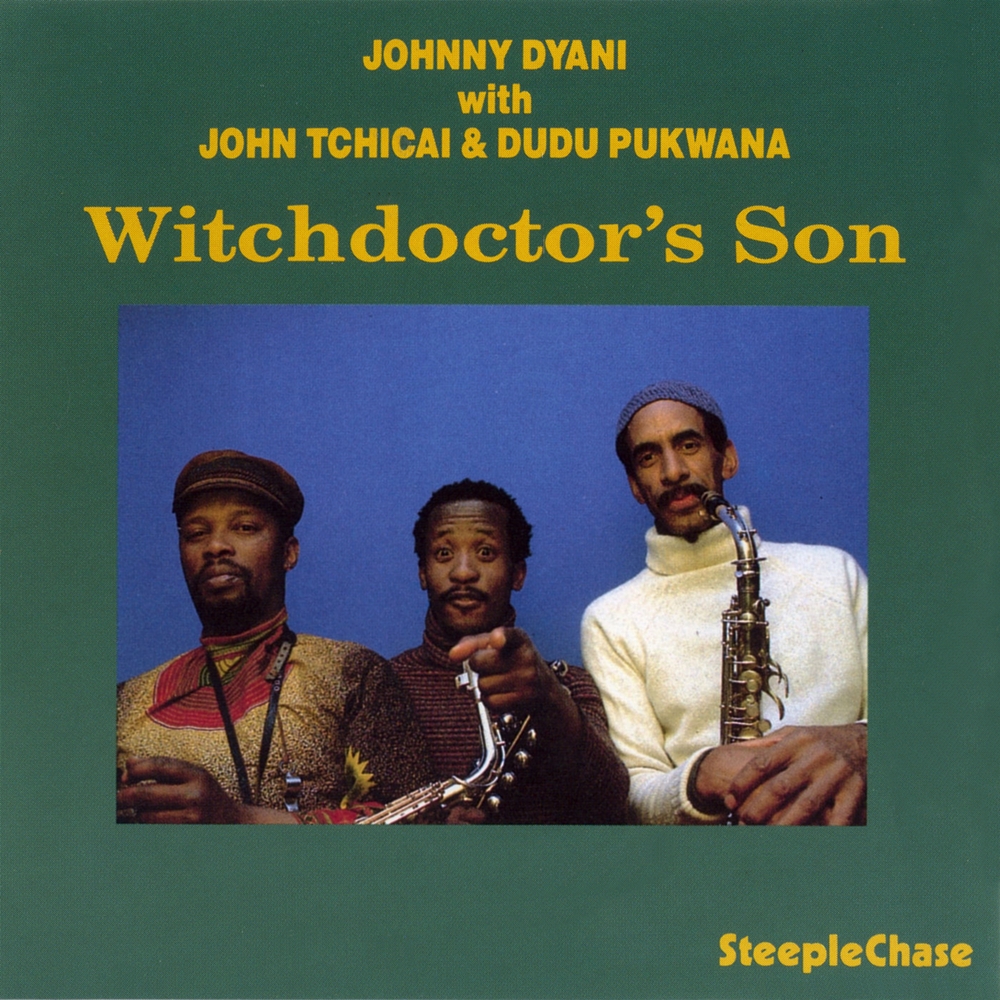
The Blue Notes composer systematically returned to African sources, and not to Western jazz. His friend Pallo Jordan described him as “a man who worked for Africa” (translated from English). This conviction nourished Xaba, a trio founded in 1972 with Mongezi Feza — his lifelong companion, alas deceased in 1975 — and Turkish percussionist Okay Temiz. Music for Xaba (1972) and the epic Witchdoctor’s Son (1978, SteepleChase) are summits where free jazz meets Zulu and Khoisan polyrhythms.
Major works
| Work | Year | Why it is essential |
|---|---|---|
| The Forest and the Zoo (with Steve Lacy) | 1967 | The turning point: Dyani frees the double bass from bop, inaugurates South African free jazz |
| Good News from Africa (with Abdullah Ibrahim) | 1973 | The shock: jazz and African heritages fuse under the gaze of Ibrahim’s piano |
| Witchdoctor’s Son (SteepleChase) | 1978 | Masterpiece: Tchicai, Dyani, Pukwana, and Tchicai compose a Zulu epic in the form of redemption |
| Angolian Cry (SteepleChase) | 1985 | Last jewel: a hymn to African dignity, recorded in Denmark |
Legacy and influence
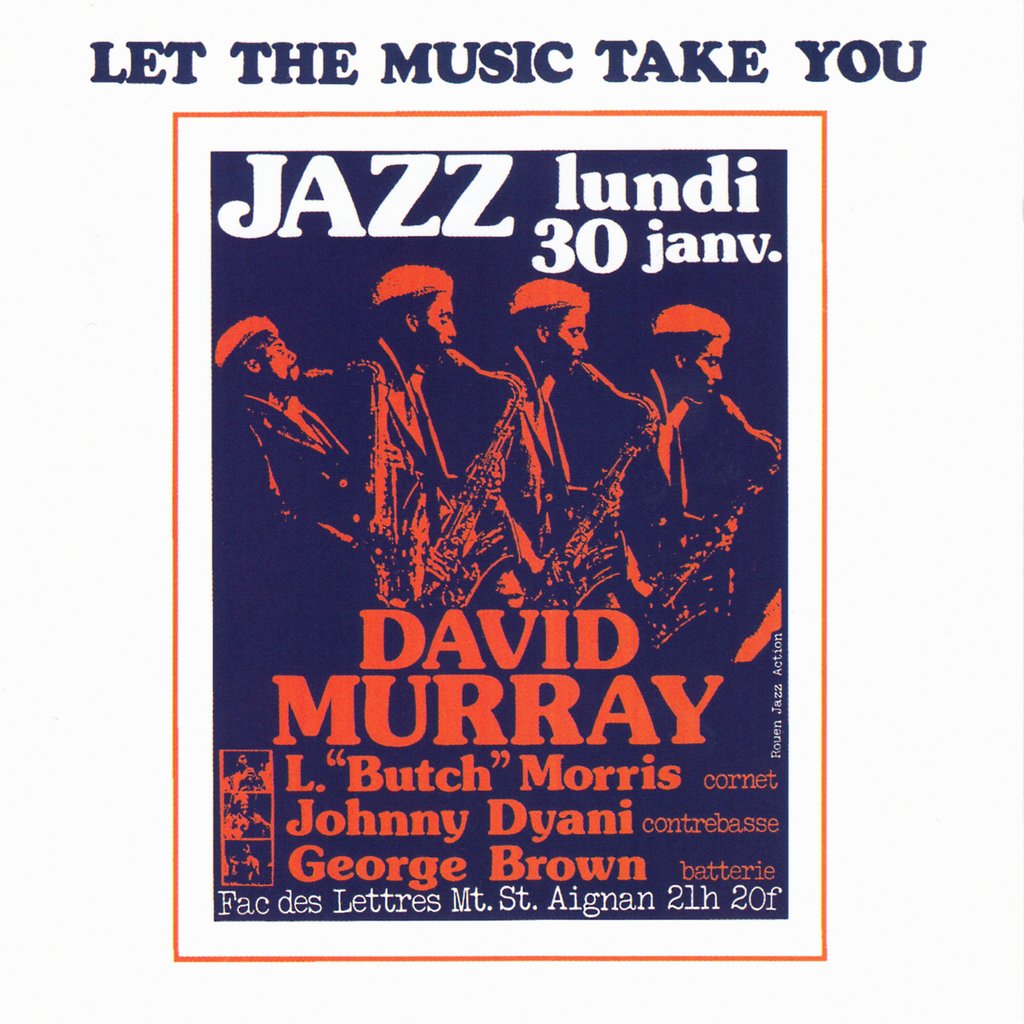
Johnny Dyani died in West Berlin, in October 1986. South African jazz lost one of its greatest faces — he who had refused to forget the land he no longer had. Peter Brötzmann dedicated the album Fuck de Boere (1970) to him, Pierre Dørge recorded Johnny Lives with the New Jungle Orchestra, David Murray composed “Mbizo” on Southern Bells, and the surviving Blue Notes reunited for the tribute album Blue Notes for Johnny.
Today, the reissue of his solo at the Willisau festival in 1978 — published by Sing a Song Fighter in 2018 — allows new generations to hear a musician who transformed exile into a musical creature. As Pallo Jordan wrote in Rixaka (1988): “Above all, his music resonated with a joy in life.” (translated from English).
Sources and references
- Brandon Norman, « Biography of Johnny ‘Mbizo’ Dyani », South African History Online, https://sahistory.org.za/article/biography-johnny-mbizo-dyani-brandon-norman, accessed 7 November 2025.
- Nombuso Mathibela, « Home is the space », Africa Is a Country, https://africasacountry.com/2020/04/home-is-the-space, accessed 7 November 2025.
- « Johnny Dyani », Wikipedia, https://en.wikipedia.org/wiki/Johnny_Dyani, accessed 7 November 2025.
- Michael Tucker, « Johnny M. Dyani : African Bass », Jazz Journal, https://jazzjournal.co.uk/2024/06/09/johnny-m-dyani-african-bass/, accessed 7 November 2025.
- Francesco Martinelli, « Johnny Dyani — Biography », AllMusic, https://allmusic.com/artist/johnny-dyani-mn0000952987, accessed 7 November 2025.
- « Remembering the Blue Notes: South Africa’s first generation of free jazz », The Conversation, https://theconversation.com/remembering-the-blue-notes-south-africas-first-generation-of-free-jazz-83824, accessed 7 November 2025.
- Pallo Jordan (1988), « Johnny Dyani: a Portrait », Rixaka, no 4, pp. 4–8 (cited in SA History Online).