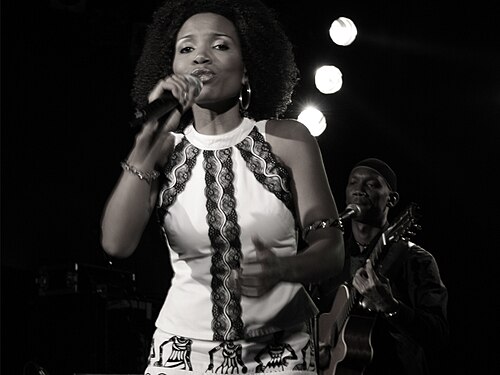
Biography
Lura
In Lisbon, in a dance studio where she was taking classes with the Santomean singer Juka, Lura was not destined for the stage. A sports education student, specialized in swimming, she was preparing for a future made of pools and podiums1. Then Juka proposed that she sing in a duo on his album. She was seventeen years old. That evening, an entire musical genre changed registers.
In brief
| Full name | Maria de Lurdes Assunção Pina |
| Birth | July 31, 1975, Lisbon, Portugal |
| Origin | Father from Santiago, mother from Santo Antão |
| Genre | Morna, funaná, batuque and world music |
| Notable works | Di Korpu Ku Alma, Herança, Multicolor |
| Awards | Victoires de la Musique 2006, BBC World Music Awards, Cabo Verde Music Awards 2013 |
Key dates
| Year | Event |
|---|---|
| 1975 | Birth in Lisbon of Maria de Lurdes Assunção Pina, daughter of Cape Verdean parents |
| 1992 | Debut on stage at 17 in a duo with Juka |
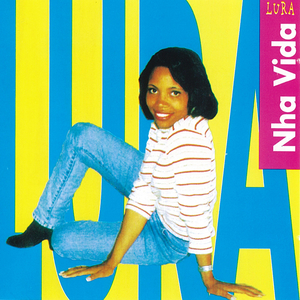
| 1996 | Release of first album Nha Vida, produced by Zé Afonso |
| 1997 | Participation in the compilation Red Hot + Lisbon (AIDS cause) |
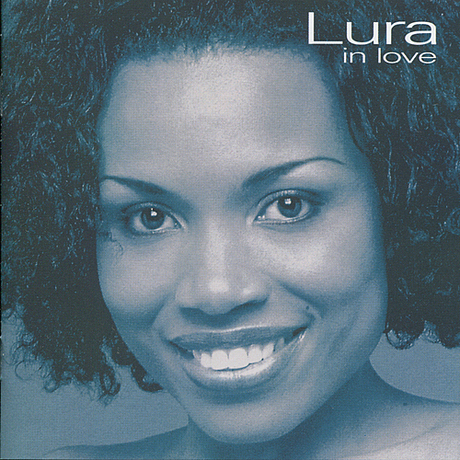
| 2002 | Second album In Love, first collaboration with label Lusafrica |
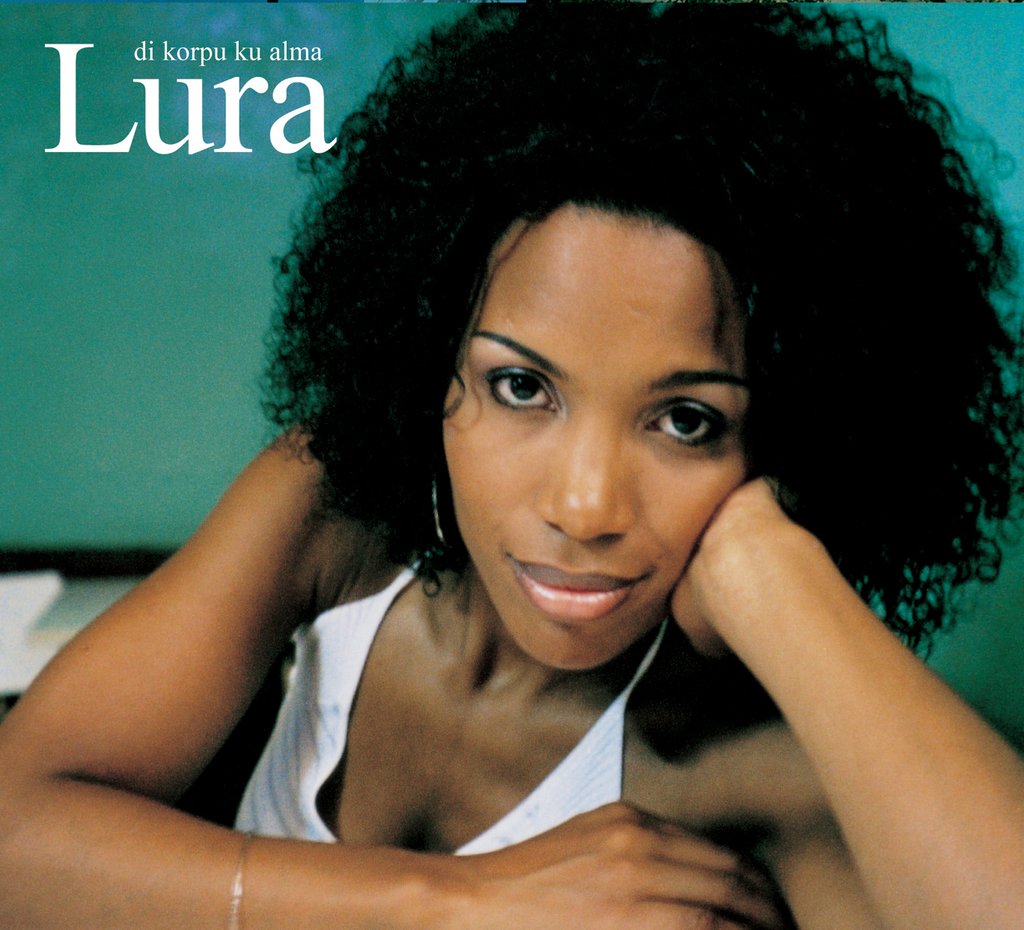
| 2004 | Di Korpu Ku Alma, the album that revealed her internationally |
| 2005 | Nominations for BBC World Music Awards and Victoires de la Musique |
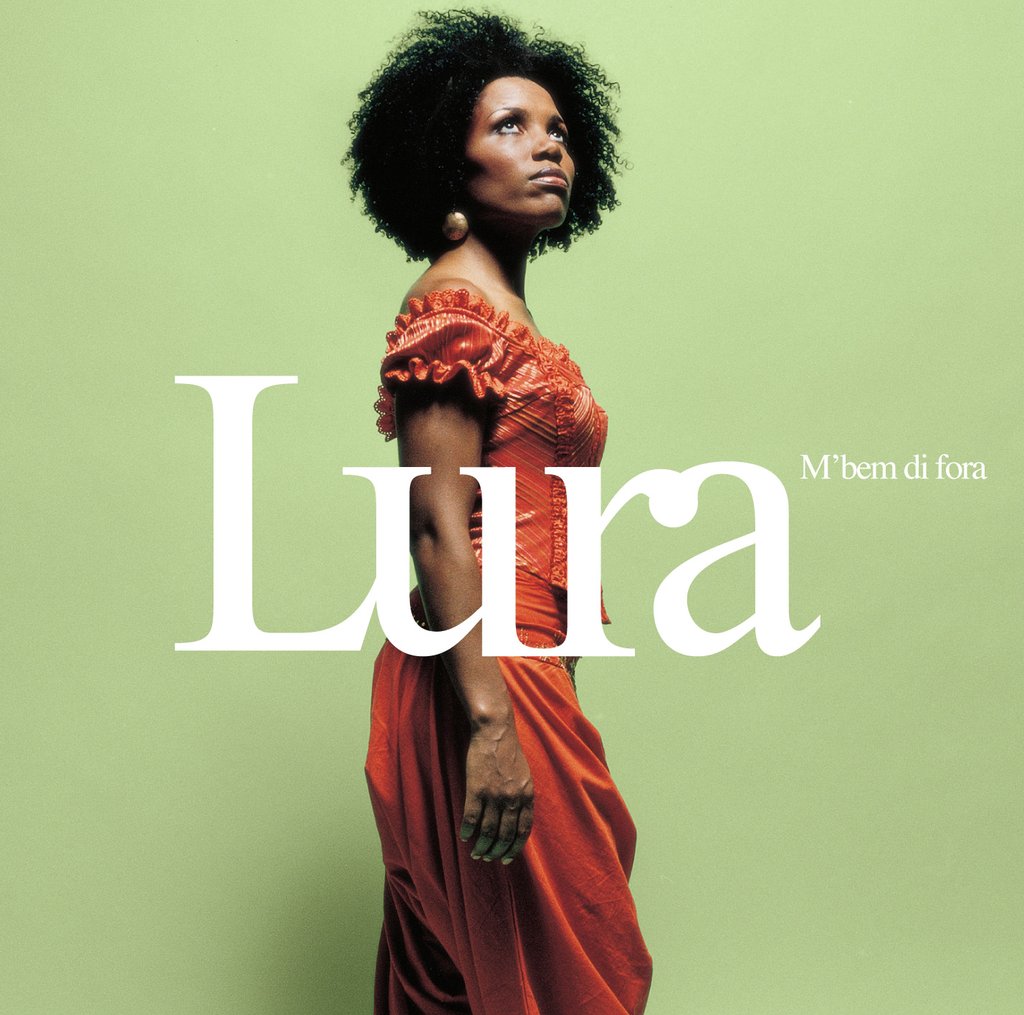
| 2006 | M’bem di fora, world tours and appearance at Lisbon’s Tivoli Theatre |
| 2007 | Appearance in Carlos Saura’s film Fados |
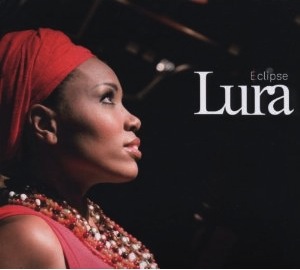
| 2009 | Eclipse, American distribution by Four Quarters Entertainment |
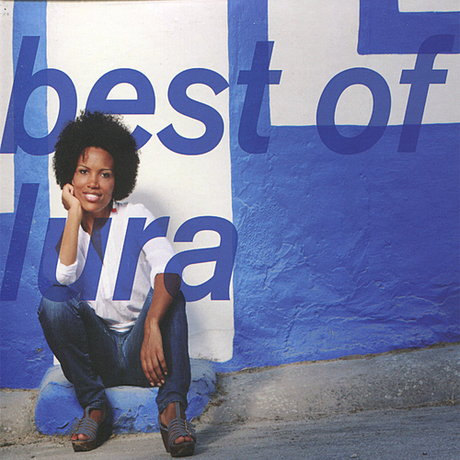
| 2010 | The Best of Lura and duo with Cesária Évora, Moda Bô |
| 2013 | Best Live Artist Award at the Cabo Verde Music Awards |
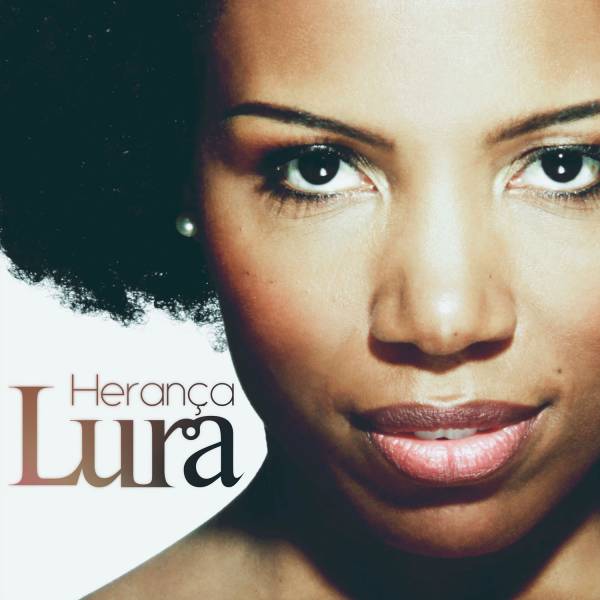
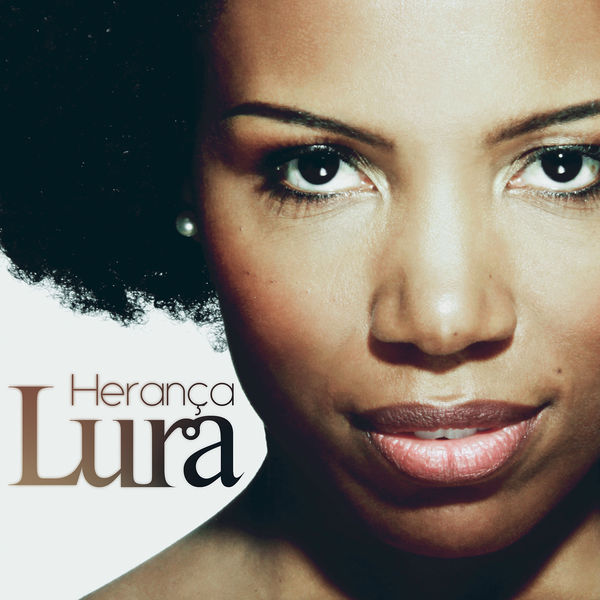
| 2015 | Herança, album dedicated to funaná, a rhythm once banned |
| 2018 | Alguem Di Alguem; performance at the Festival Sakifo in Réunion |
| 2023 | Multicolor, reflection on her European and Cape Verdean cultural heritage |
From modest origins to international recognition
Born in Lisbon in 1975, the same year as Cape Verde’s independence, Lura was raised by a father from the island of Santiago and a mother from Santo Antão. In the large Cape Verdean community in the Portuguese capital, her family had no artistic background2. Her father listened to morna — that slow, melancholic song that expresses Cape Verdean saudade, that mixture of nostalgia and distress in the face of exile — and it was through this that the teenager discovered her adopted land. But she wanted something else. First dance, then swimming, then the studio. It was Juka who convinced her that she had a “deep and powerful” voice.
After her first commercial album in 1996, Nha Vida, Lura gained momentum. Her duets with Bonga on Mulemba Xangola in 2001, followed by her signing with Lusafrica, the emblematic label of Lusophone African music, opened a new chapter. In 2002, In Love marked her first steps with the label, before Di Korpu Ku Alma (Of body and soul) in 2004 established her genius3. The album, propelled by the track Na Ri Na, sold over a million copies and ranked among the best summer sellers in Italy. Critic José Eduardo Agualusa then wrote: “The future of Cape Verdean music already has a name, and that name is Lura”.
A legacy that transcends borders
After M’bem di fora (2006) and Eclipse (2009), Lura did not intend to limit herself to the repertoire of her predecessor and compatriot, the famous Cesária Évora4. In 2010, she recorded Moda Bô with the Barefoot Diva herself — a duo that will remain unique. When Cesária died in December 2011, Lura paid tribute to her with Nós Diva.
With Herança (Heritage) in 2015, she delved into funaná, that frenetic rhythm based on accordion and percussion, once considered too popular and banned by Cape Verdean authorities. Lura made it popular on stages around the world, including in Réunion, where she performed at the Festival Sakifo in 2018. In 2023, Multicolor reflected an identity at a crossroads: a voice from the diaspora, rooted in island traditions, open to African, Brazilian and European worlds1.
Major works
| Work | Year | Why it is essential |
|---|---|---|
| Nha Vida | 1996 | First album: a teenager singing her life and conquering Lisbon |
| Di Korpu Ku Alma | 2004 | The album that revealed Lura to the world and earned two major nominations |
| M’bem di fora | 2006 | World tours and public consecration |
| Herança | 2015 | Return to roots and rebirth of funaná on the international stage |
| Multicolor | 2023 | Career summary: blending, freedom and cultural diversity |
Legacy
Lura brought Cape Verdean music beyond the Lusophone community. Her deep, sensual voice, capable of moving from dancing funaná to the most painful morna, made her the figure of a generation that did not renounce its roots5. Victoires de la Musique 2006, BBC World Music Awards, Cabo Verde Music Awards, tours from Australia to Brazil, collaborations with Angelique Kidjo and Bonga, Lura’s career is that of an artist who managed to transform a lucky discovery into a global career, never betraying the music of her islands.
Sources and references
-
Lusafrica, Our Artists — Lura, accessed November 1, 2026 ↩︎ ↩︎
-
Cabo Verde & a Música, Lura, by GN, March 13, 2021, accessed November 1, 2026 ↩︎
-
The Independent, Lura: Voice of the islands, accessed November 1, 2026 ↩︎
-
Putumayo, Lura (Cabo Verde / Portugal), May 9, 2024, accessed November 1, 2026 ↩︎
-
MN2S, Lura, booking agency, accessed November 1, 2026 ↩︎