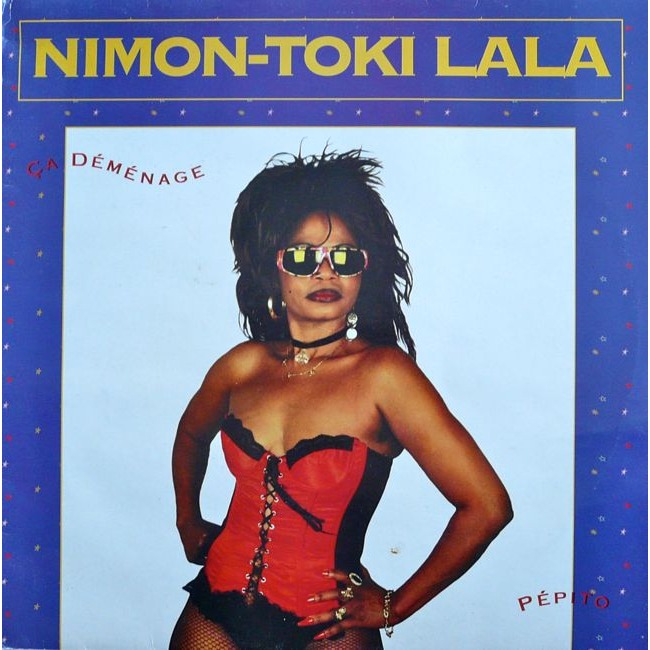
Biography
Nimon Toki Lala: the voice of Togolese soukous
On stage, Nimon Toki Lala transforms hardship into light. Born in 1955 in Kara, a small town in northern Togo, she remains one of the most striking female figures in Togolese music. Her journey, forged in precariousness and dignity, illustrates the fate of these pioneering artists who exported Togolese music to Europe’s and Africa’s biggest stages1.
In brief
| Full name | Pyalo Lala Nimon Toki |
| Birth | 1955, Kara, Togo |
| Activities | Singer, dancer |
| Genre | Soukous, Congolese rumba, Togolese sounds |
| Notable works | “La paille et la poutre”, “Banina”, Consécration, Ayele |
| Awards | RFI Prix Découvertes (1982) |
Key dates
| Year | Event |
|---|---|
| 1955 | Birth in Kara (northern Togo), eldest of a sibling group |
| Late 1970s | Start of professional career in Lomé |
| 1978 | Selected by Yta Jourias as a dancer for a European tour; move to France |
| 1982 | Won RFI Prix Découvertes; triumph at Bourget, at the Geneva festival |
| 1999-2013 | Release of Consécration, first full-length album (11 tracks) |
| 2008 | Career pause following illness and death of her mother |
| 2021-2022 | Return with singles “Tu partiras sans rien”, “M’bou Bilaba” and “Seigneur Jésus” |
Origins: a life of resistance
Born in 1955 in the city of Kara, northern Togo, Nimon Toki Lala — whose real name is Pyalo Lala Nimon Toki — grew up in extremely modest conditions. At her birth, her mother had only two wrappers: one covered her body, the other served as a mat. In fourth grade, she became pregnant and fled Kara to give birth to her cousin in Lomé. It was there, far from her family, that her talent as a singer and dancer awakened1.
The revelation: RFI Prix Découvertes
Her life turned upside down one Saturday afternoon. In a Parisian nightclub, she was told to submit her application for the Radio France Internationale Prix Découvertes. On Sunday, she worked with guitarist Toto Guillaume and composed four tracks. On Monday, she submitted “Banina”, “La paille et la poutre” and two other songs. The result arrived: she had won. Under RFI’s umbrella, she played Europe’s biggest stages. « Everything I am today, I owe to RFI and no one else », she would say. Her style is characterized by soukous — that fast rhythm born from Congolese rumba, carried by interlaced guitars and a dancing bass2. She blends these influences with the sound of her Togolese terroir, creating a bridge between two shores of Africa.
A pioneer of Togolese soukous
Nimon Toki Lala is among those women who shaped the musical identity of Togo. Carlos Danklou, director of All That Production studio, cites her alongside Bella Bellow, Afia Mala, Fifi Rafiatou and Yta Jouria: « These ladies gave an identity to Togolese music. They exported it internationally ». She collaborated with soukous giants: Sam Mangwana, Aurlus Mabélé and Awilo Longomba. Her album Consécration, released in 2013 under Jimmy’s Production label, gathers ten tracks and these prestigious collaborations. Songs like “La paille et la poutre” or “Banina” marked an entire generation of Togolese. For three years, between 2006 and 2009, she withdrew from the stage, on stand-by, following her mother’s illness and death in 2008. The return did not take long to come. In 2021, she returned with “Tu partiras sans rien” and “M’bou Bilaba”, followed in 2022 by “Seigneur Jésus”. At the dawn of her seventies, she continues to inspire young Togolese musicians3.
Major works
| Work | Year | Why it’s essential |
|---|---|---|
| “La paille et la poutre” | 1982 | First famous track, composed for the RFI Prix Découvertes, anthem of a generation |
| “Banina” | 1982 | Second track submitted for the RFI competition, classic of Togolese soukous |
| Consécration | 2013 | First full-length album (11 tracks), collaborations with Aurlus Mabélé, Awilo Longomba, Jimmy Papy Ramazani |
| Ayele | 1992 | Single that became a continental hit, propelled her popularity across Africa |
Legacy
Nimon Toki Lala embodies artistic resilience. From the little girl of Kara sleeping on a wrapper to the name that resonates from Bourget to Kinshasa, her journey is not just hers: it’s that of all those women who, without resources, paved the way for Togolese music on the world stage1. Her voice, between frenzied soukous and spirituality, continues to carry the two worlds that made her: northern Togo and Paris, the land of origin and the land of emigration.
Sources and references
-
Paul Amegbo, Music/Anniversary: Nimon Toki Lala celebrates 30 years of career, La Première Agence de Presse Privée au Togo, March 10, 2012, accessed October 30, 2026 ↩︎ ↩︎ ↩︎
-
Discogs, Nimon Toki Lala, artist profile, accessed October 30, 2026 ↩︎
-
Emmanuel Atcha, Women in the music industry in Togo, Music In Africa, October 20, 2016, accessed October 30, 2026 ↩︎