Biography
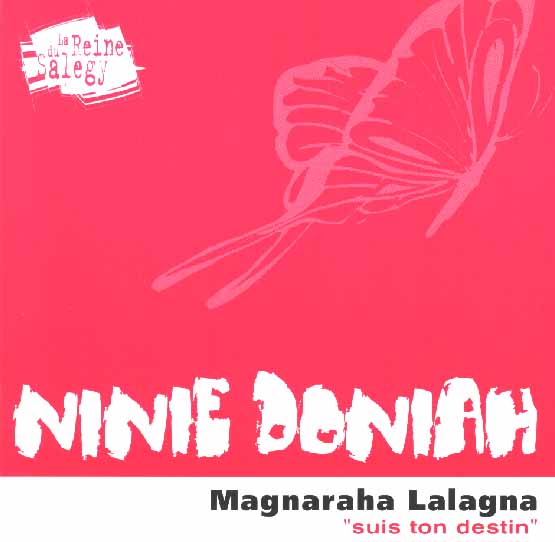
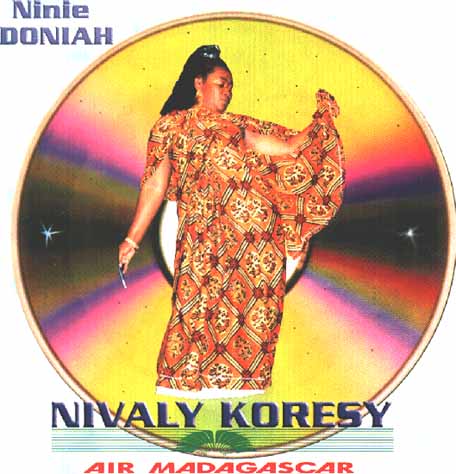
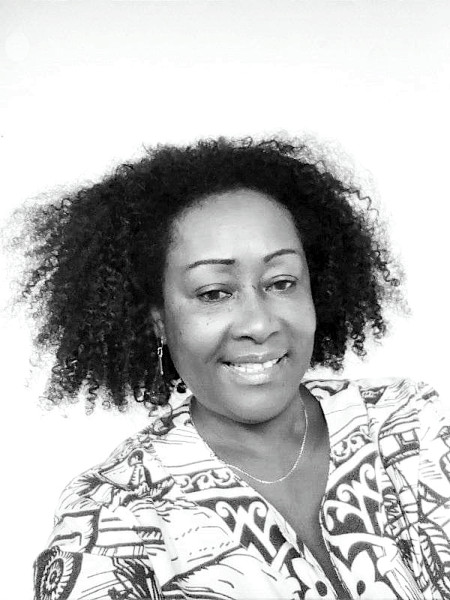
Ninie Doniah, Queen of Salegy
Nosy Be, November 2023. On the road between Île aux Parfums and Diego-Suarez, an ambulance moves through the rain. Inside, a 56-year-old woman grits her teeth: her pancreatic cancer is too advanced, and the prison of Île aux Parfums has already weakened her enough. These are the final minutes of Ninie Doniah, known as the “Queen of Salegy”. In the hours that follow, all of Madagascar mourns an artist who imposed salegy as the country’s identity music and transformed a historically male genre into a feminist echo chamber.
In Brief
| Stage Name | Ninie Doniah |
| Birth Name | Virginie Bezara (Eliane Virginie) |
| Birth | 1966/1967, Hell-Ville (Nosy Be), Madagascar |
| Death | 19 November 2023 (56 years old), near Ambilobe, Madagascar |
| Genre | Salegy — a breathless six-eight rhythm born in northern Madagascar in the 1950s |
| Instrument | Voice |
| Notable Works | “Malilo”, “Soma Salegy”, Tsara Olobe |
| Awards | Woman of the Year 2000, Kora Awards 2001 (Best African Artist), National Order of the Legion of Honour |
Key Dates
| Year | Event |
|---|---|
| 1966/1967 | Birth of Virginie Bezara in Hell-Ville, Nosy Be |
| ~1990 | Musical debut; inheritance from her grandmother, a traditional singer |
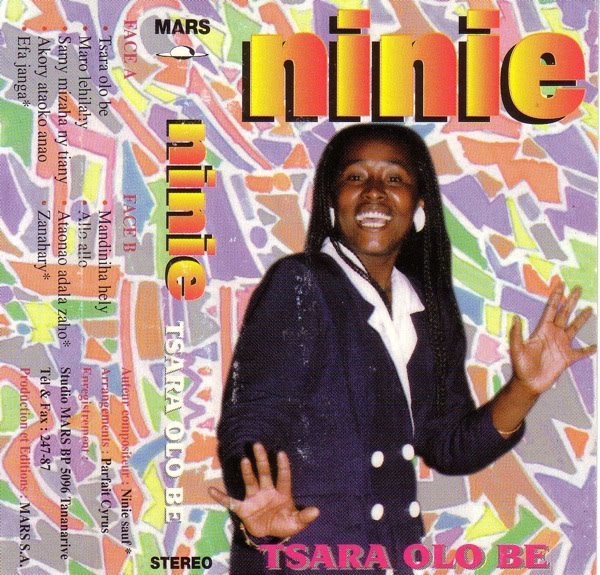
| 1995 | Release of Tsara Olobe, a landmark album |
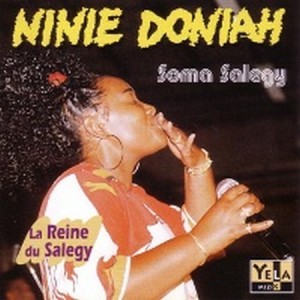
| 1999 | Coronation; nicknamed “Queen of Salegy” in mirror of Jaojoby |
| 2000 | “Woman of the Year” award for her feminist lyrics |
| 2001 | Best African Artist award at the Kora Awards |
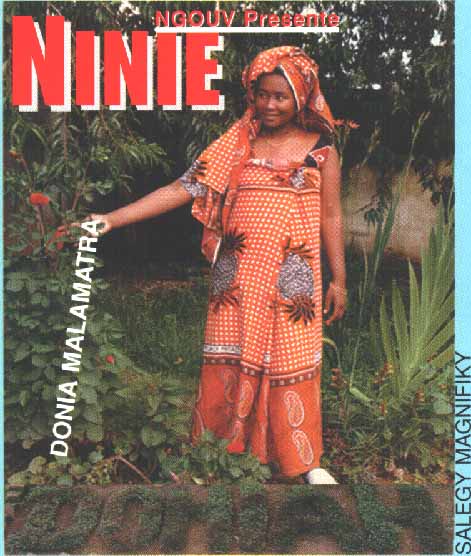
| ~2005 | Release of Donia Malamatra and Ngoma Lelahy |
| 2011 | Release of the album Mitapolaka (Studio ProRossy) |
| 2013 | Recognition by the French Republic; presence at WOMEX |
| 2021 | Arrest and imprisonment for “public order disturbances” in Nosy Be |
| 19 Nov. 2023 | Death during medical evacuation, at 56 years old |
Origins and First Steps in Salegy
Virginie Bezara was born around 1966-1967 in Hell-Ville, on the island of Nosy Be. Her family was deeply musical: her grandmother had the reputation of being a top-tier singer in the jijy vako-drazana antakarana, a traditional form of the Antakarana communities in the north. From childhood, Virginie learned that singing was a vocation, not a hobby.
By the end of the 1980s, when the first electric recordings of salegy circulated from Antsiranana, she seized this new sound from the north coast. Salegy — a breathless six-eight rhythm that marries accordion, electric bass, and rombo, the hand claps of dancers — gave her a language to express her island pride.
A Revelation: The Queen of Salegy
From her first albums in the mid-1990s — Tsara Olobe in 1995, followed by Donia Malamatra and Ngoma Lelahy — Ninie Doniah’s voice imposed a unique style in salegy, a universe where men dominated both the stage and the studios. She entered it forcefully, with verve and lyrics that disrupted habits. In 1999, her artistic stature was so marked that the press and public crowned her “Queen of Salegy”, in mirror of Jaojoby, the “King” of the genre.
The Commitment: Feminism and Land
What distinguishes Ninie Doniah are her lyrics. From the start, she sang women’s emancipation, their right to work and to no longer be content with a domestic role. “This did not mean women should be considered less, valued less, and less valiant,” summarized her friend Cerveau Kotoson, art and culture professor at the University of Diego-Suarez, later. “She was also in this perspective of telling women that at some point, one must know how to say no,” he added.
Her commitment earned her distinctions and enmities: the “Woman of the Year” award in 2000, the Kora Awards 2001, and international tours in Switzerland, the Seychelles, Mayotte, and France.
In the early 2020s, Ninie directed her struggle toward a precise cause: the land grabbing of Nosy Be by the sugar company Sirama. She organized demonstrations, carried the peasants’ grievances against expropriation. On February 22, 2021, police intercepted her along with several other activists. Sentenced to nineteen months in prison for “threat to state security” and “public order disturbance”, her health would decline rapidly behind bars.
Major Works
| Work | Year | Why It Is Essential |
|---|---|---|
| Tsara Olobe | 1995 | Landmark album; establishes her signature feminist lyricism in salegy |
| “Malilo” | ~1999 | National hit that became an anthem of emancipation and resilience |
| Donia Malamatra | ~2005 | Affirmation of an artist secure in her message after national success |
| Mitapolaka | 2011 | Last documented album; 12 tracks blending commitment and dance |
| “Soma Salegy” | ~2001 | Festive anthem introducing the genre to the new generation |
Legacy and Influence
Ninie Doniah proved that women can dominate salegy, not by imitating men but by writing their own language. More than two years after her death, her memory continues to irrigate the Malagasy musical field: young artists like Vaiavy Chila or Tence Mena take up her themes of emancipation, and the independent scene of Nosy Be maintains her memory as a banner. Her albums, available on digital platforms, reveal to a new generation an artist who always insisted: “Bet on talent, not on beatings.”
Sources and References
- “Ninie Doniah”, Wikipedia, https://en.wikipedia.org/wiki/Ninie_Doniah, accessed November 12, 2025.
- Sarah Tétaud, « Madagascar: the singer Ninie Doniah dies at the age of 56 », RFI, 20 November 2023, https://www.rfi.fr/fr/afrique/20231120-madagascar-la-chanteuse-ninie-doniah-est-morte-%C3%A0-l-%C3%A2ge-de-56-ans, accessed 12 November 2025.
- CISAO-Unito, « SALEGY IN MADAGASCAR: between musical tradition and activism », 17 September 2025, https://www.cisao.org/fr/salegy-a-madagascar-entre-tradition-musicale-et-activisme/, accessed 12 November 2025.
- « Ninie Doniah: the queen of salegy bids farewell », Newsmada, 20 November 2023, https://newsmada.com/2023/11/20/ninie-doniah-la-reine-du-salegy-tire-sa-reverence/, accessed 12 November 2025.
- « Ninie Doniah – The unique queen of salegy! », Gasigasy, 19 November 2023, https://www.gasigasy.mg/culture/ninie-doniah-lunique-reine-du-salegy/, accessed 12 November 2025.
- « The Songs of Malagasy Women: Their Side of the Story », Afropop Worldwide, 20 March 2025, https://www.afropop.org/articles/women-of-malagasy-music-2, accessed 12 November 2025.
- « Ninie Doniah », Discogs, https://www.discogs.com/artist/3951315-Ninie-Doniah, accessed 12 November 2025.
- « Ninie Doniah », MusicBrainz, https://musicbrainz.org/artist/bf965460-c91c-477c-99b0-19e6feb8fa04, accessed 12 November 2025.