Biography
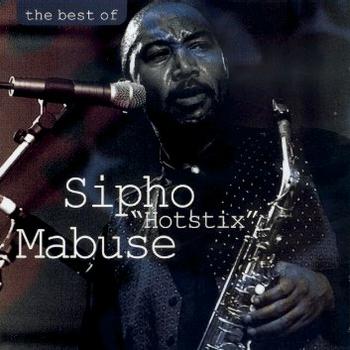
Sipho Mabuse: The drummer who made South Africa dance
At the dawn of the Orlando West township, an eight-year-old child beat on pots and plastic drums, inventing rhythms that would shake concert halls across a continent. Fifty years later, this Soweto drummer — who became a multi-instrumentalist, composer, producer and cultural resistance figure — remains a pillar of South African music. Sipho « Hotstix » Mabuse did not just shape the sound of township pop; he showed that one can be an artist and continue to learn at sixty.
In brief
| Full name | Sipho Cecil Peter Mabuse |
| Birth | 2 November 1951, Soweto, Johannesburg, South Africa |
| Genre | Afro-pop, township soul, South African jazz |
| Instruments | Drums, saxophone, flute, piano, kalimba, timbales |
| Signature works | “Burn Out”, “Jive Soweto”, Chant of the Marching |
| Honours | SAM Award Lifetime Achievement (2005), Order of Ikhamanga, Silver (2018) |
Key dates
| Year | Event |
|---|---|
| 1951 | Born in Masakeng, Orlando West, Soweto |
| 1966 | Leaves school at sixteen for music |
| 1974 | Forms The Beaters, a group inspired by the Beatles |
| 1975 | Group renames itself Harari after a tour in Zimbabwe |
| 1976 | Voted best instrumental group in South Africa |
| 1982 | Harari splits up; launch of solo career |
| 1984 | “Burn Out”, a hit selling 500,000 copies |
| 1986 | “Jive Soweto”, a disco-shangaan anthem |
| 1989 | “Chant of the Marching”, a memorial to the Soweto uprising |
| 2012 | Obtains his matric at sixty years old |
| 2018 | Receives the Silver Order of Ikhamanga for his contribution to music |
From Soweto to the world stage: music, consciousness and solo work
Sipho Mabuse was born on 2 November 1951 in the Masakeng township, in Orlando West, at the heart of Soweto. His mother is Zulu, his father Tswana. Young Sipho learns drums at the age of eight. Nicknamed « Hotstix », he drops out of school at sixteen to form The Beaters with Selby Ntuli and Alec Khaoli, in homage to the Beatles. The group strings together performances and attracts money. The 1975 tour in Zimbabwe changes everything. In a country at war for its independence, young South Africans discover mixed audiences. « At Harari, we rediscovered our Africanity », Mabuse recounts. The group, which had changed its name — Harari — dons dashikis, draws inspiration from the Black Conscious Movement and records on the independent label As-Shams. Their music, blending funk, soul and pop in Zulu and Sesotho, becomes the first success of a black group to headline at Johannesburg’s Colosseum. After Ntuli’s death in 1978, Mabuse takes the lead. But internal tensions eventually prove stronger. In 1982, Harari splits up.
Mabuse’s solo career is a tidal wave. « Burn Out » (1984) sells over 500,000 copies and becomes an afro-pop classic. « Jive Soweto » (1986) is a disco-shangaan anthem, followed by “Shikisha” (1987) and « Chant of the Marching » (1989), a memorial to the 1976 Soweto uprising — an event that young Sipho had lived by marching alongside Nelson Mandela during the 1960 anti-pass campaign. Meanwhile, he uses his tours to deliver messages for the underground wing of the African National Congress (ANC), then banned. He also produces Miriam Makeba, Hugh Masekela, Ray Phiri and Sibongile Khumalo, owns the Kippies club and sits on the South African National Arts Council as well as SAMRO.
Return to school and later years
In 2012, at sixty, Mabuse returns to the classroom and earns his matric, the high school leaving certificate. His daughter, singer Mpho Skeef, had encouraged him: « You cannot wait for us to be educated while you are not. » President Jacob Zuma publicly congratulates him. In 2018, he co-founds The Liberation Project, a re-reading of resistance music — South African, Cuban, Italian — with Dan Chiorboli, Roger Lucey, Phil Manzanera and a multinational cast. The double album and tour remind us that at sixty-seven, Mabuse remains an artist with intact convictions.
Major works
| Work | Year | Why it is essential |
|---|---|---|
| “Burn Out” | 1984 | First major solo, over 500,000 copies; timeless anthem of South African afro-pop |
| “Jive Soweto” | 1986 | Disco-shangaan anthem that defined a generation of urban partying |
| Chant of the Marching | 1989 | Memorial to the 1976 Soweto uprising, rooted in collective memory |
| Afrodizzia | 1986 | Confirmation of style: blended funk, soul and township pop |
Legacy
Sipho Mabuse remains a flagship figure of South African music: a complete drummer turned multi-instrumentalist, a bridge between jazz, soul and pop, an artist who served resistance before singing it. His return to school at sixty, with the pride of earning his matric, is a national symbol of humility and determination. The Silver Order of Ikhamanga bestowed by the State in 2018 officializes a legacy already inscribed in memory: Mabuse showed that music can be a political vehicle, that one is never too old to learn, and that township rhythms can cross borders and decades.
Sources and references
-
Gwen Ansell, « Sipho Hotstix Mabuse: a South African legend whose music spans generations », The Conversation, https://theconversation.com/sipho-hotstix-mabuse-a-south-african-legend-whose-music-spans-generations-171038, accessed 23 October 2026.
-
« Sipho Mabuse », Wikipedia, https://en.wikipedia.org/wiki/Sipho_Mabuse, accessed 23 October 2026.
-
Sipho Mabuse, Discogs, https://discogs.com/artist/396512-Sipho-Mabuse, accessed 23 October 2026.
-
Sipho Mabuse, AllMusic, https://allmusic.com/artist/sipho-mabuse-mn0000019137, accessed 23 October 2026.
-
« The sound of struggle: South Africa’s lasting legacy of cultural resistance », RFI, https://www.rfi.fr/en/africa/20240616-south-africa-music-cultural-resistance-sipho-mabuse, accessed 23 October 2026.
-
« Sipho Mabuse: the South African music legend who went back to school », The Guardian, https://www.theguardian.com/world/2012/jul/31/sipho-hotstix-mabuse-back-to-school, accessed 23 October 2026.
-
Percy Mabandu, « The Interview – Sipho Hotstix Mabuse: A disco man’s jazz tribute », News24, https://www.news24.com/the-interview-sipho-hotstix-mabuse-a-disco-mans-jazz-tribute-20150429, accessed 23 October 2026.
-
« National Orders: Award of the Order of Ikhamanga », The Presidency, Republic of South Africa, https://www.thepresidency.gov.za, accessed 23 October 2026.