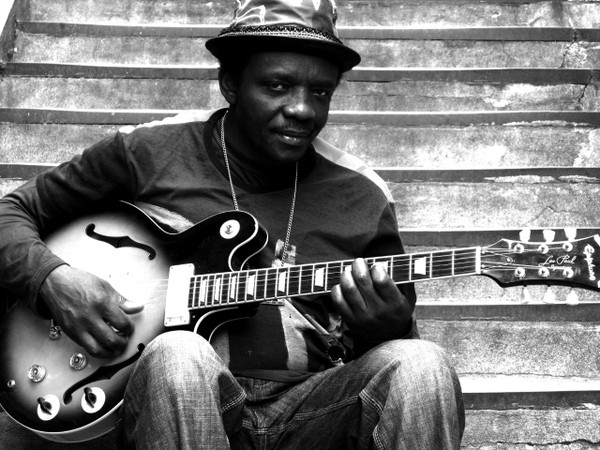
Biography
So Kalmery
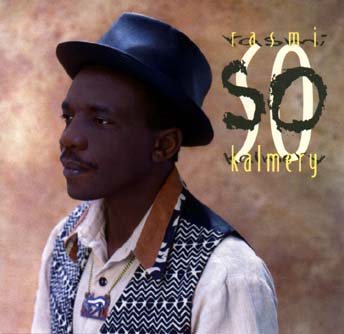
In 1994, while awaiting a contract with Carlos Santana in the United States, So Kalmery took a flight to Australia. There, he discovered the Aboriginal people and the didgeridoo, that continuous-breath instrument which resonates with the Sufism he carries within him. From this unexpected choice was born Rasmi (1996), the album that established his music internationally, opening the door to European tours. His story is that of a musician who has never ceased to cross borders.
In Brief
| Full Name | So Mosolo Kalmery |
| Birth | 1955, Bukavu (Belgian Congo, current DRC) |
| Fields | African music, Brakka music, afro-folk |
| Instruments | Vocals, guitar, oud, inanga, didgeridoo |
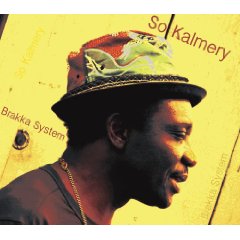
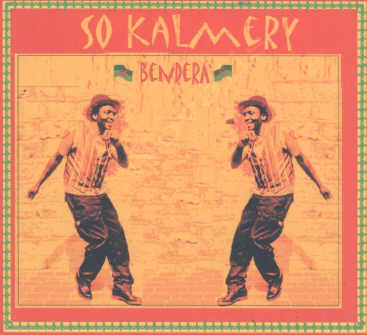
| Notable Works | Bendera, Brakka System, Rasmi |
| Honors | Opening act for Paco de Lucia and John McLaughlin at the Royal Albert Hall (1987) |
Key Dates
| Year | Event |
|---|---|
| 1955 | Birth in Bukavu (Belgian Congo); his father David Kalmery, musician and close to Lumumba |
| 1961 | Assassination of David Kalmery in the anti-Lumumbist repression; exile in Zambia |
| 1969 | Start of professional career, at eleven years old |
| 1972 | King Melody Band with EMI Kenya, best group award in Kenya |
| 1978-1980 | Kinshasa: guitarist and vocalist for Viva la Musica (Papa Wemba, Koffi Olomide) |
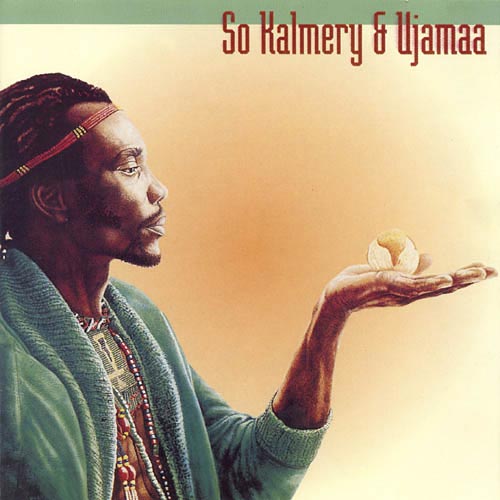
| 1982 | Move to Paris; creation of the group Ujamaa (family in Swahili) |
| 1987 | Opening act for Paco de Lucia and John McLaughlin at the Royal Albert Hall, London |
| 1996 | Rasmi, international revelation; tours with Ben Harper in France |
| 2001-2009 | Bendera (2001) then Brakka System (2009, World Village/Harmonia Mundi) |
From Brakka to the World: A Musical Journey
So Mosolo Kalmery was born in 1955 in the Bukavu region, a few kilometers from Lake Kivu. His father, David Kalmery, was a musician—accordion, guitar, and trumpet in local brass bands, organ at the church on Sundays—and close to Patrice Lumumba. In 1961, David Kalmery was assassinated in the anti-Lumumbist repression. At seven years old, So fled with his family to Zambia, where he ended up in a refugee camp in Lusaka.
From the age of nine, he composed and sang in choirs. At eleven, he entered the professional lives of local orchestras and traveled across southern Africa. At fourteen, the conductor Anatole—a garage owner by trade and originally from Bujumbura—invited him to Burundi; the visit turned into six months of touring. At sixteen, he discovered recording studios thanks to EMI and founded Vedette Mambo.
Three years later, So joined the Fimbana Club in Lusaka and integrated The Blades, the group where Dorothy Masuka, a great lady of South African jazz, sang. There, he learned harmony and orchestration, acquiring a discipline that would mark his entire career. He then went to Kenya with Fadhili William, legendary interpreter of “Malaika,” before founding the King Melody Band. In 1972, this group recorded with EMI Kenya and won the best group award.
In 1978, So made a key stop in Kinshasa as guitarist-vocalist for Viva la Musica, the emblematic orchestra directed by Papa Wemba and counting Koffi Olomide among its members. This experience refined his taste for soukous, that music where guitars interlace in fast and catchy riffs. In Paris, in 1982, So Kalmery put down his bags after a contract in Belgium. There, he created Ujamaa (family in Swahili) and forged his musical identity: the Brakka. A name invented by himself, a contraction of Bra (the beginning) and Ka (infinity, the spirit). For him, a practice that draws from the African tradition of the Great Lakes and integrates urban influences—ternary rhythms in 12/8 that can be compared to American shuffle or 1920s ragtime.
The album Brakka (CBS France, 1989) and So Kalmery & Ujamaa (1986-1989) laid the foundations of this style. In 1987, his fame grew: he opened the concert of Paco de Lucia and John McLaughlin at the Royal Albert Hall in London. Then came the turning point of 1994: refusal of a contract with Carlos Santana, flight to Australia, and fascinating encounter with the Aboriginal people. The didgeridoo, that continuous-breath instrument he had discovered by chance in his youth, became one of So Kalmery’s sonic signatures.
Rasmi (Buda Musique, 1996) consecrated this alchemy. The album blends twelve-string guitar, subtle percussion, penny whistle, and saxophone, punctuated by choirs and didgeridoo. It opened the doors to major tours—as opening act for Ben Harper in France, and at European festivals. With Bendera (Pygmalion Records, 2001), So Kalmery once again brandished the standard of the Brakka: eight compositions in Swahili and English, tinged with blues, gospel, and folk song, animated by love, equality, and a mysticism he draws from his travels. Brakka System (World Village/Harmonia Mundi, 2008-2009) confirmed this maturity.
Major Works
| Work | Year | Why It’s Essential |
|---|---|---|
| Brakka | 1989 | First solo album with CBS France, establishes the Brakka as a distinct style |
| Rasmi | 1996 | International revelation, brilliant fusion of acoustic guitar and didgeridoo; toured with Ben Harper |
| Bendera | 2001 | Pivot album: Swahili, blues, and gospel, notions of love and mysticism |
| Brakka System | 2008-2009 | Maturity album, sophisticated harmonic production (World Village/Harmonia Mundi) |
Heritage and influence
So Kalmery occupies a singular place in the landscape of contemporary African music. By inventing the Brakka — a musical philosophy that links the African Great Lakes region to the diaspora, with Australian and European sounds — he embodies what the world music world promises but does not always achieve: a true blending, without exoticism or folklorization. His journey as a traveling musician, confronted with exile from childhood and nourished by the styles of southern Africa, from Kenya to Zambia via Kinshasa, makes him a figure of musical humanism. He also composed for the film Juju Factory (2005), extending his creative approach beyond albums.
Sources and references
- « So Kalmery Biography », AllMusic, https://www.allmusic.com/artist/so-kalmery-mn0000035571, accessed 13 November 2026.
- « So Kalmery », Wikipedia, https://fr.wikipedia.org/wiki/So_Kalmery, accessed 13 November 2026.
- « So Kalmery and the Brakka », Africultures (based on Musée Dapper), https://africultures.com/personnes/?no=3126, accessed 13 November 2026.
- « So Kalmery », Afrisson, https://www.afrisson.com/so-kalmery-4783/, accessed 13 November 2026.
- « African Archive #6 : So Kalmery - Rasmi », RootsWorld, https://www.rootsworld.com/rw/feature/africa6.html, accessed 13 November 2026.
- « 1. So Kalmery - Plein Sud », RFI, https://www.rfi.fr/fr/emission/20091027-1-so-kalmery, accessed 13 November 2026.
- « So Kalmery Discography », Discogs, https://www.discogs.com/artist/401404-So-Kalmery, accessed 13 November 2026.
- « So Kalmery », Accent-Presse, https://www.accent-presse.com/artiste/so-kalmery/, accessed 13 November 2026.