Biography
Stimela: the steam train that derailed apartheid
In a South African township of the 1980s, a Stimela track silenced SABC broadcasters and ignited the underground. “Whispers in the Deep”, a song that sings of fear and calls for resistance, banned from radio, spread through Joburg dormitories and made Stimela a voice of the anti-apartheid movement.
In brief
| Band name | Stimela |
| Origin | Johannesburg, South Africa |
| Genres | Afro-fusion (jazz, R&B, mbaqanga) |
| Period | 1970s – present |
| Founding members | Ray Phiri (guitar), Isaac Mtshali (drums), Lloyd Lelosa (keyboards), Jabu Sibumbe (bass) |
| Signature works | Look, Listen and Decide, Fire, Passion and Ecstasy, “Whispers in the Deep” |
| Distinctions | SAM Awards, Grammy (via Graceland), Order of Ikhamanga (Ray Phiri) |
Key dates
| Year | Event |
|---|---|
| 1974 | Formation of The Cannibals, a soul group in Johannesburg |
| 1982 | The group renames itself Stimela (“steam train” in Nguni languages) |
| 1984 | Fire, Passion and Ecstasy, first hit (certified gold) |
| 1986 | Look, Listen and Decide: “Whispers in the Deep”, banned by SABC |
| 1986 | Ray Phiri collaborates with Paul Simon on Graceland |
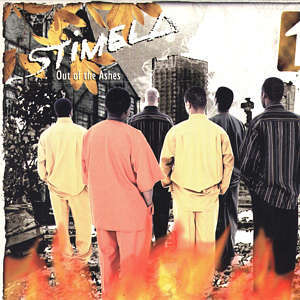
| 1996 | Out of the Ashes, return to home country after exile |
| 2011 | Three SAM Awards; Ray Phiri receives Order of Ikhamanga |
| 2017 | Death of Ray Phiri; the group continues its activity |
A journey of resistance and consecration
Ray Phiri was born on March 23, 1947 in Nelspruit. His father, a Malawian musician nicknamed “Just Now” Phiri, taught him guitar before an agricultural accident cost him three fingers. Raymond recovered, trained himself and joined the Jabavu Queens as a dancer. In Johannesburg, at the beginning of the 1970s, he founded with drummer Isaac Mtshali, keyboardist Lloyd Lelosa and bassist Jabu Sibumbe The Cannibals, a soul group then mbaqanga (a driving rhythm South African township style). The group adopted singing in 1975 thanks to vibrant Jacob Radebe, who disappeared in 1978, but The Cannibals resisted.
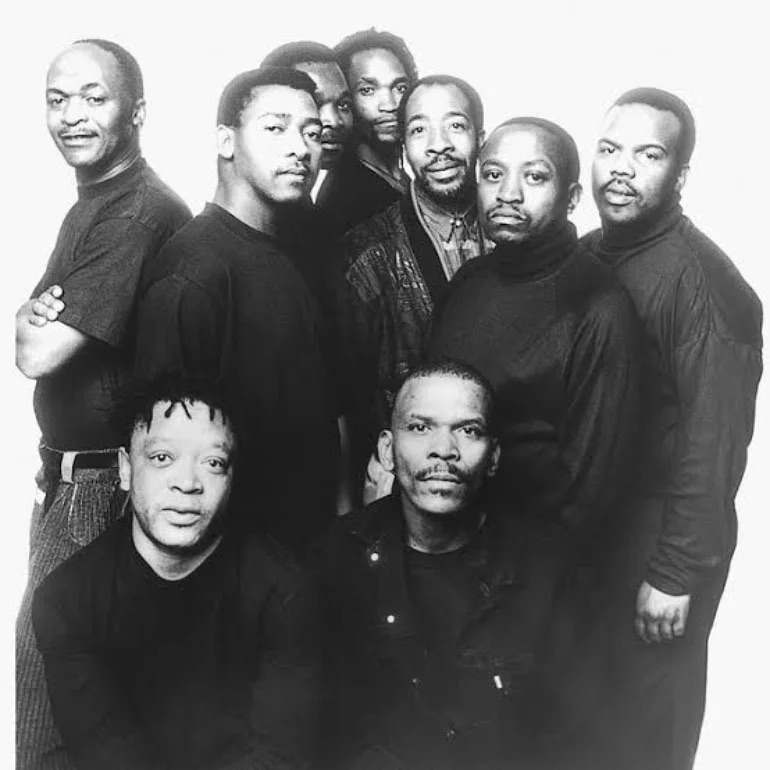
In 1982, blocked for three months in Maputo, Mozambique, Phiri and his companions sold their gear to pay for a train journey. This ordeal shifted their identity: the group renamed itself Stimela, referring to “steam train” in Nguni languages. The lineup expanded with Charlie Ndlovu and Thapelo Khomo on keyboards, guitarist Ntokozo Zungu and singer Joy White.
Fire, Passion and Ecstasy (1984) achieved gold status. Look, Listen and Decide (1986) is the founding work: the album oscillates between ballads and revolt anthems. “Whispers in the Deep” denounces fear installed in oppressed bodies. Banned by the South African Broadcasting Corporation, the song paradoxically amplified the group’s notoriety. Stimela also accompanied the Mahotella Queens and Irene Mawela.
Between 1985 and 1992, Ray Phiri toured more than thirty countries with Paul Simon on Graceland (1986) and Rhythm of the Saints (1990), performed at Madison Square Garden and on American television. The stopover in Graceland opened doors for the formation, which signed with Gallo Record Company and reached platinum. Phiri later affirmed that Simon did not credit him for his compositions.
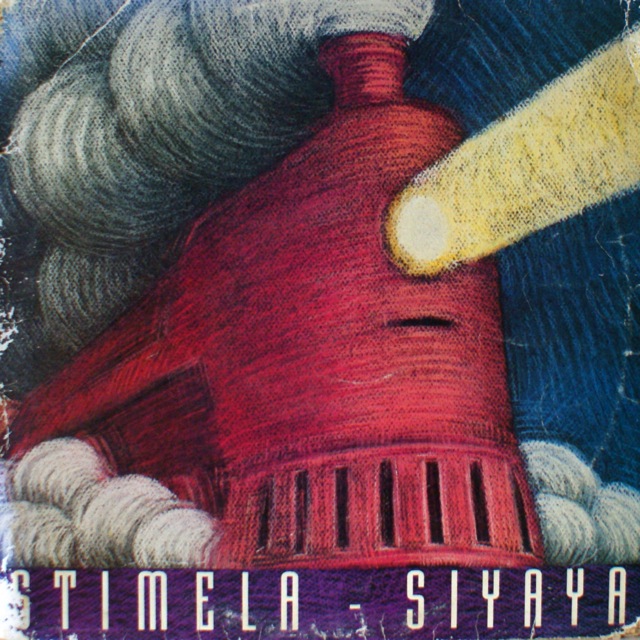
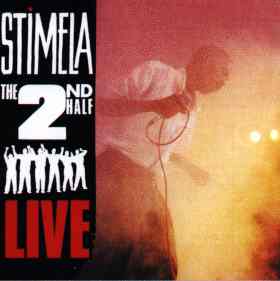
Out of the Ashes (1996) sealed Stimela’s return to home country after exile. The group multiplied albums: Siyaya (1991), Khululani (1994), Turn on the Sun (2011), Catch the Train (2018). The 2011 SAM Awards crowned A Lifetime… and the DVD Live in Concert 25 Years. On July 12, 2017, at 70 years old, Ray Phiri died of lung cancer in Nelspruit. UNISA conferred on him, in 2024, an honorary doctorate in music.
Major works
| Work | Year | Why it’s essential |
|---|---|---|
| Fire, Passion and Ecstasy | 1984 | First hit, certified gold |
| Look, Listen and Decide | 1986 | Founding work; “Whispers in the Deep”, anti-apartheid anthem |
| Graceland (collaboration) | 1986 | Ray Phiri alongside Paul Simon: global visibility |
| Out of the Ashes | 1996 | Return to home country after exile; platinum |
| The Unfinished Story | 1987 | Afro-fusion exploration and political writing |
Legacy
Stimela paved the way for a South African music where jazz, soul and mbaqanga weave a borderless tapestry. Ray Phiri, self-taught guitarist, became one of the pillars of the South African scene and an inspirer for generations. Stimela continues to tour, carrying the name of the train that changed their destiny.
Sources and references
-
“Stimela (band)”, Wikipedia, https://en.wikipedia.org/wiki/Stimela_(band), accessed October 23, 2026.
-
“Raymond (Ray) Chikapa Enock Phiri”, Wikipedia, https://en.wikipedia.org/wiki/Ray_Phiri, accessed October 23, 2026.
-
“Stimela”, AllMusic, https://www.allmusic.com/artist/stimela-mn0000937155, accessed October 23, 2026.
-
“Raymond (Ray) Chikapa Enock Phiri”, South African History Online, https://sahistory.org.za/people/raymond-ray-chikapa-enock-phiri, accessed October 23, 2026.
-
Kalin Pashaliev, “Interview: SA legend Ray Phiri”, Music In Africa, https://www.musicinafrica.net/magazine/interview-sa-legend-ray-phiri, accessed October 23, 2026.
-
“What the lives of two South African music giants tell us about culture under apartheid”, The Conversation, https://theconversation.com/what-the-lives-of-two-south-african-music-giants-tell-us-about-culture-under-apartheid-80970, accessed October 23, 2026.
-
Nicholas Huggins, “Ray Phiri, ‘Graceland’ Guitarist and Anti-Apartheid Icon, Dies at 70”, The Washington Post, https://www.washingtonpost.com/local/obituaries/ray-phiri-south-african-jazz-musician-who-performed-with-paul-simon-dies-at-70/2017/07/12/09df92ae-671c-11e7-8eb5-cbccc2e7bfbf_story.html, accessed October 23, 2026.
-
« Presentation of National Orders », The Presidency of South Africa, http://www.thepresidency.gov.za/MediaLib/Downloads/Newsletters/National%20Orders%202011.pdf, accessed on 23 October 2026.