
Biography
The Zawose Queens
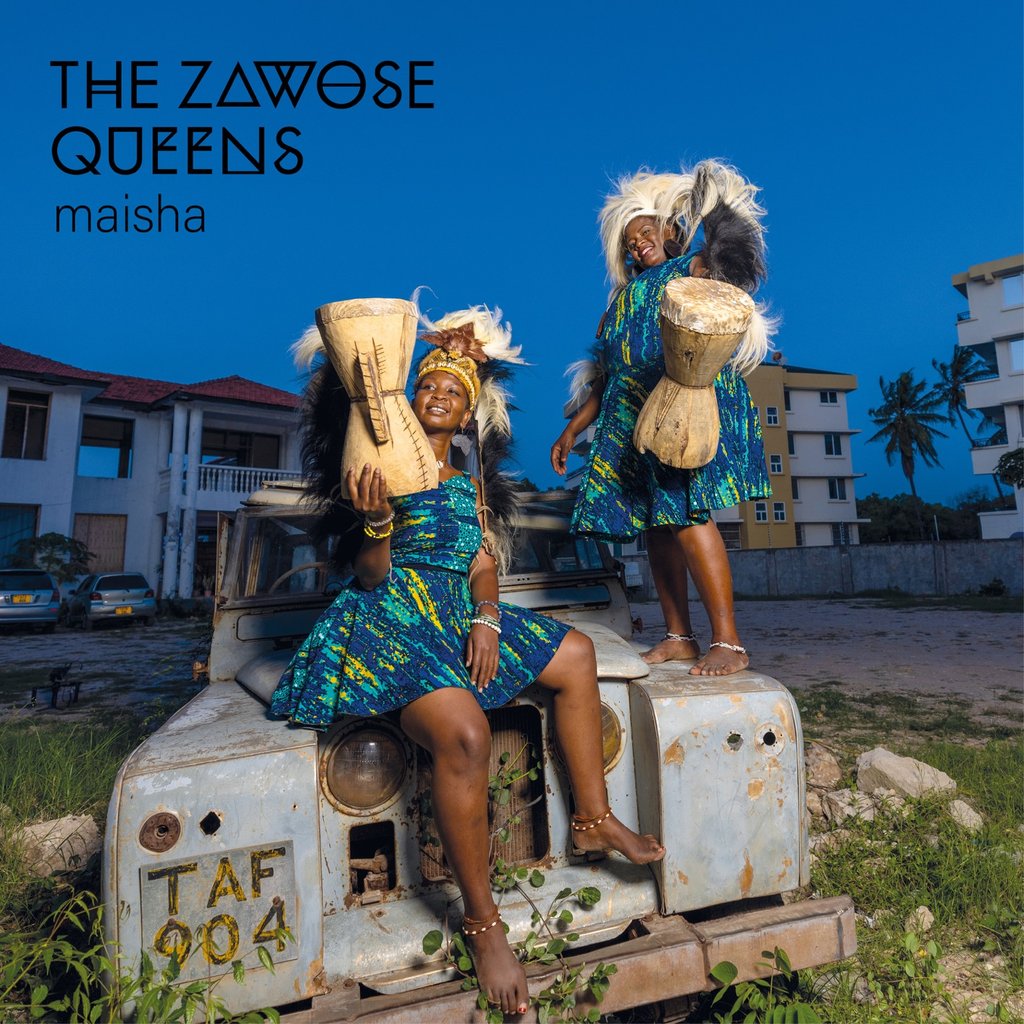
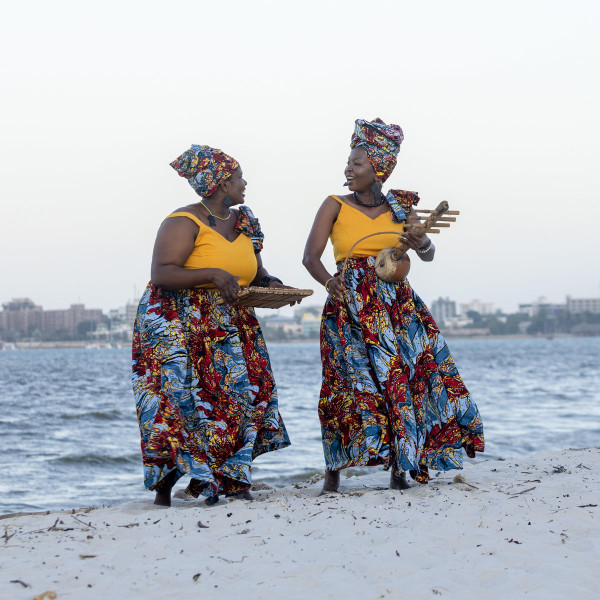
Bagamoyo, Tanzania. On the edge of the Indian Ocean, on a dusty hill where eight households are scattered across six plots, Pendo Zawose adjusts the tuning of her illimba — a metal thumb piano — and launches a verse that echoes the generations that preceded her. Behind her, her cousin Leah raises a high-pitched voice in response. It is the ancestral call-and-response of the Gogo people, enriched here with electronic basses and synths that glide like a wind from the open sea. For the first time in their family’s history, the women hold the mics.
In brief
| Group Name | The Zawose Queens |
| Members | Pendo Zawose (vocals, illimba, percussion) · Leah Zawose (vocals, chizeze, percussion) |
| Origin | Bagamoyo, Tanzania |
| Genre | Traditional Gogo (Wagogo) music fused with electronic music |
| Notable Works | Maisha (2024), “Sauti Ya Mama”, “Fahari Yetu” |
| Label | Real World Records |
Key Dates
| Year | Event |
|---|---|
| 1980s-1990s | Dr Hukwe Zawose, father of Pendo and grandfather of Leah, becomes internationally known |
| 2003 | Death of Hukwe Zawose; Pendo takes the lead of The Zawose Family |
| 2007 | Release of Small Things Fall from the Baobab Tree on Real World Records, with Pendo as the opening act |
| 2019 | First collaboration between Pendo and Leah at Sauti za Busara (Zanzibar); meeting with British producers Tom Excell and Oli Barton-Wood |
| 2019-2023 | Writing and recording of the first album, produced by Tom Excell and Oli Barton-Wood |
| 2024 | Release of Maisha; European tour with Glastonbury, WOMAD, and Trans Musicales |
A feminine legacy, rewriting traditions
Hukwe Zawose, a doctor of Gogo music and a tutelary figure, is the patriarch at the origin of a musical lineage of seven women and seventeen children. After his death in 2003, Pendo took over the direction of The Zawose Family while accepting gendered restrictions: like all women of the clan, she was relegated to backing vocals and was not allowed to sing lead. “We are always behind the men,” she tells Songlines. “Women were never allowed to take the first place.”
The breakthrough was delayed, but it came in two stages: first, a gradual opening. Pendo began playing the illimba in concerts, and when the men left, she secretly borrowed the chizeze, a four-stringed violin once reserved for men. Then, in 2019, a project by the British Council bringing together Tanzanian and British musicians placed the two cousins in the spotlight. Aziza Ongala, manager of the duo and daughter of the late Remmy Ongala (who himself passed through Real World), spotted them during a stop at Sauti za Busara. At first, Leah slipped into the performance without notice; she was told that she needed to train to be part of the group. She did, and Pendo helped her get accepted.
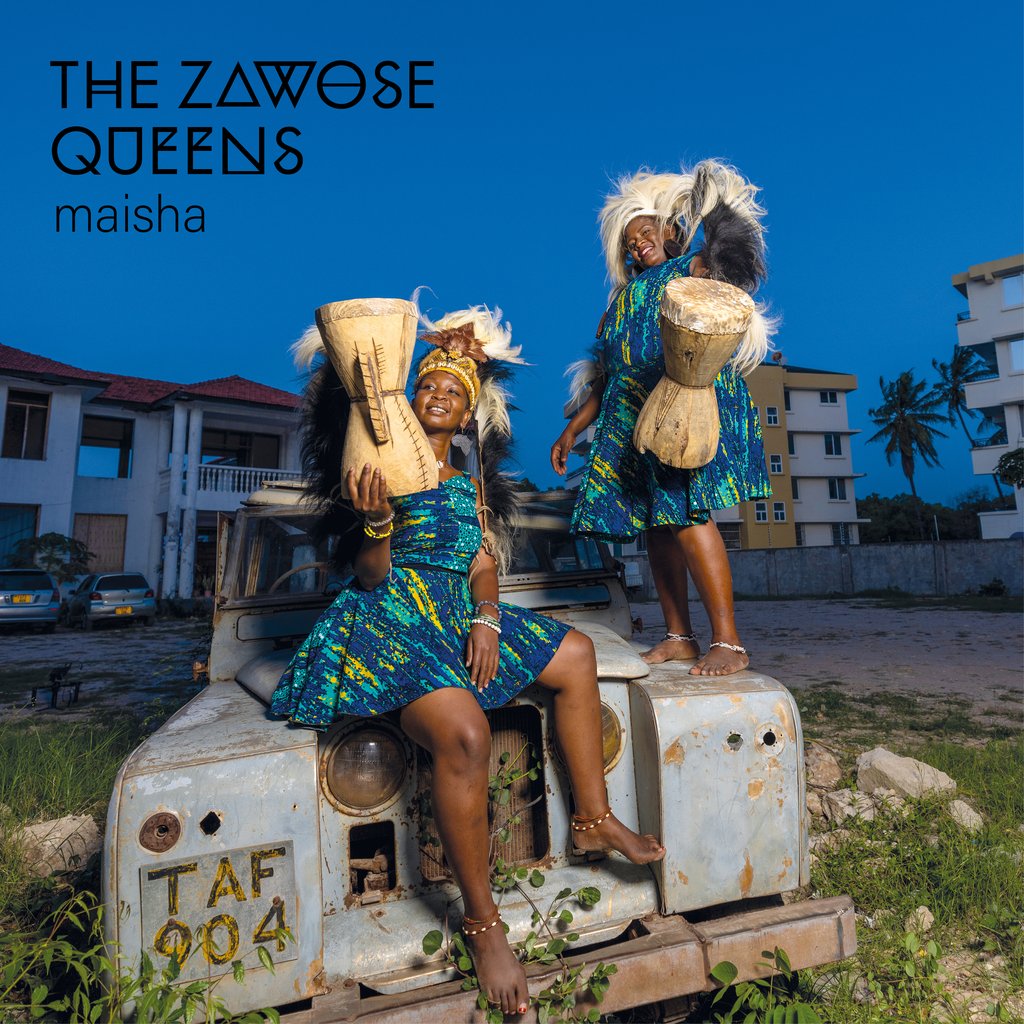
Two British producers — Tom Excell and Oli Barton-Wood — decided to return to Tanzania to record the duo’s album. The result, Maisha, released on June 7, 2024, on Real World Records, marks a turning point: Pendo and Leah write their own titles in kigogo, the language of the Gogo people, and sing them in the lead position. “It is our heritage, in our own way,” they launch to The Guardian.
Their repertoire mixes a cappella recordings, such as “Sauti Ya Mama” (“the voice of mom”) — recorded between feedings — and electronic arrangements where 808 basses and synths come to overload the ancestral polyrhythms. “The mix of our traditional music with the power of electronics makes the sound better,” estimates Leah to Songlines. “We wanted to mix the traditional and the modern to create something new.”
Major Works
| Work | Year | Why it is essential |
|---|---|---|
| Maisha (album) | 2024 | Duo’s first original titles, tradition-electronic fusion; the greatest success of the Zawose dynasty |
| “Sauti Ya Mama” | 2024 | Tribute to motherhood, recorded at the top of a hotel in Zanzibar; Pendo’s baby’s cries can be heard in it |
| “Dunia Hii (The World)” | 2024 | Plea for unity, carried by airy polyphonies and a weightless illimba |
| “Muheme” | 2024 | The only women allowed to play the muheme become the protagonists; pure tribal percussion |
Legacy and Influence
The duo embarked on a first European tour in 2024 — Glastonbury, WOMAD, Africa Oyé, Trans Musicales — marking a symbol: Gogo women on the world’s biggest stages, while their fathers and grandfathers only had access to WOMAD during the 1980s-2000s. The album Maisha received glowing reviews (The Guardian, The Quietus) and positions the Queens as pioneers of musical emancipation in East Africa. Leah concludes: “We want to be an example,” and the next generation of Tanzanian musicians seems already ready to follow them.
Sources and References
- “Women have always been sidelined. So we’re radical”: the Zawose Queens go from Tanzania to Glastonbury, The Guardian, https://www.theguardian.com/music/article/2024/jun/25/women-have-always-been-sidelined-so-were-radical-the-zawose-queens-go-from-tanzania-to-glastonbury, accessed November 6, 2025.
- “The Zawose Queens: ‘We wanted to blend the traditional and modern to create something new’”, Songlines, no.199 (July 2024), https://www.songlines.co.uk/content/features/the-zawose-queens-we-wanted-to-blend-the-traditional-and-modern-to-create-something-new, accessed November 6, 2025.
- David Honigmann, “The Zawose Queens — Tanzanian musical dynasty on a European tour”, Financial Times, July 21, 2024, https://www.ft.com/content/668b6b94-3328-4060-bbcb-578288e87f37, accessed November 6, 2025.
- « Maisha — Liner notes », Real World Records, https://realworldrecords.com/releases/maisha/, accessed 6 November 2025.
- « The Zawose Queens — Artist page », Real World Records, https://realworldrecords.com/artists/the-zawose-queens/, accessed 6 November 2025.
- « The Zawose Queens », Wikipedia (EN), https://en.wikipedia.org/wiki/The_Zawose_Queens, accessed 6 November 2025.
- David Pratt, « The Zawose Queens – Maisha (Album Review) », KLOF Mag, 10 June 2024, https://klofmag.com/2024/06/the-zawose-queens-maisha/, accessed 6 November 2025.