
Biography
Yuri da Cunha
In 2013, in Luanda, a simple and irresistible song took over the streets: “Atchu Tchutcha”, a title carried by an unmistakable voice, that of a man who made semba — the traditional Angolan music often considered the music of the old — his spearhead and his mission. “I was insulted, they called me palhaço — clown,” he recounts of the beginnings. “I knew that semba was not the music of the old and that I had a mission to accomplish.” Yuri da Cunha, whose real name is Álvaro Yuri Alberto da Cunha, was born on September 13, 1980, in Sumbe, in the Cuanza-South province. An engaged artist who has carried Angolan rhythms to the world for two decades, he owes his nickname, “The Show Man”, to the fervor of his concerts.
In brief
| Full name | Álvaro Yuri Alberto da Cunha |
| Birth | September 13, 1980, Sumbe (Cuanza-South, Angola) |
| Field | Semba, kizomba; also rumba, kuduro, zouk |
| Emblematic works | “Eu”, “Atchu Tchutcha”, “De Alma na Paixão” |
| Distinctions | MTV Africa Music Award (2014), Top Rádio Luanda 2006, RTP prize for best music video (1996) |
Key dates
| Year | Event |
|---|---|
| 1993 | First public steps, at thirteen years old |
| 1994 | First prize in the street contest; victory on Angolan radio with Amigo |
| 1996 | Official debut in Lisbon with É Tudo Amor; RTP prize for best music video |
| 2004 | “Makumba” wins Top Rádio Luanda |
| 2005 | Release of Eu, the revelation album that makes him a national star |
| 2009 | Kuma Kwa Kié, twenty thousand copies sold in one day — a historical record |
| 2010 | Opening act for Eros Ramazzotti for twenty months on a world tour |
| 2013 | “Atchu Tchutcha”: national hit; MTV Africa Award |
| 2014 | Twenty-year career celebration at MEO Arena, Luanda |
| 2015 | Fifth album O Intérprete, carried by “De Alma na Paixão” |
| 2017-2018 | International duos with Flavour and Agir |
| 2023 | Celebration of thirty years of career |
Between tradition and modernity
Yuri da Cunha grew up in Luanda, in the Rocha Pinto neighborhood. From childhood, he attended rehearsals of the group Os Kwanzas, where his father Henrique da Cunha, known as “Riquito”, played guitar. Far from being confined by this tradition, he discovered singing on his own and developed a taste for the show very early on. At nearly ten years old, he won an improvised street contest named Kutonina — a pun between Makumba (magic in quimbundo) and the Portuguese expression meaning “don’t touch me”. Later, in Luanda, he refined his vocal technique with teacher Manuel Costa, known as “Makanha”, and stood out in 1994 at the Angolan National Radio’s children’s music contest by winning the best song prize with Amigo.
His musical influences are not limited to Angola — Bonga, David Zé, Artur Nunes, Teta Lando, Carlos Burity, and André Mingas — but also Michael Jackson for dance. “I was educated in semba,” he confesses, and it is precisely against the idea that this style is “not for the young” that he forged his artistic identity. He mixes semba, kuduro, and choreographies inspired by Michael Jackson on stage. In 1996, at twenty years old, he crossed the Atlantic and settled in Lisbon, where producer Valentim de Carvalho entrusted him with a studio. The album É Tudo Amor was released that same year; he then returned to the Netherlands to receive the RTP prize for best music video and that for best music from Lusophone African countries.
Yuri did not return to Angola until ten years later, after a period of maturity far from the spotlights. He returned in 2004 with “Makumba”, a cover of the legendary work by Bonga, which earned him the Top Rádio Luanda and became a style signature.
In January 2005, Eu was released: thirteen tracks mixing semba, rumba, and kizomba sung in Portuguese and quimbundo. The singles “Homem é bom” (the man is good), “Kalundu”, “Njila”, and “Simão” took over Angolan airwaves. The album won the Top Rádio Luanda 2006 in four categories: best album, best discographic production, best semba, and best kizomba.
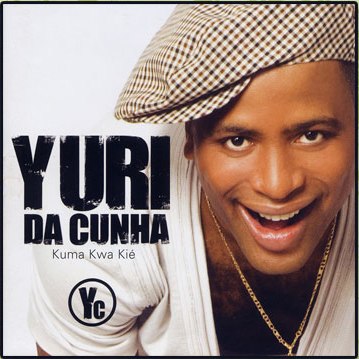
But it is with Kuma Kwa Kié (which means “take care”), released in 2009, that Yuri da Cunha explodes. Thirteen tracks recorded in Angola, Portugal, and France with the participation of musician Man-Ré. The album sold more than twenty thousand copies in a single day — a record for the time. The same year, he signed with Sony Music and joined Eros Ramazzotti’s world tour as the opening act: twenty concerts across Europe over nearly two years.
On July 17, 2014, he celebrated his twenty years of career at the MEO Arena in Luanda. That same evening, before a crowd that acclaimed him, he sang “Atchu Tchutcha”, a title released in collaboration with the South African group Uhuru that became the season’s anthem and earned him an MTV Africa Music Award in the best collaboration category.
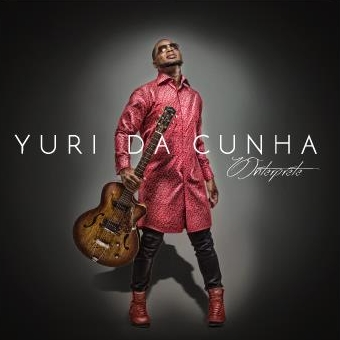
For his subsequent years, Yuri did not let himself be confined: O Intérprete (2015), the fifth album, was carried by “De Alma na Paixão”, then he explored international duos — the Nigerian Flavour on “Sweet La Vida” (2017) and Agir on “N’Gakuzolu” (2018). He also appeared in Coke Studio Africa in 2013. In 2019, he interviewed with Angolan Culture Minister Maria da Piedade de Jesus to defend copyright and the international dissemination of Angolan artists. On stage, Yuri dances as he composes: without concessions, mixing the influences of a lifetime to forge an inimitable style.
Major Works
| Work | Year | Why It’s Essential |
|---|---|---|
| Eu | 2005 | The breakthrough album that made Yuri an Angolan star. |
| Kuma Kwa Kié | 2009 | Twenty thousand copies sold in one day — the first Angolan album to explode. |
| “Atchu Tchutcha” | 2013 | National hit turned stage anthem. |
| O Intérprete | 2015 | International confirmation with “De Alma na Paixão”. |
| Canta Artur Nunes | 2012 | Tribute to the Angolan legend Artur Nunes. |
Legacy and Influence
Yuri da Cunha contributed to making semba a contemporary style, not a relic. By adding kuduro, zouk, and elements of modern African dance, he paved the way for a new generation of Angolan artists who proudly claim their roots without forsaking modernity. He remains today one of the few Angolan musicians to have toured the world and major international stages — from South Africa to European festivals.
Sources and References
- “Yuri da Cunha — Biography”, AllMusic, https://www.allmusic.com/artist/yuri-da-cunha-mn0002603017, accessed November 3, 2025.
- “Yuri da Cunha”, Wikipedia (en), https://en.wikipedia.org/wiki/Yuri_da_Cunha, accessed November 3, 2025.
- “Yuri da Cunha”, Wikipedia (pt), https://pt.wikipedia.org/wiki/Yuri_da_Cunha, accessed November 3, 2025.
- “Singer Yuri da Cunha celebrates 30 years of career”, ANGOP, https://angop.ao/en/noticias/lazer-cultura/yuri-da-cunha-celebra-30-anos-de-carreira-com-roda-de-semba/, accessed November 3, 2025.
- “Yuri da Cunha — 20 Anos de Carreira”, RTP Antena 1, https://antena1.rtp.pt/apoios/apoio-a1-yuri-da-cunha, accessed November 3, 2025.
- “Discover The Hitmaker Behind “Atchu Tchutcha””, Coca-Cola Studio Africa, http://et.coca-cola.com/cokestudio/home/blog/discover-the-hitmaker, accessed November 3, 2025.
- “Angola: Yuri DA Cunha Remembers Late Teta Lando Musician”, AllAfrica, https://allafrica.com/stories/202104120199.html, accessed November 3, 2025.
- “Angolan Music Spreading Internationally — Singer Yuri Da Cunha”, AllAfrica, https://allafrica.com/stories/200512120279.html, accessed November 3, 2025.