Biography
Ziskakan
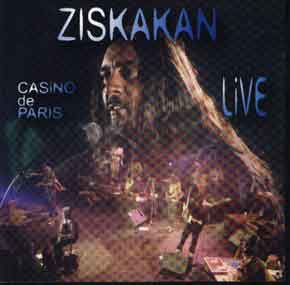
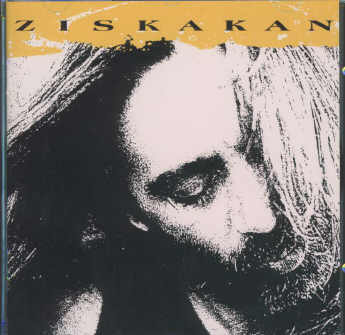
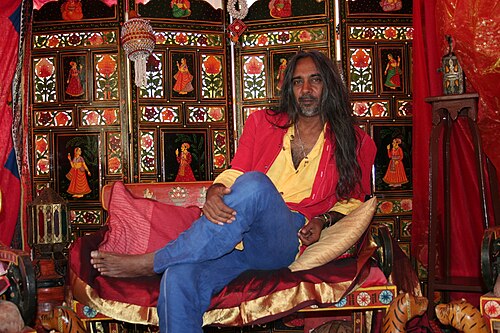
In 1979, on the island of La Réunion, a group of friends gathered and posed a question that would become their mission: Ziskakan, until when? Will the Creole language always be despised? Will maloya, the music of slaves, remain on the margins? The answer, they would make it sing. Led by Gilbert Pounia, a poet and guitarist of Tamil origin, Ziskakan established itself over forty-five years as the most emblematic group of La Réunion, a laboratory of Creole culture that made maloya a universal art1.
In brief
| Group name | Ziskakan (Creole: Until when?) |
| Formation | 1979, La Réunion |
| Leader | Gilbert Pounia (guitar, vocals, poet) |
| Genres | Maloya, world music, Creole fusion |
| Notable works | Péi Bato Fou (1983), Kaskasnikola (1993), Banjara (2006) |
| Awards | Kora Awards 1994 (best group), documentary Ziskakan (2023) |
Key dates
| Year | Event |
|---|---|
| 1979 | Foundation of the association and group in La Réunion |
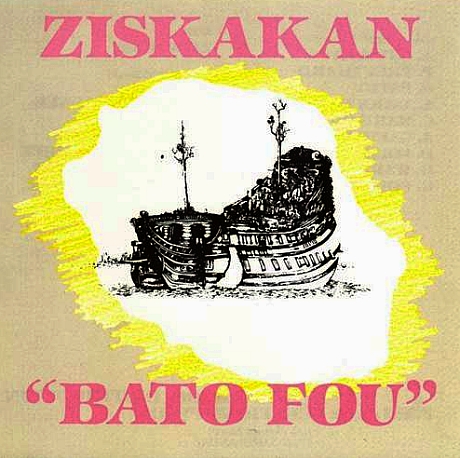
| 1983 | Release of Péi Bato Fou, self-funded double album, Creole anthem |
| 1992 | Meeting with Polygram at the Olympia in Paris |
| 1993 | Kaskasnikola, first album on Mango/Island Records |
| 1994 | Kora Awards (best group) — international tours |
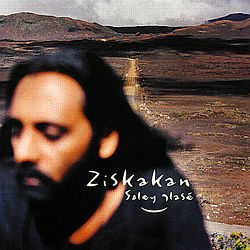
| 1996 | Soley Glasé, recorded in London and Brussels |
| 1998 | Group disbandment |
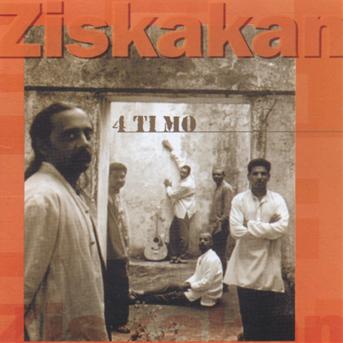
| 2001 | Acoustic comeback with 4 ti mo, maloya-sitar fusion |
| 2006 | Banjara, 8,000 copies sold in two months |
| 2012 | 32 Desanm, poetic vision of a free world |
| 2023 | Documentary Ziskakan by Sébastien Folin, Charles Cros Academy prize |
Origins: a political project
Before being a group, Ziskakan was an association born in 1979 from Gilbert Pounia’s and his companions’ will to fight for the recognition of the Creole language and maloya2. At that time, maloya — this music rhythmically driven by rouler, kayamb and pikèr, a heritage of Malagasy and African slaves — was still mistreated by the authorities. The group began playing in sugar cane fields and community halls, within an underground cultural and political movement. It served as a true laboratory: creation of the GREC (Creole Study and Research Group), launch of the magazine Sobat-koz, establishment of a free radio, theatre and poetry performances.
Gilbert Pounia, fourth generation of Indians in La Réunion, draws his strength from this dual Creole and Tamil heritage. He studied with the old masters of maloya, including Firmin Viry, considered the founding father of the genre, and Lo Rwa Kaf3. His repertoire enriched itself with poems by Creole authors such as Dev Virahsawmy, Bernard Payet or Axel Gauvin, making each concert a literary as well as musical celebration.
The first album — a self-funded project from 1980 — and then the double album Péi Bato Fou (1983) marked a turning point: the group emerged from the shadows and established itself among the Réunion public4. The title track of the album, issued from Péi Bato Fou, became an anthem, written by writer Axel Gauvin and sung with a rage that resonated far beyond the island.
Revelation and consecration: the doors of Paris open
Recognition from the metropolis did not come by chance. In 1992, Ziskakan’s participation in the La Réunion des musiques evening at the Olympia in Paris was a shock. Philippe Constantin, the late director at Polygram, spotted the group and offered them a contract5. The result was immediate: Kaskasnikola, the seventh album, was recorded in Dakar and published in 1993 on Mango, a satellite label of Island Records.
1994 was a prosperous year. Kaskasnikola propelled Ziskakan onto the international stage: tours at Musiques Métisses festivals (Angoulême, Le Havre, Montreux), Francofolies de La Rochelle, and participation in the Africa Fête tour in the United States, alongside Angélique Kidjo and Kassav’. The group won the Kora Awards, prize for best African group and artist, a rare consecration for a Réunion group6.
The following album, Soley Glasé (1996), was recorded in London and Brussels under the Mercury label. Gilbert Pounia reached a peak of expression there, between bitterness from past battles and inner passion. He revisited Bato Fou with renewed force, delivering lyrics that were a manifesto: « They gave us the order to whiten our skin, to learn French quickly so that French bosses would not have too many problems2. »
The group disbanded in 1998 after a six-month tour, financial tensions making the atmosphere tense. Gilbert Pounia took time to reflect, then rebuilt.
Hybridations: from Bombay to the Rajasthan desert
The renaissance of Ziskakan takes the form of a return to its roots… and to a new source: India, the land of origin of Gilbert Pounia. In 1999, the group became entirely acoustic. 4 ti mo (2001) blends Maloya instruments — rouler, cayamb — with Indian sitar and tablas, and contains a text dedicated to the singer Kaya, who died in prisons on the island of Mauritius.
Gilbert Pounia reconnects with his ancestors’ land in 2001, traveling to Bombay to record a new album. He works there with instruments such as the sarod, shennai, and flute, the latter entrusted to Rupark Kulkarnik, a student of the famous Hari Prasad Chaurasia. Rimayer, released in December 2001, is imbued with these Indian sonorities and opens a decade of transoceanic collaborations.
Banjara (2006), a reference to the Gypsies encountered here and there, achieves remarkable popular success: 8,000 copies sold in two months on an island of 800,000 inhabitants. The album Madagascar (2009), dedicated to the neighboring island, explores childhood nostalgia in a Maloya with a refined sound, produced by Erick Benzi.
Each Ziskakan album is a journey, but also a political act. 32 Desanm (2012) imagines a dreamed day, December 32nd, when the world would be free and at peace. The group continues its journey: concerts in Paris, Bombay, Monaco, Toronto, Johannesburg, and celebrates its 35th anniversary at the Saint-Gilles outdoor theater in 2014 as well as its 40th anniversary in 2019 with the orchestra of the École des musiques actuelles de La Réunion.
In 2023, the documentary Ziskakan by Sébastien Folin dedicates itself to the history of this cultural movement that fought for forty-three years for the recognition of Creole culture. The film receives the Coup de cœur award from the Académie Charles Cros, reminding us that the question posed in 1979 never truly received a definitive answer.
Major Works
| Work | Year | Why it is essential |
|---|---|---|
| Péi Bato Fou | 1983 | First self-financed double album, hymn to the Creole language and cultural resistance |
| Kaskasnikola | 1993 | First album with a major label (Mango/Island), recorded in Dakar, international breakthrough |
| 4 ti mo | 2001 | Acoustic return after dislocation, Maloya-sitar-tabla fusion, tribute to Kaya |
| Banjara | 2006 | References to Gypsies, 8,000 copies sold in two months |
| 32 Desanm | 2012 | Dreamed day when the world would be free, poetic inspiration and universal vision |
Legacy
Ziskakan is not just a music group: it is a Réunionese cultural institution5. Its forty-five-year career paved the way for entire generations of artists — Fenoamby, Zanzibar, Sabouk, Maloya Zone 7 — and contributed to making Maloya a heritage recognized by UNESCO since 2009, proving that the music of an island in the Indian Ocean could speak to the whole world.
Gilbert Pounia, today, continues to play at the Zinzin — his headquarters located by the sea, where he goes from microphone to kitchen. He is accompanied by his musical family: his son Wasis Pounia on bass and flute, the Riesser brothers on guitar and drums. The question posed in 1979 has no answer, but music continues to play on.
Sources and References
-
Wikipédia FR, Ziskakan — Chronology, history, member lists and detailed discography (accessed October 30, 2026) ↩︎
-
RFI Musique, Ziskakan — Complete biography written by RFI Musique, July 2022 (accessed October 30, 2026) ↩︎ ↩︎
-
Wikipédia EN, Ziskakan — Style, influence, academic sources (accessed October 30, 2026) ↩︎
-
LiveOne / AllMusic, Ziskakan — Discography, career, awards (accessed October 30, 2026) ↩︎
-
Bandsintown — Group history, discography, recent performances (accessed October 30, 2026) ↩︎ ↩︎
-
MusicBrainz, Ziskakan — Official discography, labels, credits (accessed October 30, 2026) ↩︎