Gabon, Land of Music: From Mvet to Afropop Stars
The founders, legendary orchestras, engaged rap, and the new wave of Afropop — a musical history that makes Gabon one of Central Africa’s creative melting pots.
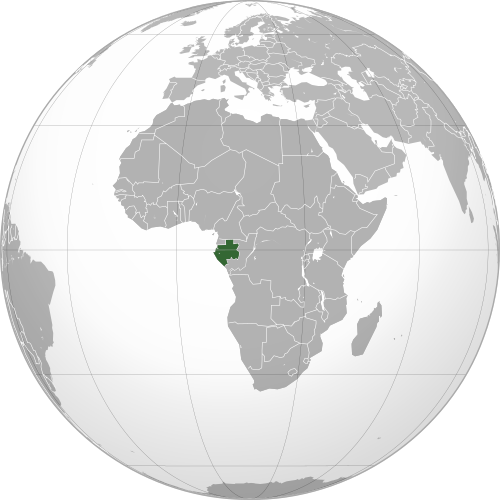
Gabon, a country of 2.2 million inhabitants, has long been eclipsed by its Cameroonian and Congolese neighbors. Yet it is from here that Pierre Akendengué, the tutelary figure of Francophone song; orchestras that turned Congolese rumba into the greatest musical movement in Central Africa; and one of the continent’s most engaged rap scenes, all emerged. Today, Emma’a, Shan’l, and new Afropop talents are conquering digital platforms.
Ancestral Traditions: Mvet, Bwiti, and Polyphonies
Gabon is home to approximately 40 ethnic groups, each with its own repertoires and rites1. Two traditions dominate: mvet and bwiti.
Mvet (or mvett) is an epic sung by the Fang people2. The instrument is a stick zither (bamboo harp equipped with gourds); the mvet — storytellers and singers — recount genealogies, battles, philosophy, and history. This epic complex, Fang-Beti-Bulu, extends from Gabon to Cameroon and Equatorial Guinea3.
Bwiti (or bwete) is an initiation rite centered on the ritual consumption of iboga4. Among the Punu and Mitsogo, bwiti mobilizes the ngombi (8-string zither), cylindrical drums, and responsorial singing — a music constitutive of spiritual experience, not merely an accompaniment5. The polyphony of the Babongo Pygmies, with their alternations between chest and head voices, has influenced Bantu vocal harmonies throughout Central Africa6.
These traditions still resonate in rap, Afropop, and contemporary traditional fusions7.
Pierre Akendengué: The Poet-Musician
Born in 1943 on Awuta Island, near Port-Gentil, Pierre Akendengué is Gabon’s most important aed8. As a child, he composed songs broadcast on the Gabonese radio. In the 1960s, he studied psychology in Caen and literature at the Sorbonne, before gradually losing his sight. His commitment to AGEG, the General Association of Gabonese Students, earned him a ban from the airwaves9.
His first album, Nandipo (1974, Pierre Barouh’s Saravah label), marries poems, songs, percussion, and women’s choirs — a creative shock10. Africa Obota (1976), Eseringuila (1978 — Maracas d’Or 1979), Piroguier (1986, a classic of African music), and many others followed. In 2016, he published an update of Libérée la liberté, a song denouncing dictatorship11. Cultural advisor to President Ali Bongo (2004–2016), he embraced the paradox: “Art must be a hearth of contestation”1213.
Olivier N’Goma and Patience Dabany: Afro-Zouk and Rumba
Olivier N’Goma (1959–2010), nicknamed “Noli,” was born in Mayumba14. His father, a schoolteacher, played the harmonium and taught him music from the age of eight. After studies in accounting and work as a cameraman for Gabonese television, N’Goma settled in Paris15. There he met Cape Verdean producer Manu Lima — former leader of Cabo Verde Show who had worked with Ismaël Lô, Pépé Kallé, and Monique Séka16.
In 1990, Bane, his first album, became a phenomenon. The eponymous title track, in Vili, was an absolute hit — joining the ranks of classics by Franco, Alpha Blondy, and Kanda Bongo Man17. Blending Afro-zouk with Antillean zouk, the sound became the anthem of “Paris noir” discotheques18. Adia (1995), Seva (2001), and Saga (2006) confirmed his virtuosity, but Bane remains the timeless masterpiece19.
Patience Dabany (born Marie-Joséphine Kama, 1941) epitomizes Gabonese rumba20. Of Bateke origin from Haut-Ogooué, she was the first wife of Omar Bongo, First Lady from 1967 to 198721. After her divorce, she launched the group Kounabeli Mbil’asuku (“the eagle of Haut-Ogooué”) and devoted herself to music22. Her self-titled album (1994), Obomiyia (2004, produced by Edgar Yonkeu with Quincy Jones), and No Comment (2010, featuring the hit Ewawa) make her an icon of rumba and Francophone zouk-love23. More than four decades after her debut, Patience Dabany remains a reference.
Massako, Les Diablotins, and Congolese Predominance
The story of Gabonese music is also one of an ambivalent relationship with Congolese rumba — the genre that, since the 1950s, has dominated Central Africa24. Two Gabonese formations illustrate this dynamic: Orchestre Massako and Les Diablotins.
Founded in 1971 by Jean-Christian Mboumba Mackaya, known as Mack-Joss25, Orchestre Massako was originally a Gabonese military orchestra. Very quickly, the group became the most popular in the country, accompanying President Omar Bongo on his domestic tours. With the arrival of Senegalese singer Amara Touré in 1980, the group entered a new creative era26. Massako blends traditional Gabonese rhythms, Congolese rumba, and Latin influences — a groovy, danceable sound that captivated for decades. The group produced a dozen albums27. In 2022, British label Analog Africa reissued its best tracks under the title Limited Dance Edition28.
Les Diablotins, for their part, are a 15-piece formation led in the 1980s by Elvis Kemayo, then director of music at Gabonese television29. Recorded in Paris, their albums — including Africa No. 1 — earned them the title “one of the best soukous ensembles in Africa,” according to Stern’s Guide30. The song Africa No. 1 subsequently became the theme for the powerful Gabonese radio station Africa No. 1, which broadcasts 18 hours of African music daily31.
Gabonese rap: from Movaizhaleine to Bwity Gang Cypher
Gabonese rap is one of the most politicized hip hop scenes in Central Africa32. Lord Ékomy Ndong (born Ékomy Ndong Mba Meyong) is the tutelary figure — co-founder in 1990 of Movaizhaleine, his first solo album L’Afrikain (2003) is considered a classic33. His lyrics, in French and local languages, question identity, politics, colonization and Franco-African relations34. During the contested 2009 election, he published 300, 809 and Engongol (« what shame »); his album Ibogaine (2011) draws inspiration from the Gabonese ritual plant and targets Nicolas Sarkozy3536.
After years of repression and exile, the scene revitalized itself at the end of the 2010s thanks to digital platforms37. The project Bwity Gang Cypher (2018), launched by rappers Tris and Rodzeng, broadcasts freestyle sessions blending hip hop and bwiti aesthetics38. In May 2020, the Catalogue Challenge brought together the two rival legends Lord Ékomy Ndong and Ba’Ponga in viral confrontations39. « Faut que ça rappe ! » — slogan of a generation that refuses to stay silent.
The new stars: Emma’a, Shan’l and afropop
The post-2010 generation in Gabon modernizes its production by opening up to pan-African trends40. Emma’a (Emmanuella Issembe, born in 2003 in Libreville) is the most prominent Gabonese artist41. Her sound — R&B, afrobeats, urban pop — combines vocal sweetness and frank lyrics. Discovered in 2022 with Grand Bandit (with Eboloko), she went viral with Encré, certified gold in 202442. In 2023, she won the PRIMUD Prize in Abidjan (best artist from Central Africa) and signed with Sony Music Afrique43. Collaborations with Joé Dwèt Filé, Chily, Jungeli — her trajectory is accelerating44.
Shan’l (Channelle Lekogo, born in 1989) embodies afropop R&B45. Her first album Shan’L is my name (2015) received a good reception; in 2019, she was best female artist from Central Africa at the Afrima Awards. She signed with Sony Music Afrique in 202346.
Annie-Flore Batchiellilys (born in 1967 in Tchibanga) occupies a unique place. A Punu speaker, this guitarist and percussionist blends Gabonese traditions with jazz and blues47. Championed by Pierre Akendengué, she was awarded at the Kora Awards in 200248. Her statements during the 2009 crisis earned her three years of censorship49. Nominated as a senator for the transition in 202350.
Revisited traditions and musical future
The Tandima, style of the Punu and Mitsogo peoples, continues to thrive thanks to Vyckos Ekondo (1950–2023), « king of the Tandima »51. His passing in August 2023 left a void — Ali Bongo hailed him as « a monument of Gabonese music »52. Heirs like Pape Nziengui, Laurianne Ekondo and Zang Gabon perpetuate these sounds53.
In 2026, the Gabonese music scene is multigenerational, hybrid and connected54. The direct music market is estimated at less than 2 billion CFA francs per year — fewer than 20% of artists live exclusively from their music5556. But signs of evolution are clearly present: YouTube, TikTok and Audiomack are the showcases for 78% of young artists57. The Institut Français du Gabon serves as a stage for traditional-modern experiments (SeBa, Pamela Badjogo, Neda), and Bwity Gang Cypher shows the renewed vitality of Gabonese rap58.
In brief
| Aspect | Detail |
|---|---|
| Population | ~2.2 million inhabitants |
| Main ethnic groups | Fang (32%), Myènè (20%), Punu-Sira-Nzebi (16%), Bateke (11%), Kioko, etc. |
| Traditional genres | Mvet, bwiti, ngombi, Tandima, society dances |
| Dominant urban genres | Rumba/soukous, afro-zouk, afropop, rap |
| Pioneer artists | Pierre Akendengué, Oliver N’Goma, Patience Dabany, Mack-Joss |
| Current scene | Emma’a, Shan’l, Ba’a, SeBa, Bob Dan, Méa, Neda |
Sources and references
-
“Music of Gabon”, Wikipedia, accessed 2026. https://en.wikipedia.org/wiki/Music_of_Gabon ↩︎
-
Pierre Alexandre, “Introduction to a Fang oral art genre: Gabon and Cameroon mvet”, Bulletin of the School of Oriental and African Studies, vol. 37, no. 1, 1974. ↩︎
-
“Mvet”, Wikipedia, accessed 2026. https://en.wikipedia.org/wiki/Mvet ↩︎
-
“Bwiti”, Wikipedia, accessed 2026. https://en.wikipedia.org/wiki/Bwiti ↩︎
-
James W. Fernandez, classic studies on Fang bwiti; Philip Peek on sound semantics in bwiti. Cited in “Music of Gabon”, Wikipedia. ↩︎
-
Åke Norborg, Music from an Equatorial Microcosm: Gabon and Equatorial Guinea, Smithsonian Folkways FW04214. ↩︎
-
Alice Aterianus-Owanga, “‘Faut que ça rappe !’ : Musical revitalization, social healing and the politics of performance in the Gabonese rap world (2009–20)”, 2020. ↩︎
-
Frank Eisenhuth, Rovi (AllMusic), accessed 2026. https://www.musicmetricsvault.com/artists/pierre-akendengue/ ↩︎
-
“Pierre Akendengué”, Wikipedia, accessed 2026. https://en.wikipedia.org/wiki/Pierre_Akendengu%C3%A9 ↩︎
-
“Pierre Akendengue”, Lusafrica Artist Management. https://www.lusafrica.com/en/our-artists/pierre-akendengue ↩︎
-
Global Voices, “In Gabon, music is a tool for visibility both inside and outside the country”, November 4, 2023. https://globalvoices.org/2023/11/04/in-gabon-music-is-a-tool-for-visibility-both-inside-and-outside-the-country/ ↩︎
-
“Pierre Akengue”, Lusafrica Artist Management. https://www.lusafrica.com/en/our-artists/pierre-akendengue ↩︎
-
Same source, quote by Akendengué: “Art should be a hotbed of protest in society to avoid it stagnating.” ↩︎
-
“Oliver N’Goma”, Wikipedia, accessed 2026. https://en.wikipedia.org/wiki/Oliver_N'goma ↩︎
-
“Oliver N’Goma — The king of Afro-Zouk”, Lusafrica Artist Management. https://www.lusafrica.com/en/our-artists/oliver-ngoma/ ↩︎
-
“Biographie of Oliver N’Goma”, Afromix. https://www.afromix.org/html/musique/artistes/oliver-n-goma/bio.en.html ↩︎
-
“L’afro-zoukeur Oliver N’Goma et l’indétrônable « Bane »”, Jeune Afrique, June 7, 2010. https://www.jeuneafrique.com/445658/culture/lafro-zoukeur-oliver-ngoma-lindetronable-bane/ ↩︎
-
Binetou Sylla, producer at Syllart Records, cited in Jeune Afrique, same article. ↩︎
-
José Da Silva, founder of Lusafrica, cited in Jeune Afrique, same article. ↩︎
-
“Patience Dabany”, Wikipedia, accessed 2026. https://en.wikipedia.org/wiki/Patience_Dabany ↩︎
-
“Patience Dabany (Marie-Joséphine Kama)”, Francophone Wikipedia, accessed 2026. https://fr.wikipedia.org/wiki/Patience_Dabany_(Marie-Jos%C3%A9phine_Kama) ↩︎
-
AllMusic biography of Patience Dabany. https://www.allmusic.com/artist/patience-dabany-mn0000006001 ↩︎
-
“Patience Dabany — Biographie”, MusicMe. https://www.musicme.com/Patience-Dabany/biographie ↩︎
-
“Chapter 4: Central Africa”, Les Musiques du monde — François Bensignor, Larousse 2002, accessed within the scope of the world-music-guide skill. ↩︎
-
“Orchestre Massako / Limited Dance Edition”, Analog Africa (Bandcamp). https://analogafrica.bandcamp.com/album/orchestre-massako-limited-dance-edition-nr-14 ↩︎
-
“Orchestre Massako – Orchestre Massako”, HHV Magazine. https://hhv-mag.com/review/orchestre-massako-orchestre-massako?lang=en ↩︎
-
“Orchestre Massako”, AfrOriginal Blog, accessed 2026. https://afroriginal.blogspot.com/2021/02/orchestre-massako.html ↩︎
-
Cal Gibson, “Orchestre Massako / Limited Dance Edition / Analog Africa”, Bantan Ton Ton, June 9, 2022. https://banbantonton.com/2022/06/09/orchestre-massako-limited-dance-edition-analog-africa-by-cal-gilson/ ↩︎
-
Ronnie Graham, Stern’s Guide to Contemporary African Music, vol. 1 (Zwan Publications, 1988), pp. 216–221. ↩︎
-
Same source, quote: “one of the finest soukous outfits in Africa”. ↩︎
-
Same source: “Africa No. 1 is used as theme song for powerful Gabonese radio station.” ↩︎
-
“Lord Ékomy Ndong”, WildAid Ambassadors. https://wildaid.org/ambassadors/lord-ekomy-ndong ↩︎
-
“HHAP Episode 56: Lord Ekomy Ndong on Gabonese Hip-Hop & French Politics”, Hip Hop African Podcast. https://hiphopafrican.com/hhap-episode-56-lord-ekomy-ndong-on-gabonese-hip-hop-french-politics ↩︎
-
“Lord Ekomy Ndong”, Al Jazeera, “Surprising Europe”, August 7, 2011. https://aljazeera.com/video/surprising-europe/2011/8/7/lord-ekomy-ndong ↩︎
-
Same source. ↩︎
-
Same source, regarding Ibogaine (2011) and “Questions Noires”. ↩︎
-
Alice Aterianus-Owanga, 2020, same reference. ↩︎
-
Same reference. ↩︎
-
Same reference: “Catalogue Challenge” — viral confrontation Lord Ékomy Ndong vs Ba’Ponga, May 2020. ↩︎
-
Global Voices, November 2023, same reference. ↩︎
-
Rolling Stone Africa, “The Reign of EMMA’A”, accessed 2026. https://rollingstoneafrica.com/cover-story/the-reign-of-emmaa ↩︎
-
LiveOne (Spotify-like data), Emma’a biography. https://liveone.com/artist/emmaa/9504203 ↩︎
-
Same source: Emma’a wins the PRIMUD in Abidjan, November 2023. ↩︎
-
“Emma’a, La Machine du Moulin Rouge, Saturday, April 18”, City Plus. https://city.plus/it/events/294560 ↩︎
-
“Shan’L”, Wikipedia, accessed 2026. https://en.wikipedia.org/wiki/Shan%27L ↩︎
-
BweliTribe on X (Twitter), July 31, 2023. Cited in Global Voices, November 2023. ↩︎
-
“Annie-Flore Batchiellilys, la voix du Gabon”, RFI Musique, March 2, 2018. https://musique.rfi.fr/musique-africaine/20180302-annie-flore-batchiellilys-gabon.html ↩︎
-
“Annie-Flore Batchiellilys”, Jeune Afrique, January 9, 2013. https://www.jeuneafrique.com/138830/culture/annie-flore-batchiellilys/ ↩︎
-
“Monde Afrique”, “Gabon, la chanteuse et sénatrice Annie-Flore Batchiellilys”. <https://mondafrique.com/confidentiels/gabon-la-chanteus ↩︎
-
Same source: nomination for senator of transition, October 2023. ↩︎
-
Global Voices, November 2023. Quote from Ali Bongo: “It’s an icon, a monument of Gabonese music that is going.” ↩︎
-
Same source. ↩︎
-
Global Voices, November 2023, mention of Pape Nziengui, Laurianne Ekondo, Nicole Amogho, Zang Gabon. ↩︎
-
“A thriving and multigenerational Gabonese music scene”, TV Plus Afrique, January 2026. https://www.tvplusafrique.com/index.php?article=13583 ↩︎
-
“Gabonese music industry, emergence of a new generation of artists”, TV Plus Afrique, 2026. https://www.tvplusafrique.com/index.php?article=15254 ↩︎
-
Same source: “The Gabonese music market remains estimated at less than 2 billion CFA francs in direct annual turnover.” ↩︎
-
Same source: “Approximately 78% of Gabonese young artists now use social networks as their main promotion channel.” ↩︎
-
Same source: mention of IFG, SeBa, Pamela Badjogo, Neda. ↩︎