
Biography
Dina Bell
Douala, packed cabaret, 2021: on stage, a sixty-eight-year-old man grips the microphone with a firm hand. The audience mimed every chorus like a choir. For the young, it’s “Sophie” that named him — a romance turned into an anthem of love. For the older generation, it’s enough to pronounce Bazor for the memory to resurface. Charles Dina Ebonguè, known as Dina Bell, has lived between Douala and Paris for decades. His voice remains one of the most recognizable in Cameroonian makossa.
In Brief
| Full Name | Charles Dina Ebonguè (stage name: Dina Bell) |
| Birth | May 28, 1953, Douala-Akwa, Cameroon |
| Genre | Makossa (influences: afro-zouk, funk, and Congolese rumba) |
| Iconic Works | “Yoma Yoma”, “Mbemb’a Iyo”, “Sophie” (on Blow) |
| Awards | Gold Record, Knight of the Order of the Value |
| Group | Bazor (founded in 1983) — a pillar in the Douala language |
Key Dates
| Year | Event |
|---|---|
| 1953 | Born in Douala-Akwa, second son of a family of seven children. Father from Akwa, mother from the Bell nobility |
| 1960-70s | Lotina Samè de Eboa Lotin choir; school concerts and fairs |
| 1978 | “Yoma Yoma”, first hit single, gold record with Toto Guillaume (guitar) and Aladji Touré (bass) |
| 1980 | Mbemb’a Iyo: manifesto on respecting women, another major success |
| 1982 | Les fleurs musicales du Cameroun, Ministry of Culture box set, with Manu Dibango and Ben Decca |
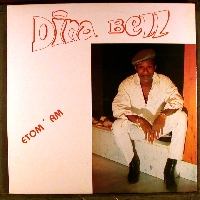
| 1983 | Creation of the group Bazor; release of Etom’Am |
| 1984 | Blow, containing the title “Sophie” which became an anthem of love |
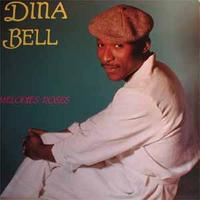
| 1986-89 | Poko Poko (1986), Mélodies roses (1988): peak of his creation |
| 2004 | Violent assault in Douala, temporary coma |
| 2009 | Rebirth, return after five years of silence |
| 2017 | Celebration of forty years of career |
Origins, Revelation, and Rebirth
Charles Dina Ebonguè was born on May 28, 1953, in Douala-Akwa, second son of a family of seven children. His father comes from the central neighborhood and his mother descends from the Bell nobility. Religious music surrounded him from childhood, and his parents sent him to the Lotina Samè de Eboa Lotin choir, a tutelary figure of Cameroonian folk music. As an adolescent, he hosted neighborhood parties and festivals before abandoning his law studies — passion took over.
In 1978, “Yoma Yoma” changed everything. This 45 rpm maxi recorded with Toto Guillaume on guitar and Aladji Touré on bass became an immediate love at first sight. The gold record that followed concretized a popular success that the decades would only strengthen. The following decade was explosive: Mbemb’a Iyo (1980) advocated for respecting women, Longe (1981), then Etom’Am (1983) confirmed an evolving artist — his makossa adorned with touches of afro-zouk, funk, and Congolese rumba.
In 1982, Dina Bell was among the invited artists for the box set Les fleurs musicales du Cameroun, a production of the Ministry of Culture with Manu Dibango, Anne-Marie Nzié, and Ben Decca. The creation of his group Bazor in 1983 inaugurated uninterrupted creativity. Each album was released on his own label: Blow (1984) contains the title “Sophie”, a romance turned into an anthem of love, Poko Poko (1986) with “Minya Mam”, and Mélodies roses (1988). The Douala audience went wild for this period.
History reserved trials for the 2000s. In February 2004, a brutal attack on the street — four men injured his head and broke his arm. A temporary coma in a Douala hospital preceded a gradual recovery. The following five years saw Dina Bell step back: illness and the aftereffects of the assault weighed down the silence. Rebirth, released in 2009, closed this crossing and marked a turning point toward a new mission — training young artists in his own studio. The Bazor experience is now passed on to the next generation, including Guy Bilong and Ndédi Eyango.
Major Works
| Work | Year | Why it’s Essential |
|---|---|---|
| “Yoma Yoma” (45 rpm maxi) | 1978 | First love at first sight, driving beat makossa that earned him the gold record |
| Mbemb’a Iyo (album) | 1980 | Manifesto on respecting women, tenderness of a son crying for his mother |
| “Sophie” (on Blow) | 1984 | Love romance turned into an anthem for generations of Cameroonians |
| Etom’Am (album) | 1983 | First opus under his Bazor label, makossa tinged with afro-zouk |
| Rebirth (album) | 2009 | Return conceived as a rebirth after a long medical silence |
Legacy and Influence
Dina Bell shaped the makossa of the Cameroonian golden era while helping it survive piracy and fleeting trends. His music — melodic, pure, accessible but technically rigorous — remains an entry point for new listeners discovering the Cameroonian scene. Knight of the Order of the Value, he embodies a career where talent has always served melody. “Yoma Yoma”, “Sophie”, and “Mbemb’a Iyo” continue to resonate well beyond borders. Amidst concerts and tributes, Bazor remains standing, a pillar of a music that gives words to African love.
Sources and References
- “Dina Bell”, Wikipedia, https://fr.wikipedia.org/wiki/Dina_Bell, accessed November 6, 2025.
- Frank Bessem, “Dina Bell (Cameroon)”, Musiques d’Afrique, https://www.musiques-afrique.net/cameroon/art-bell-dina.html, accessed November 6, 2025.
- Nago Seck, “Dina Bell”, Afrisson, https://www.afrisson.com/dina-bell-4961/, updated May 24, 2020.
- “Au parcours légendaire de Dina Bell”, Le Tamtam du Mboa, https://tamtamdumboa.com/le-parcourt-legendaire-de-dina-bell-tamtam-du-mboa/, March 15, 2020.
- “Dina Bell : 45 ans au top”, Cameroon Tribune, https://www.cameroon-tribune.cm/article.html/47988/fr.html/dina-bell-45-ans, May 9, 2022.
- « Meet Dina Bell, Legendary Cameroonian Makossa Artist », CMEA (Cameroon Music Evolution Awards), https://www.cmea.cm/meet-dina-bell-legendary-cameroonian-makossa-artist/, consulted on 6 November 2025.
- Dina Bell, Rate Your Music, https://rateyourmusic.com/artist/dina-bell.