Biography
Boy Gé Mendes: the velvet voice of Cape Verde
On June 10, 2007, at the Cirque d’Hiver Bouglione in Paris, an unexpected scene unfolded. Beside Sara Tavares — already a rising star —, Gérard “Boy” Mendes, with his graying beard and guitar in hand, delivered Santa Maria, a morna of rare sensuality. The audience, captivated, did not applaud an anonymous performer: they acclaimed the first great figure of Cape Verdean music to emerge from the shadow of the diaspora. Before the global fame of Césaria Évora, Boy Gé Mendes had opened the door.
In brief
| Full name | Gérard “Boy” Mendes Sequeira |
| Birth | 1952, Dakar, Senegal |
| Nationality | Cape Verdean |
| Genre | morna, coladeira — morna is that slow, nostalgic song of Cape Verde that expresses saudade, that homesickness that traverses generations |
| Instruments | vocals, guitar |
| Notable works | |
| Awards | Choc prize from Jazzman (1998), World of Music prize (1998) |
Key dates
| Year | Event |
|---|---|
| 1952 | Birth in Dakar, within the Cape Verdean diaspora in Senegal |
| 1967 | Formation of the Beryl’s, first group, with a brother |
| 1977 | Founding of Cabo Verde Show with his brother Jean-Claude, Luis Silva, and Emmanuel Lima |
| 1983 | Move to Nice, after a stopover in Paris |
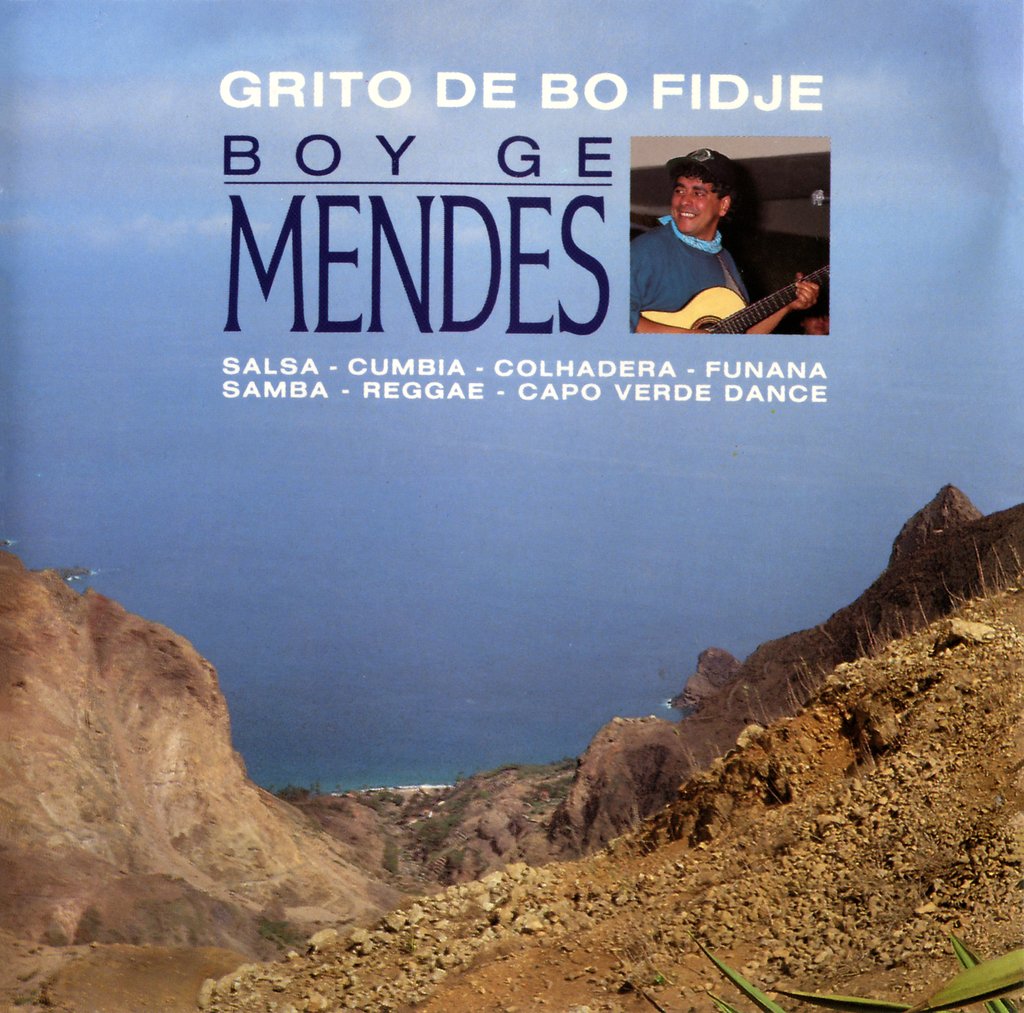
| 1990 | “Grito de bo Fidge”: first Cape Verdean hit for the general public |
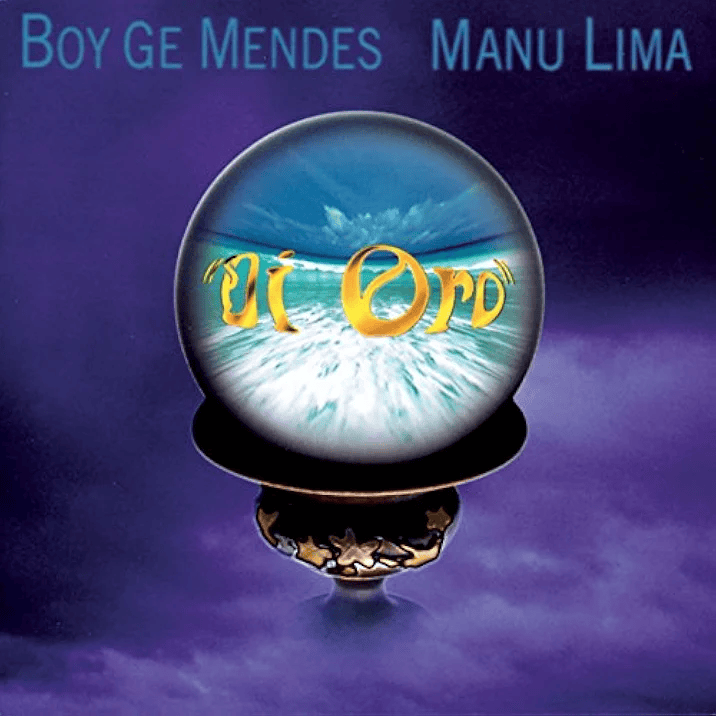
| 1996 | Recording of Di Oro with Manu Lima (arranger and composer) |
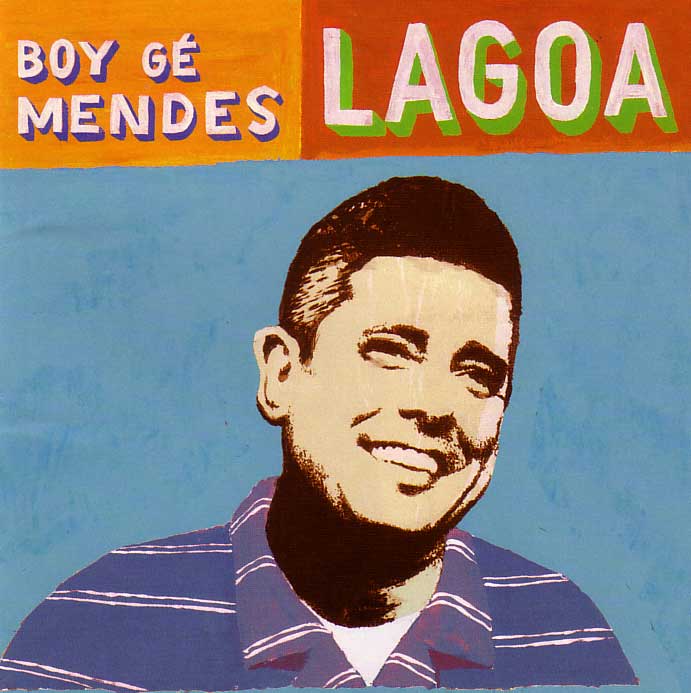
| 1997 | Release of Lagoa, crowned with the Choc prizes from Jazzman and the World of Music, considered his best album |
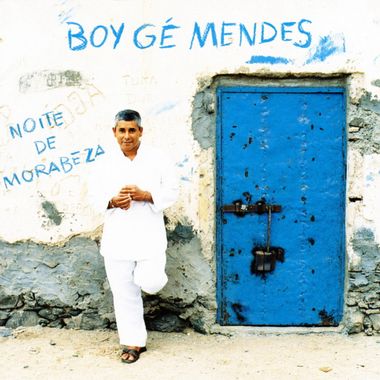
| 1999 | Release of Noite de Morabeza, on the Lusafrica label |
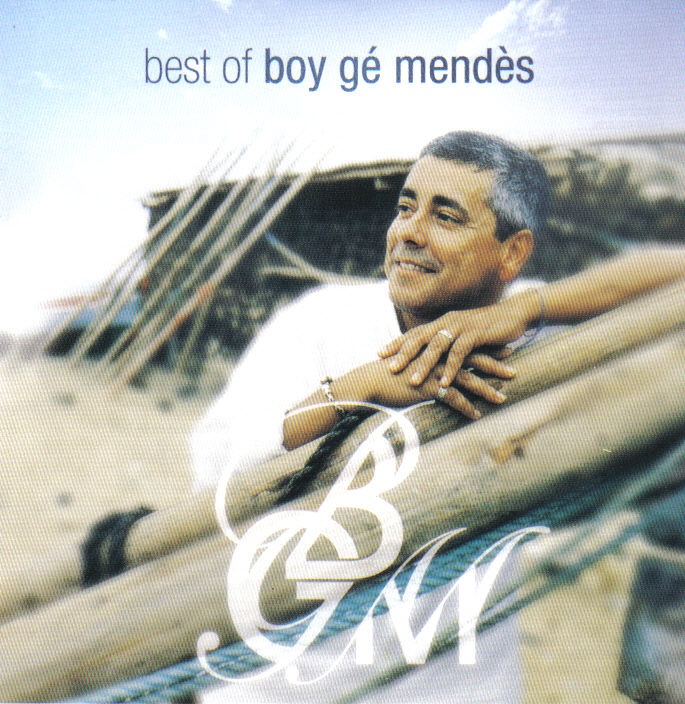
| 2007 | Best of Best of Boy Gé Mendès, released by Lusafrica |
| 2020 | Release of Bate Tempu |
Career
Gérard Mendes grew up in a multicultural Dakar, among friends from Mali, Guinea, and Cape Verde. Singing came to him at Catholic school, then at parties and fairs. As a teenager, he learned the ropes of the stage in the piano-bars of Dakar’s lively neighborhoods — the Marseille, the Black & White, the Alhabama — where he sang standards: the Beatles, the Stones, rhythm and blues, salsa, in French, and phonetically in English or Spanish. His father worked with punched cards, his mother was a tailor; music remained a passion.
In 1967, he formed the Beryl’s with a brother and began touring throughout Senegal. At the end of the 1960s, he went to France — a first aborted departure lasting two years. In 1976, he returned, and the following year, founded with his brother Jean-Claude, Luis Silva, and Emmanuel Lima, Cabo Verde Show. The group became the star of Cape Verdean expatriate communities in France and the Netherlands. It was there that the turning point occurred: Mendes felt the urgent need to compose in Cape Verdean Creole, writing three texts on the group’s second album, acclaimed by the community. He left Cabo Verde Show, launched with his brother the duo Mendes & Mendes, and then the group O’asah, which opened for João Bosco in Paris. Tired of the gray north, he left Paris for Nice in 1983, drawn by the light.
In 1990, Gérard Mendes became Boy Gé Mendes — a wink to the nickname his friends had stuck on him as a child in Dakar, where little boys called each other “boy”. His song “Grito de bo Fidge” — the cry of the young man’s heart — became the first Cape Verdean hit aimed at the international public. Paris, New York, Abidjan: concerts piled up to the point that he felt the need for a break. He then traveled with his guitar, to Brazil, Senegal, and Cape Verde. In 1996, on the island of São Vicente — his mother’s birthplace —, he reunited with Emmanuel Lima, now Manu Lima, and recorded Di Oro.
His album Lagoa (the lagoon), published in 1997, consecrated this turning point: a return to roots, a blend of Cape Verdean jazzy base with Brazilian and Cuban fragrances. The album received in 1998 the Choc prize from Jazzman and the World of Music prize. Boy Gé left Nice and settled in Cape Verde, in Mindelo, where he found calm and serenity. He recorded Noite de Morabeza in 1999 for Lusafrica, surrounded by musician friends — Mario Canonge, the Fanfant brothers, Xavier Dessandre, Manu Lima. The album established an elegant atmosphere where Boy Gé sang his love for his archipelago. He published Best of in 2007 and Bate Tempu in 2020.
Major works
| Work | Year | Why it is essential |
|---|---|---|
| Di Oro | 1996 | First solo steps with Manu Lima, a milestone album where Cape Verdean jazz emancipates itself from the collective |
| Lagoa | 1997 | His return to roots crowned with two prizes; the album that shifted Cape Verdean music onto the international stage |
| “Grito de bo Fidge” | 1990 | First Cape Verdean hit outside the community; the track that made him famous |
| Noite de Morabeza | 1999 | Masterpiece of elegant melancholy, carried by the Lusafrica label, where Boy Gé sings entirely his love for Cape Verde |
Legacy and influence
Boy Gé Mendes is recognized as the male counterpart to Césaria Évora, the Barefoot Diva who made morna world-famous. His song “Joia” (the jewel, a tribute to Cape Verdean women) was covered by Canadian singer Toshi Shah, who described it as a love letter to Cape Verde. Boy Gé also appears on the records of Sara Tavares and Mariana Ramos, confirming his role as a bridge in a Cape Verdean scene in effervescence. He continues to live between Mindelo and the islands of Boa Vista and Santo António, between popular carnival parties and the Noites Caboverdianas where the world is remade around guitars and glasses of grog. Cape Verdean music owes to him having crossed the diaspora threshold long before the Césaria explosion — and his velvet voice, between saudade and swing, remains a mandatory passage for anyone who wants to understand this music.
Sources and references
- « Boy Gé Mendès », Lusafrica, https://www.lusafrica.com/artiste/boy-ge-mendes/, accessed 8 November 2026.
- « Boy Ge Mendes », World Music Central (Angel Romero), https://worldmusiccentral.org/artist-profiles-boy-ge-mendes/, accessed 8 November 2026.
- « Boy Gé Mendès », Wikipedia (FR), https://fr.wikipedia.org/wiki/Boy_Gé_Mendès, accessed 8 November 2026.
- « Boy Gé Mendes », Wikipedia (EN), https://en.wikipedia.org/wiki/Boy_Gé_Mendes, accessed 8 November 2026.
- « Boy Ge Mendes », Afrisson, https://www.afrisson.com/boy-ge-mendes-123/, accessed 8 November 2026.
- « Boy Gé Mendès — Fiche Personne », Africultures, http://africultures.com/personnes/?no=4205, accessed 8 November 2026.
- « Festival Cap Vert 2006 — Trouville-sur-Mer », http://capvert.festival.free.fr/artistes.htm, accessed 8 November 2026.
- « Saint Germain », RFI Musique, https://musique.rfi.fr/musique/20000606-saint-germain.html, accessed 8 November 2026.
- « Les choix du Monde » (mention Sara Tavares), Le Monde, https://www.lemonde.fr/culture/article/2007/12/10/les-choix-du-monde_987862_3246.html, accessed 8 November 2026.
- « Mariana Ramos, la re…belle du Cap-Vert », RFI Musique, https://musique.rfi.fr/musique/20080215-mariana-ramos-rebelle-cap-vert.html, accessed 8 November 2026.