Biography
Busi Mhlongo: the untamable voice of maskanda
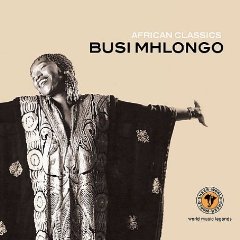
In 1999, Urban Zulu propelled a young Zulu singer onto the global charts. At the microphone, a powerful voice alternating between traditional songs and modernized soul. On stage, barefoot, she danced with contagious energy. Busi Mhlongo, nicknamed “Mam’Busi” by the public, crossed continents to return to the heart of South Africa.
In brief
| Full name | Busisiwe Victoria Mhlongo |
| Birth | 28 October 1947, Inanda, KwaZulu-Natal, South Africa |
| Death | 15 June 2010 (62 years), Durban, South Africa |
| Field | Singer, dancer, composer — mbaqanga, maskanda, soul, jazz |
| Iconic works | Urban Zulu, Babhemu, Freedom |
| Honors | Order of Ikhamanga (silver), 3 SAM Awards, Kora Award, Grammy nomination |
Key dates
| Year | Event |
|---|---|
| 1947 | Birth in Inanda, near Durban, in a musical family |
| 1963 | “My Boy Lollipop” becomes a national hit under the name Victoria Mhlongo |
| 1968 | Trip to Maputo with the African Follies, then Lisbon with Conjunto Juan Paulo |
| 1972 | Settles in London, joins the scene of exiled South African musicians |
| 1979 | Return to South Africa on tour with Letta Mbulu |
| 1980-1989 | Dutch period: Amsterdam festivals, collaborations with Salif Keita |
| 1993 | First solo album, Babhemu, with the group Twasa |
| 1999 | Release of Urban Zulu, major album produced by Will Mowat |
| 2000 | Three SAM Awards (best artist, best adult contemporary album, afro-pop) |
| 2010 | Death from breast cancer at Albert Luthuli Hospital in Durban |
A song since childhood
Busi Mhlongo was born in the mountainous village of Ohlange, not far from Durban, within a family attached to music. Her Methodist education opened few doors to sound, but little Busi was not discouraged: she followed preachers of other confessions to hear hymns, hunted guitar players in the streets. “I have always sung, at school, after school,” she recounts in an interview with Jamie Renton. “Singing was my place in the family. I sang when my voice was needed, at a funeral or a wedding.”
In 1963, at sixteen, she won a Gallo Records contest and recorded “My Boy Lollipop,” which became a national hit. The single propelled her onto Durban stages, where she participated in musicals — King Kong among them — and worked with the biggest names in local jazz and mbaqanga. This mbaqanga is the urbanized music of South African townships, born from the meeting between traditional Zulu singing and jazz harmonies imported from America. Busi stood out for her voice and stage presence: barefoot, she danced with a freedom that shocked and charmed at once.
Exile and crossing
Busi’s life turned in 1968. A tour with the African Follies brought her to Maputo, in Mozambique. Portuguese musicians invited her to join the orchestra Conjunto Juan Paulo, and she settled in Lisbon to sing in casinos. It was there she learned of her husband’s death, drummer Early Mabuza — assassinated in South Africa. “My tears flowed for him, for the years lost with my family,” she would say.
London first, where she recorded with exiled South Africans Dudu Pukwana and Julian Bahula, and sang as lead vocalist with the afro-rock group Osibisa. Canada next, where illness had pushed her to seek care. “It was there that they started to notice me,” she said. “I participated in theater, and directors, artists, and musicians respected me.” She returned to South Africa in 1979 after a tour with Letta Mbulu: “I came back to South Africa and things were terribly hard. I felt the spirit, the energy, the anger and frustration.”
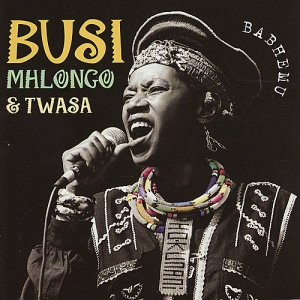
The Netherlands became her base for much of the 1980s. She stood out at the Africa Roots Festival in Amsterdam, shared the stage with Ifang Bondi, Salif Keita, and Manu Dibango, and became a figure of emerging world music. Back in South Africa, she formed the group Twasa and recorded Babhemu in 1993, an album reissued internationally in 1995.
The triumph of Urban Zulu
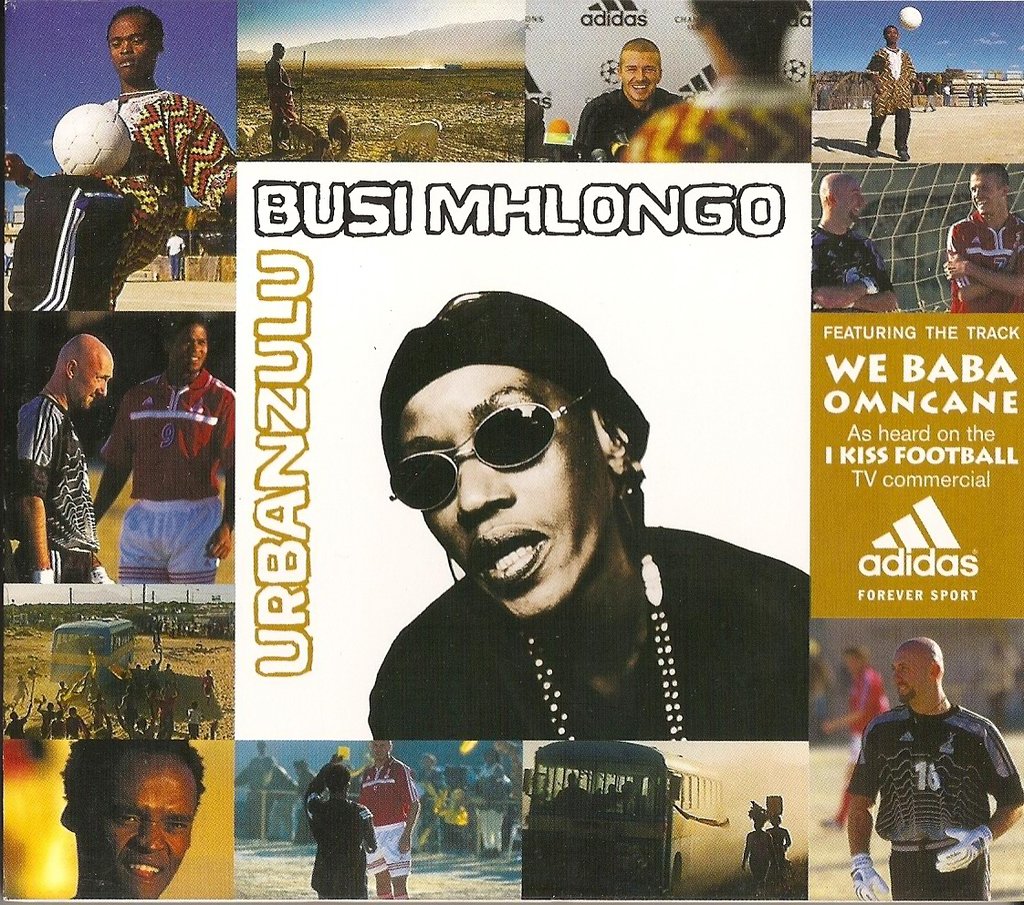
1999 marked the turning point with Urban Zulu, an album produced by Will Mowat that made Busi a global ambassador of maskanda — a traditional Zulu genre historically carried by male migrant workers working in mines, and that narrates the lives of black workers. Busi reinterpreted this masculine music with a properly feminine voice, singing with the power of traditional healer chants. “If you cannot touch the youth, it is painful,” she said about this album. “The rhythms of maskanda are not so far from those of drum ’n’ bass or hip-hop.”
The album rose to number one on European world music charts for two consecutive months. In 2000, it earned three SAM Awards and a Grammy nomination. “We Baba Omncane” was even used in a global Adidas campaign in the early 2000s.
Major works
| Work | Year | Why it is essential |
|---|---|---|
| Babhemu | 1993 | First solo album, recorded with Twasa in the Netherlands; a milestone that launched her career |
| Urban Zulu | 1999 | Masterpiece reinventing maskanda for a global audience, number one on charts |
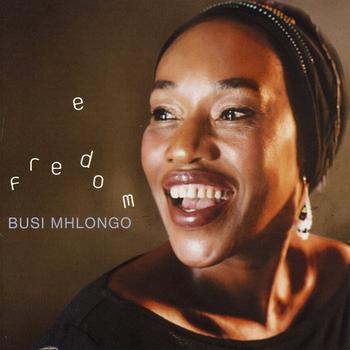
| Freedom | 2003 | Spiritual and political exploration between soul and mbaqanga |
| “We Baba Omncane” | 1999 | Single from Urban Zulu, used in a global Adidas campaign |
Heritage and influence
Busi Mhlongo passed away on June 15, 2010, at the Albert Luthuli Hospital in Durban, after a long battle with breast cancer. Twenty months later, President Jacob Zuma posthumously awarded her the Silver Order of Ikhamanga for her exceptional contribution to South African music.
Thandiswa Mazwai, singer and friend, paid tribute to her emotional honesty: “The one who knew Mam’Busi knew her tears were always close. She cried a lot — over lost years with her family, over what the record companies owed her.” Critic Niren Tolsi summarized it thus: “a woman with a powerful voice and temperament, who had demanded and subverted the patriarchal space of the wandering Zulu troubadour, the maskandi.”
Urban Zulu was reissued on vinyl in 2022 by Matsuli Music, and the memory of Busi Mhlongo remains alive — the one who made maskanda a bridge between rural traditions and urban sounds, crossing continents without ever renouncing her roots.
Sources and references
- “Busi Mhlongo, queen of modern Zulu music, dead at 62”, Mail & Guardian, http://mg.co.za/article/2010-06-16-busi-mhlongo-queen-of-modern-zulu-music-dead-at-62, accessed November 6, 2026.
- “Busi Mhlongo, South Africa’s urban punk king”, Pan-African Music, https://pan-african-music.com/en/busi-mhlongo-south-africa-urban-punk-king/, accessed November 6, 2026.
- “Busisiwe Victoria Mhlongo”, South African History Online, https://sahistory.org.za/people/busisiwe-victoria-mhlongo, accessed November 6, 2026.
- “Artist Profiles: Busi Mhlongo”, World Music Central, https://worldmusiccentral.org/artist-profiles-busi-mhlongo/, accessed November 6, 2026.
- “South African Artist Busi Mhlongo Dies”, Billboard, https://www.billboard.com/music/music-news/south-african-artist-busi-mhlongo-dies-1205128/, accessed November 6, 2026.
- “Presentation Of National Orders”, The Presidency, http://www.thepresidency.gov.za/MediaLib/Downloads/Newsletters/National%20Orders%202011.pdf, accessed November 6, 2026.
- “African Roots and Rhythms: Busi Mhlongo”, The Riff (Medium), https://medium.com/the-riff/african-roots-and-rhythms-busi-mhlongo-south-africa-ba315410bf8c, accessed November 6, 2026.
- “Busi Mhlongo”, Wikipedia, https://en.wikipedia.org/wiki/Busi_Mhlongo, accessed November 6, 2026.