Biography
Justin Vali
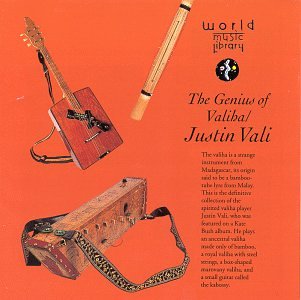
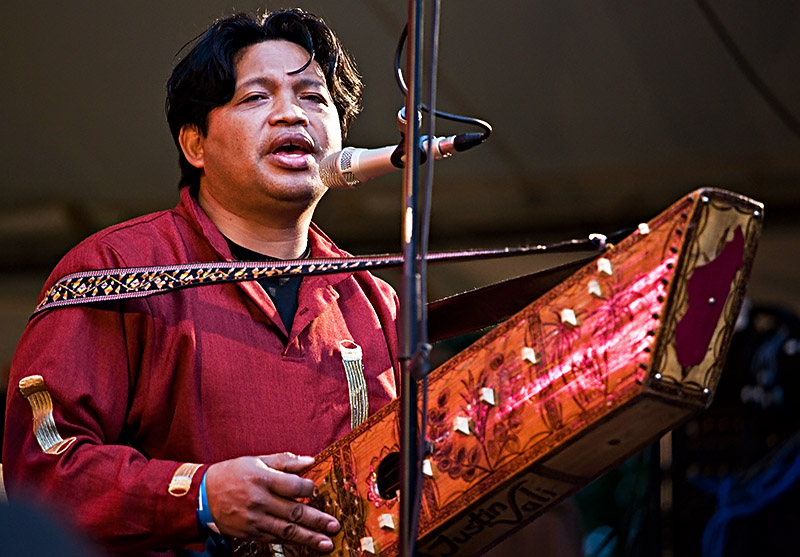
In the heart of his Paris home, a bamboo instrument rests on its tripod — a valiha, a tubular zither that the elders of Madagascar made converse with the spirits of ancestors. Justin Vali extends his hands, and his nails strike strings that had never resonated thus: within an acoustic trio, at the WOMAD festival, with Peter Gabriel at Real World Studios. A new sound for a millennial instrument.
In brief
| Full name | Justin Rakotondrasoa (stage name: Justin Vali) |
| Birth | 1964, Fierenana near Toamasina, Madagascar |
| Field | Traditional Malagasy music; valiha (tubular bamboo zither), marovany, kabosy |
| Notable works | Ny Marina (The Truth), The Sunshine Within, Valiha |
| Awards | Grand Prix SACEM 2006 (traditional music) |
Key dates
| Year | Event |
|---|---|
| 1964 | Birth in Fierenana, near Toamasina, into a family of luthiers and valiha players attached to the court of former Malagasy kings |
| 1970-1971 | Training in the valiha with his maternal grandfather Railazafy, specialist of traditional rhythms from the south |
| 1980s | Move to France; first Parisian stages via Malagasy communities |
| 1993 | Collaboration with Kate Bush: Eat the Music on the album The Red Shoes, recorded in London |
| 1995 | Release of Ny Marina (The Truth) on Real World Records; international recognition |
| 2005 | Release of Valiha (Five Planets); confirmation as a global reference for the valiha |
| 2006 | Grand Prix SACEM traditional music; WOMAD and Womex tours |
| 2008 | Malagasy All Stars — collective album with Eric Manana and other figures of the Malagasy scene |
| 2021 | Creation Masoala at the Festival de Marseille (with Joel Rabesolo and Hanta) |
From Fierenana to Paris: the life of a valiha virtuoso
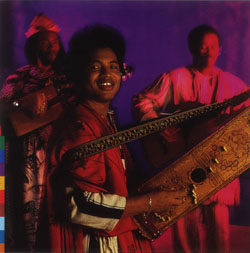
Justin Rakotondrasoa was born in 1964 in the village of Fierenana, near Toamasina on the east coast of Madagascar. “Vali,” the name under which he performs, pays homage to the valiha — the tubular bamboo zither of which he became the master. Coming from a family of luthiers and players attached to the court of former Malagasy kings, he grew up in a world where woven bamboo served as a bridge between the living and ancestors. The valiha, of Indonesian origin imported centuries ago by Malagasy ancestors, is traditionally played with bare fingers. But Justin strikes the strings with his nails, giving the instrument a sharper and more rhythmic sound. This style, born in Madagascar but matured in Paris during the eighties, became his signature. Arriving in France around the turn of the 1980s, he animated Malagasy community gatherings — churches and hostels — using the valiha in solo to accompany his warm male voice or in trio with acoustic guitar and kabosy.
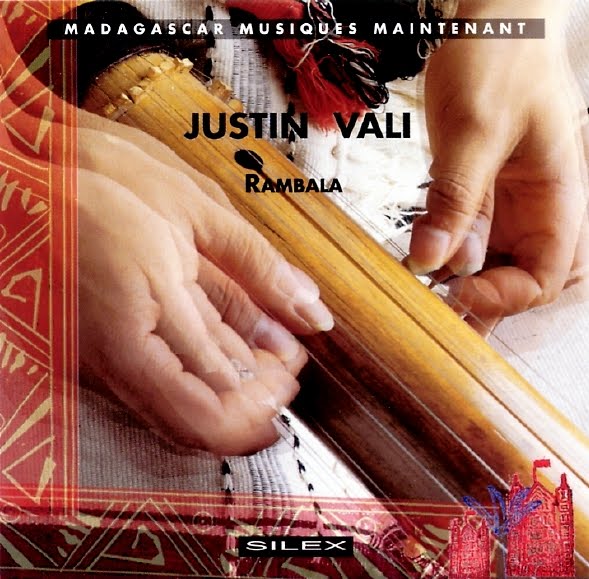
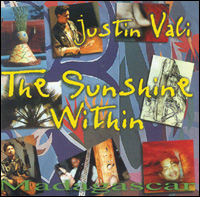
The turning point of his career occurred at the beginning of the 1990s, when he recorded Rambala (Silex/Auvidis, 1991), his first solo album. But it was especially his meeting with Kate Bush that marked a milestone: the British singer, fascinated by the track Sons La Touma (“The Holy Bible”) from her album, invited him to London. “She listened and sang the song all night, then she composed the music at the piano,” reports Justin Vali in the columns of Homeground no. 55 (spring 1995). “She insisted on singing with me, but my English was insufficient: she taught me every word all night. We maintained a very warm, friendly and spiritual relationship, because Kate is very interested in the spiritual side of things.” If Eat the Music (album The Red Shoes, 1993) is a British pop project, Justin Vali did not delay in establishing himself as one of the global references for the valiha. In 1994, he recorded Ny Marina (“The Truth”) at Real World Studios, the famous studio founded by Peter Gabriel. The album released in 1995 on Real World Records made him an international musician: three partners accompanied the valiha — Doudou (Romeo Tovoarimino) on acoustic guitar and Clemrass (Clement Randrianantoandro) on kabosy with Malagasy maracas — completed by Carlo Rizzo, Italian master of tambourine and frame drum. Real World described the formation thus: “with his non-amplified trio, Justin adorned the music of his forebears with the attire of the modern world.” In 1999, he released The Sunshine Within, a collaboration with Paddy Bush — Kate Bush’s brother and central figure of British world music. The album explored territories where Malagasy rhythms crossed Anglo-Saxon harmonies.
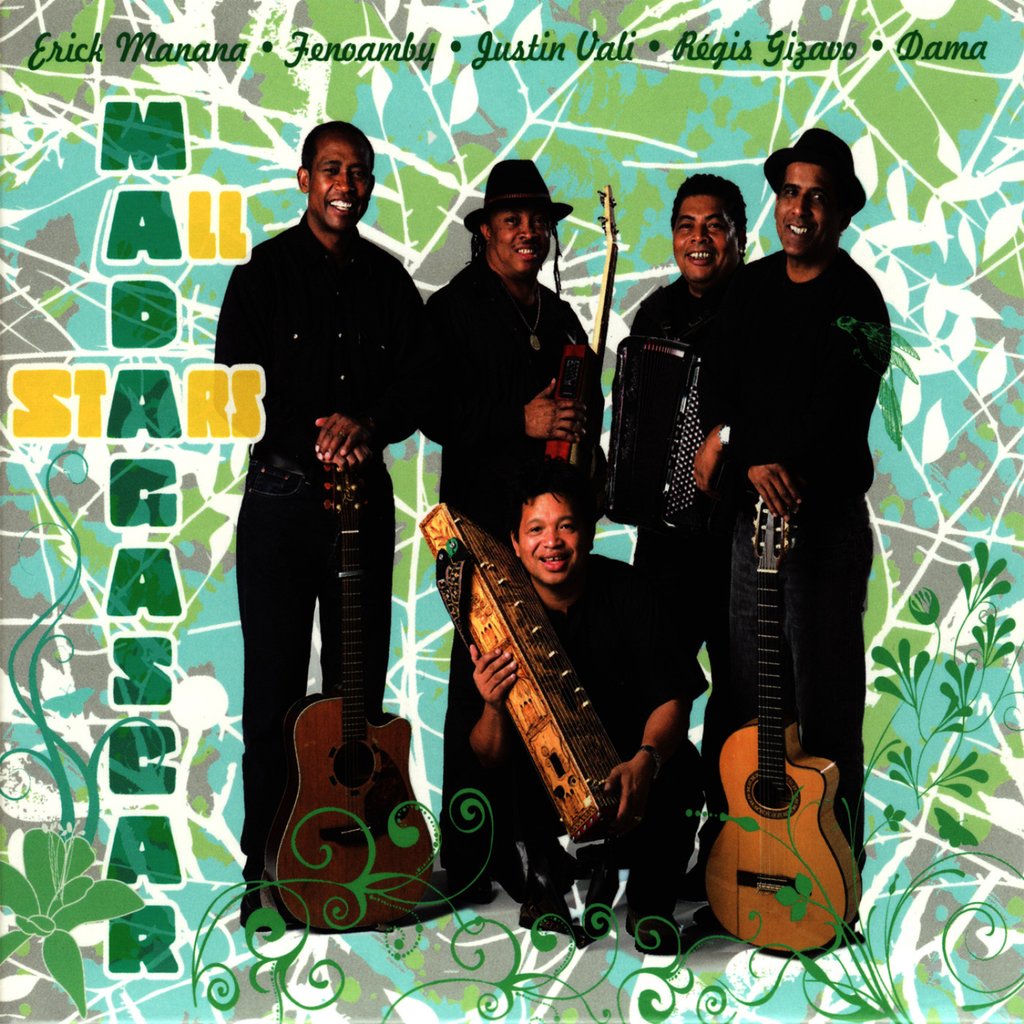
The 2010s saw Justin Vali expand his scope. In 2008, he joined the Malagasy All Stars project alongside Eric Manana, Fenoamby and Régis Gizavo. The 2006 Grand Prix SACEM, won in the traditional music category, came to celebrate two decades of work. Since 2015, he has deepened his collaboration with French musician and researcher Marc Chemillier: pianist, mathematician and ethnomusicologist of the EHESS. Together, they perform at festivals in Japan (métisse live! vol.4 in Nanto, 2024), Europe and Francophone African countries. In 2021, he participated in the creation Masoala at the Festival de Marseille.
Major Works
| Work | Year | Why It’s Essential |
|---|---|---|
| Rambala | 1991 | First solo album: the discovery of Justin Vali’s sound by the French public |
| « Eat the Music » (Kate Bush) | 1993 | The valiha enters British pop; unexpected meeting in London |
| The Truth (Ny Marina) | 1995 | Recording at Real World Studios; international consecration under Peter Gabriel’s label |
| The Sunshine Within | 1999 | Dialogue between valihes and acoustic guitars with Paddy Bush, crossing cultural boundaries |
| Valiha | 2005 | Emblematic solo album on Cinq Planètes, consolidating Justin’s status as a worldwide reference for the valiha |
Legacy and Influence
Justin Vali is what Malagasy press calls a cultural ambassador: the greatest living valiha interpreter according to the terms of the Marseille Festival. His contribution to the renewal of modern valiha — this fingernail technique he invented and disseminated — paves the way for a new generation of players. The vinyl reissue of The Truth via Real World Records, the WOMAD tours and the Marseille Festival attest that his work continues to inspire both Western music lovers and purists of Malagasy music. More than twenty-five years after his debut, Justin keeps his promise: transmitting a millennial heritage to the modern world.
Sources and References
- « Justin Vali », Wikipedia (English version), https://en.wikipedia.org/wiki/Justin_Vali, accessed November 4, 2026.
- « The Justin Vali Trio », Real World Records, https://realworldrecords.com/artists/the-justin-vali-trio/, accessed November 4, 2026.
- « Justin Valiha, Joel Rabesolo and Hanta », Marseille Festival, https://www.festivaldemarseille.com/en/justin-valiha-joel-rabesolo-et-hanta, accessed November 4, 2026.
- Justin Vali, World Music Central, https://worldmusiccentral.org/artist-profiles-justin-vali/, accessed November 4, 2026.
- « Justin Vali », Gargilesse Summer Festival, https://festivalgargilesse.fr/justin-vali/, accessed November 4, 2026.
- « métisse live! vol.4 Justin Vali & Marc Chemillier », métisse (Nanto City, Toyama, Japan), https://metisse.jp/en/program/239/, accessed November 4, 2026.
- « Vali, Justin », Kate Bush Encyclopedia, https://www.katebushencyclopedia.com/vali-justin/, accessed November 4, 2026 (textual citation of Justin Vali reported by Matt Adams in Homeground no. 55, spring 1995).
- « Grand Prix de la musique traditionnelle : Justin Vali », SACEM, https://web.archive.org/web/20130913134546/http://www.sacem.fr/files/content/sites/fr/files/mediatheque/evenement/2006/justin_vali.pdf, accessed November 4, 2026.