Biography
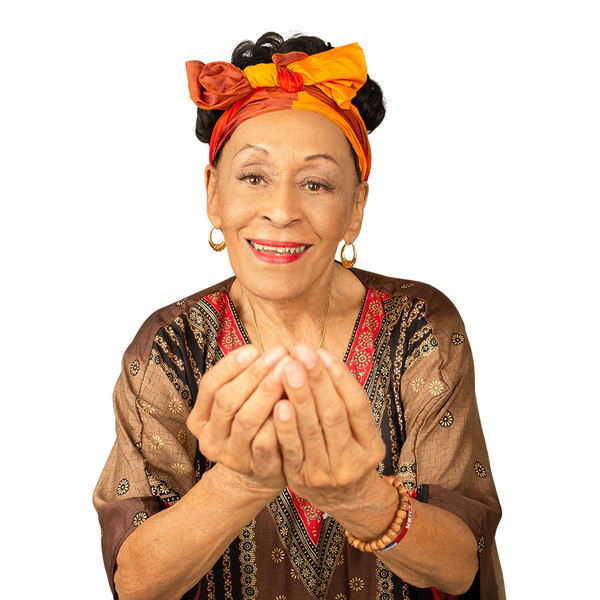
Omara Portuondo
Omara Portuondo Peláez was born on October 29, 1930, in the Cayo Hueso neighborhood, then one of the most popular areas of Havana. Daughter of Esperanza Peláez, from a wealthy Spanish family, and Bartolo Portuondo, a Black player for the Cuban national baseball team. Her mother was disinherited by her family for this interracial marriage. The parents found themselves without fortune but with music in the blood of their three daughters.
In brief
| Full name | Omara Portuondo Peláez |
| Birth | October 29, 1930, Cayo Hueso, Havana (Cuba) |
| Genre | Bolero, son cubano, filin (feeling), vocal jazz, guaracha |
| Signature works | Buena Vista Social Club, “Drume Negrita”, Vida |
| Awards | Latin Grammy 2009, 2019 (Excellence), 2023; Gold Medal of Merit in Fine Arts (Spain, 2021); three Grammy Award nominations |
Key dates
| Year | Event |
|---|---|
| 1930 | Born in Cayo Hueso, Havana. Daughter of a disinherited Spanish mother and a professional Black baseball player |
| 1950 | Began at nineteen as a dancer at the Tropicana Cabaret in Havana |
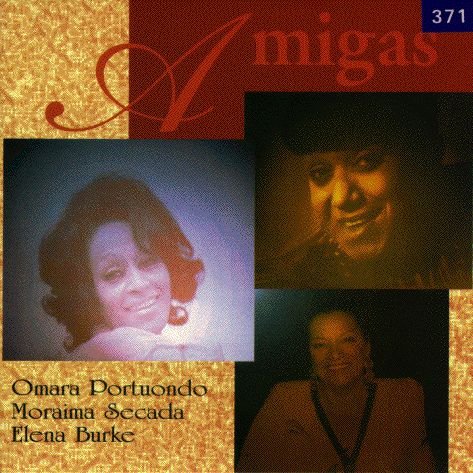
| 1953 | Joined Cuarteto d’Aida, a female vocal quartet with Elena Burke and Moraima Secada |
| 1957 | RCA Victor album by Cuarteto d’Aida; international tours, performance with Nat King Cole |
| 1958-1959 | First solo album: Magia Negra with pianist Julio Gutiérrez, at the crossroads of jazz and Cuban music |
| 1967 | Solo debut (two albums on the Areito label); represented Cuba at the Sopot Festival in Poland |
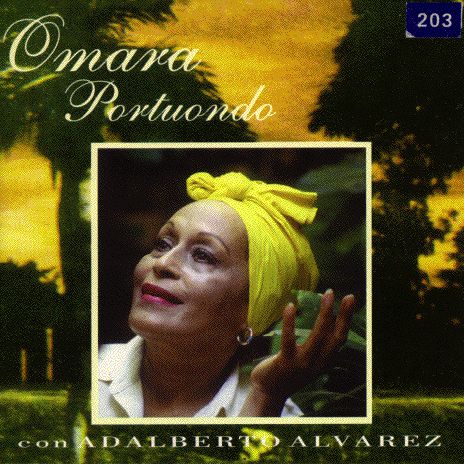
| 1970-1984 | Sang with Orquesta Aragón on world tours; collaborations with Adalberto Álvarez, Chucho Valdés |
| 1995-1997 | Met American guitarist Ry Cooder; sang with Compay Segundo “Veinte Años” on the album Buena Vista Social Club; she performed “I’ve been listening to her songs since I was a little girl” |
| 2000-2004 | Two solo albums on World Circuit; world tours at Carnegie Hall and international festivals |
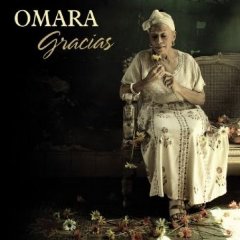
| 2008-2023 | Album Gracias (2008); Latin Grammy for Excellence (2019); album Vida (2023), Latin Grammy 2023 |
| 2024 | Retired from stages in October after a fainting spell in Barcelona; died on July 15 |
Origins, career and global consecration
Omara’s family grew up in a humble home but nourished by songs. Her parents told her she represented Cuba through art, and the fairy of songs accompanied the little girl from age eight: school choirs and music lessons. Her first professional step led her to the Tropicana Cabaret in 1950, as a dancer of the staff.
In 1953, Elena Burke called her to form Cuarteto d’Aida, a female vocal quartet directed by pianist Aida Diestro. The group quickly became a star in Havana: it toured the United States, shared the stage with Edith Piaf and Josephine Baker, recorded an album for RCA Victor. Omara then developed her intimate style, what Cubans call filin — contraction of the English feeling — a romantic and soulful way of North American vocal jazz, tinted with Cuban bolero. She became « La novia del feeling » — the fiancée of feeling, a nickname given by speaker Manolo Ortega.
In 1967, Omara left Cuarteto d’Aida to launch as a solo artist. Her first two albums on Areito explored bolero and Cuban song. The same year, she represented Cuba at the Sopot Festival in Poland — a prestigious launchpad. In the following decades, she multiplied albums, international tours and collaborations with Adalberto Álvarez, Chucho Valdés.
In 1995, American guitarist Ry Cooder arrived in Havana to record Buena Vista Social Club. Omara, then an established artist in Cuba for nearly forty years, rehearsed in the same studio. She invited Compay Segundo to sing “Veinte Años” with her, and joined the project. The album Buena Vista Social Club (1997) achieved global success. Wim Wenders immortalized this moment in the documentary of the same name in 1999, and Omara became the only original singer to remain a permanent member of the group.
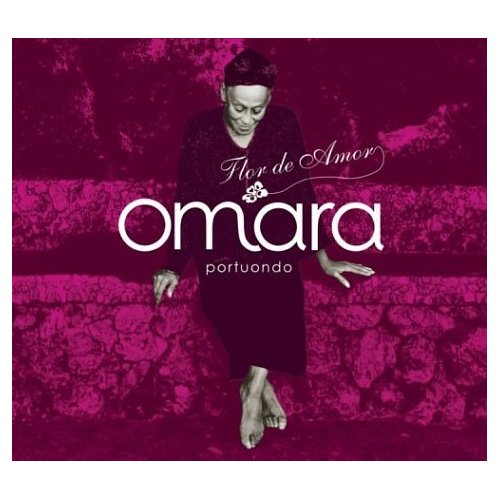
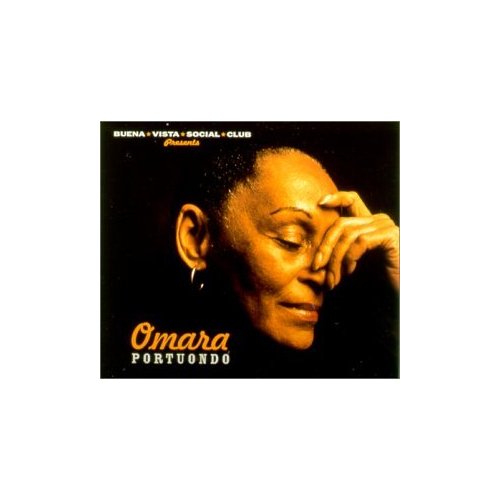
« My story is like the story of Cuba… Tremendous » she said in 2016 to Billboard. On the international stage, she signed two World Circuit albums (Buena Vista Social Club Presents Omara Portuondo and Flor de Amor), toured at Carnegie Hall, Montreal and Montreux Jazz Festivals. In 2004, the International Red Cross appointed her ambassador — first Cuban musician to receive this title.
In 2008, Omara published Gracias, a tribute album to seventy years of career, with poetic texts composed for her by Jorge Drexler. « I’ve been listening to her songs since I was a little girl », she explained in 2016 to NPR to justify her choice of “Veinte Años”, the song by Maria Teresa Vera. After Omara Siempre (2018) and the pandemic, she launched the idea of Vida, recorded at her home on the Malecón with her son Ariel and close friends — Gaby Moreno, Rubén Blades, Susana Baca. The album received the Latin Grammy for best traditional tropical album in 2023 and a nomination for a Classical Grammy Award.
On July 15, 2024, Omara Portuondo died at the age of 93. She left an immense legacy — from intimate filin to international stages, passing through Cuarteto d’Aida and Buena Vista Social Club.
Major Works
| Work | Year | Why It’s Essential |
|---|---|---|
| Magia Negra (with Julio Gutiérrez) | 1959 | First solo recording: Cuban jazz and son blended together, a rarity for the time |
| Cuarteto d’Aida | 1953-1967 | First group — the launchpad that forged her voice and intimate style, featuring the Cuban filin |
| Buena Vista Social Club (with Ry Cooder) | 1997 | The album that made the artist world-famous, at sixty-seven years old |
| Buena Vista Social Club Presents Omara Portuondo | 2000 | First solo album: her boleros and romantic songs, recorded for the world |
| Vida | 2023 | Final album, recorded in Havana during the pandemic; Latin Grammy Award 2023 |
Legacy and Influence
Omara Portuondo remains, beyond international accolades, the voice of a generation of Cuban musicians who built the country’s sonic identity. The filin — this intimate style derived from North American jazz and adapted to Cuban sensibility — is her most enduring legacy. Latin American artists who, after her, sang boleros and embodied the feeling find in Omara a pioneer: her interpretive method, blending discretion with emotional power, remains a model. The Buena Vista Social Club was born from this generation: after her death in 2024, Omara’s figure appears as the group’s female cornerstone — the one who held the stages and recorded continuously for more than seventy years.
Sources and References
- “Omara Portuondo Peláez”, Wikipedia (English version), https://en.wikipedia.org/wiki/Omara_Portuondo, accessed November 15, 2024.
- “At 85, Cuban Legend Omara Portuondo Is Still Working — And Feeling Young”, NPR, October 19, 2016, https://www.npr.org/2016/10/19/498542561/at-85-cuban-legend-omara-portuondo-is-still-working-and-feeling-young
- “Omara Portuondo on Her ‘Tremendous’ Career”, Billboard, 2016, https://www.billboard.com/pro/omara-portuondos-tremendous-career-buena-vista/
- “Omara Portuondo Biography”, artist’s official website, https://www.omaraportuondo.com/, accessed November 15, 2024.
- “Omara Portuondo: Cuba sigue adelante”, Cubainformación, February 10, 2021, https://www.cubainformacion.tv/cuba/20210210/89970
- “Omara Portuondo, la chanteuse du Buena Vista Social Club”, Ouest-France, October 7, 2024, https://www.ouest-france.fr/culture/musiques/omara-portuondo-la-chanteuse-du-buena-vista-social-club-met-fin-a-sa-carriere-a-lage-de-93-ans-80419a7e-8473-11ef-91d9-7f562215fe95
- “Quiero dar las gracias a todos”: Omara Portuondo", El Espectador, September 18, 2008, https://www.elespectador.com/entretenimiento/musica/quiero-dar-las-gracias-a-todos-omara-portuondo
- “Omara Portuondo: derrière le rideau”, Archivo Cubano, http://archivocubano.org/omara_portuondo.html
- “Omara Portuondo”, Grammy Awards, https://www.grammy.com/artists/omara-portuondo/13637, accessed November 15, 2024.