Musical History of Somalia
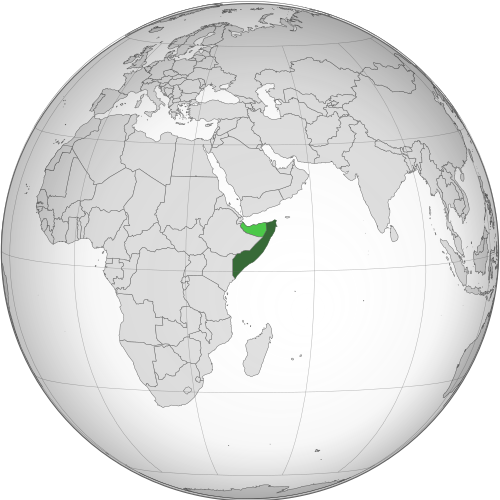
On the beaches of Lido, where the turquoise waters of the Indian Ocean caress white sand, Italian tourists came to dance in 1978 at the Al-Uruba club, facing a group that played African funk à la James Brown with lyrics in Somali1. A few kilometers away, at the Juba hotel, another group, Dur-Dur, made dancefloors tremble with a mix of disco, psychedelic rock and Bollywood melodies2. This was Mogadiscio, the Pearl of the Indian Ocean, before the war.
Today, when the world thinks of Somalia, it imagines piracy, insecurity, famine. But the 10,000 cassettes saved in the basements of Hargeisa tell another story: that of a country which, in the 1970s and 1980s, invented a hybrid sound as unique as it was avant-garde, blending pastoral traditions and global influences, and which today, in the diaspora and on the beaches of its former capital, is dancing again3.
A soil where speech makes music
Even before the appearance of electrified instruments, Somalia cultivated a millenary poetic tradition. Somali poetry, often accompanied by music, deals with love, politics, war and the lives of nomads. Pastoralists competed at night around camel herds with singing and clapping performances4.
The central instrument is the oud, a fretless Arabic lute that gathers the sound of all other traditional instruments5. Somali chordophones like the shareero and madhuube complete this soundscape, just as ashiko drums and tables do6. The dhaanto, ancestral folk song of the Ogaden clan, is played without instruments — clapping and rhythmic stomping — and precedes even Jamaican reggae according to some musicians7.
Did you know? Moroccan explorer Ibn Battuta landed in Mogadiscio in 1331, one year after the conquest of Granada by the Spanish, and described the city as the richest and most powerful port in East Africa, a crossroads where Arab, Persian, Indian and Chinese markets flourished8.
Precursors: balwo, oud and pioneers (1940-1980)
Modern Somali popular music begins with the balwo, a style born in the early 1940s under the impetus of Abdi Sinimo, whose innovation and passion for music revolutionized the scene9. This style gave birth to the heelo, a more dance-oriented evolution10.
The most revered figure is Abdullahi Mohamed Mahmoud, nicknamed « Qarshe » (Father of Somali music). He introduced the kaban — another word for oud — as an accompaniment instrument for Somali songs, thus creating a modern sound integrating melody and tradition11. His role is recognized as foundational, equal to those who launched highlife in Ghana12.
On the oud side, the undisputed master is Ismael Hudeide (1928-2020), nicknamed the « king of oud ». Born in Somalia, raised in Yemen, he learned the Arabic lute there before becoming the most popular musician in his country. His 1975 performance at the Maison de la culture in Paris and his collaboration with the Italian label Dischi Ricordi made him the global ambassador of Somali music13.
Meanwhile, women gradually emerged in a deeply conservative country. Khadija Abdullahi Daleys (1935-2018), known as the « mother of Somali music », recorded in 1963 one of the country’s first records, which, in a deeply conservative Mogadiscio, was a revolution14.
The golden age: Mogadiscio disco (1970-1991)
In 1969, General Mohammed Siad Barre took power in a bloodless coup. His regime — first allied with the Soviet Union, then shifting to the United States in 197715 — nationalized the music industry but, paradoxically, stimulated an unprecedented cultural efflorescence16.
Education rose from 5 to 24% literacy. High schools became artistic institutions. Schools produced groups that became legendary17. Mogadiscio pulses: the Al-Uruba hotel, the Juba hotel, the National Theatre attracted a youth hungry for new sounds18.
Iftiin Band installed its residence at the Al-Uruba and played polyrythmic funk, soul and reggae19. Waaberi Band, under the auspices of the national theatre, expressed nationalism with titles like Oktoobar waa tee, waa tumaa ? (« What is October, what is it? »), a school hymn that recounts Somali events of this month20. Dur-Dur Band, created in 1981 by Abdillahi Ujeeri and Eise Dahir Qasim, fused dhaanto, psychedelic rock and Bollywood melodies, and became the most popular group21.
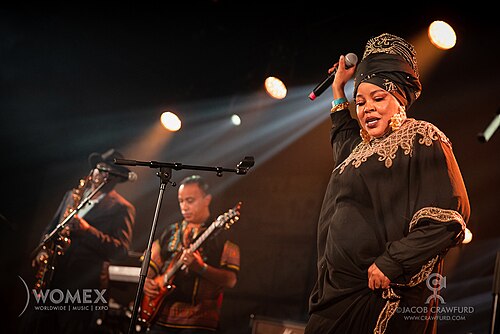
Women dominated this scene. « It was a miraculous era. People became open-minded. They realized it was Somali culture and that they admired us », explains Khadra Daahir, singer and former athlete22. Hibo Nuura recalls: « I faced no discrimination as a woman, not a single episode of negativity23. »
Exile and Saved Archives (1991-2020)
In 1988, the aerial bombings of the North — the Hargeisa region, nicknamed Africa’s Dresden23 — preceded the collapse of the Barre regime in 1991, plunging the country into a civil war that continues to this day. Musicians fled: to Djibouti, Ethiopia, Kenya, and then Europe and the United States24.
The Somali Air Force bombed Hargeisa radio to prevent its use by the rebellion. But radio operators buried thousands of cassettes25. These were sent to Djibouti and Ethiopia for safekeeping. Forty years later, they constitute the archive of 10,000 recordings held by the Red Sea Cultural Foundation in Hargeisa26.
Ostinato Records, with researcher Nicolas Sheikholeslami, digitized these archives and published Sweet As Broken Dates: Lost Somali Tapes from the Horn of Africa in 2017, nominated for a Grammy Award27. “Somalis are very aware of the power of their music and culture, but the whole world needs to know,” says Vik Sohonie28.
Diaspora, Rap and New Wave (2000-2026)
The Somali diaspora is one of the richest culturally in the world. It includes communities in Minneapolis (the largest Somali community in the United States)29, the United Kingdom, Toronto, Nairobi, and Dubai.
K’naan (born Keinan Abdi Warsame in 1978 in Mogadishu) fled the war in 1990 with his family to Toronto. He became a rapper, artist, and activist, won three Juno Awards, and his track “Wavin’ Flag” became the unofficial anthem of the 2010 World Cup30. In 2023, he released “Refugee,” “to flip the meaning of the word refugee and make it something people would be proud to wear”31.
In the mid-2010s, Liban Noah, manager of Dur-Dur based in London, tracked down the surviving members of the group. Bassist Ujeeri lives in the United States, singer Qomal in Ethiopia, and keyboardist Karama in London. In 2011, they played in Southall, then toured Europe. In 2024, the Dur-Dur Band Int. performed at London’s Barbican Centre32. In 2018, Analog Africa reissued Volume 1 and Volume 2; the original members received royalties for the first time33.
Somali rap, long stigmatized by conservatives34, exploded in the 2020s. Sharma Boy (born in 1998 in Mogadishu) blends traditional Somali poetry with hip-hop, accumulating 130 million YouTube views and receiving a prize from the President of Djibouti35. Freek, Somali-UAE, is the first to perform Arabic drill rap36. Hanad Bandz (born in Somaliland, raised in Canada) has accumulated 30 million views for “Sameeyn”37 — the global anthem of Somali youth, in the era of TikTok.
Other rising figures include: Isma IP, Didi Naji, Lil Baliil, Suldaan Seeraar (the “king of Somali music” at 33)38. The dhaanto genre has regained its prestige, and amapiano is penetrating Somali rap39.
A Dancing Future
In 2024, Hargeisa offers shows for $15 at its only live club, Hiddo Dhawr, decorated as a traditional nomadic tent40. Mogadishu is rebuilding its National Theatre41. Young Somalis in Minneapolis, Stockholm, and London listen to Hanad Bandz, Sharma Boy, and Dur-Dur. “Our dream is to bring the group home one day,” says Liban Noah42.
Somali music did not survive the war. It anticipated it, recorded it, buried it, rediscovered it, and rebuilt it. From the oud of Hudeidi to Hanad Bandz’s 808 basses, from Iftiin to Dur-Dur, from Mogadishu to London, it is a story of hybridity and resistance — and perhaps the one that best summarizes Somalia in the 21st century43.
Sources
-
BBC News, “Somalia’s lost tapes revive musical memories”, 26 August 2017. URL: https://www.bbc.co.uk/news/world-africa-40966656 ↩︎
-
Hyphen, “The unstoppable story of the Dur-Dur Band”, 2 December 2024. URL: https://hyphenonline.com/2024/12/02/dur-dur-band-barbican-london/ ↩︎
-
Al Jazeera, “Uncovering Somalia’s forgotten music of the 1970s”, 18 August 2017. URL: https://www.aljazeera.com/features/2017/8/18/uncovering-somalias-forgotten-music-of-the-1970s; RFI, “Music tells the story of Somali culture before the war”, 13 October 2017. URL: https://www.rfi.fr/en/africa/20171013-music-teling-best-concise-story-what-was-happening-somali-culture-war ↩︎
-
Ronnie Graham, Stern’s Guide to Contemporary African Music (Zwan Publications, 1988), pp. 256-257. Cited in the skill sterns-guide-african-music, reference references/somalia.md. ↩︎
-
Ibid. ↩︎
-
Open WIKI, “Music of Somalia”. URL: https://owiki.org/wiki/Music_of_Somalia ↩︎
-
BBC News (2017) — cf. note 1; RFI (2017) — cf. note 3 ↩︎
-
Al Jazeera (2017) — cf. note 3 ↩︎
-
Wikipedia, “Music of Somalia”. URL: https://en.wikipedia.org/wiki/Music_of_Somalia; Open WIKI (2017) — cf. note 6 ↩︎
-
Wikipedia (2024) — cf. note 9 ↩︎
-
Wikipedia (2024) — cf. note 9 ↩︎
-
Ronnie Graham, Stern’s Guide to Contemporary African Music (1988) — cf. note 4 ↩︎
-
Harvard Loeb Music Library, “Hudeidi, the Somali King of Oud”, 6 May 2021. URL: https://archive.blogs.harvard.edu/loebmusic/2021/05/06/hudeidi-the-somali-king-of-oud-another-sad-casualty-of-covid-19/ ↩︎
-
NPR, “Khadija Abdullahi Daleys, Mother of Somali Music, Dies at 82”, 16 January 2018. URL: https://www.npr.org/2018/01/16/578247196/khadija-abdullahi-daleys-mother-of-somali-music-dies-at-82 ↩︎
-
Al Jazeera (2017) — cf. note 3 ↩︎
-
BBC News (2017) — cf. note 1; Al Jazeera (2017) — cf. note 3 ↩︎
-
Al Jazeera (2017) — cf. note 3 ↩︎
-
BBC News (2017) — cf. note 1 ↩︎
-
Hyphen (2024) — cf. note 2 ↩︎
-
BBC News (2017) — cf. note 1 ↩︎
-
Hyphen (2024) — cf. note 2 ↩︎
-
BBC News (2017) — cf. note 1 ↩︎
-
Al Jazeera (2017) — cf. note 3 ↩︎
-
Al Jazeera (2017) — cf. note 3 ↩︎
-
RFI (2017) — cf. note 3 ↩︎
-
BBC News (2017) — cf. note 1 ↩︎
-
RFI (2017) — cf. note 3 ↩︎
-
Al Jazeera (2017) — cf. note 3 ↩︎
-
WardheerNews, “From the Field: Hip hop artist K’naan’s new track hails refugees”, 22 July 2023. URL: https://wardheernews.com/from-the-field-hip-hop-artist-knaans-new-track-hails-refugees/ ↩︎
-
Ibid. ↩︎
-
Hyphen (2024) — cf. note 2 ↩︎
-
Hyphen (2024) — cf. note 2 ↩︎
-
Al Jazeera, “Rap music finds a home in Somalia as its youth embrace the genre”, 13 July 2022. URL: https://www.aljazeera.com/features/2022/7/13/rap-music-finds-home-in-somalia-as-youth-embrace-genre ↩︎
-
Music In Africa, “Sharma Boy: Somalia’s voice of a new generation”, 1st December 2023. URL: https://musicinafrica.net/magazine/sharma-boy-somalias-voice-new-generation/ ↩︎
-
The New Arab, “Somali-UAE rapper Freek mashes up the beat, Arab style”, 14 October 2022. URL: https://www.newarab.com/features/somali-uae-rapper-freek-mashes-beat-arab-style ↩︎
-
OkayAfrica, “Hanad Bandz is building the soundtrack of Somali youth”, 20 January 2025. URL: https://www.okayafrica.com/hanad-bandz-is-building-the-soundtrack-of-somali-youth/233495 ↩︎
-
TRT Afrika, “Suldaan Seeraar: The ‘king’ of Somali music captivating”, URL: https://www.trtafrika.com/english/article/1eaa87a49a58 ↩︎
-
Geeska, “Na koro: reviving dance and experimentation in Somali music”. URL: https://www.geeska.com/en/na-koro-reviving-dance-and-experimentation-somali-music ↩︎
-
Al Jazeera (2017) — cf. note 3 ↩︎
-
BBC News (2017) — cf. note 1 ↩︎
-
Hyphen (2024) — cf. note 2 ↩︎
-
BBC News (2017) — cf. note 1; RFI (2017) — cf. note 3; Al Jazeera (2017) — cf. note 3 ↩︎