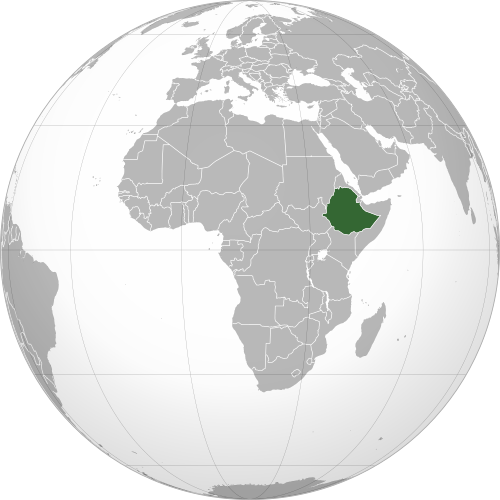
Ethiopia, an impossible-to-confuse sound
Ethiopian music has a distinct characteristic: it is recognized by its first note. This pentatonic melancholy, this groove that balances between American jazz, Afro-soul, and the traditional scales of the African horn, belongs only to it. From Mahmoud Ahmed in the clubs of Addis Ababa in the 1970s to Teddy Afro on the Billboard World Albums, passing through the worldwide renaissance of Ethio-jazz, Ethiopia has forged a sonic identity that continues to fascinate and inspire.
From liturgical hymns to urban azmaris
Ethiopia is one of the few African countries never to have been colonized (except for the brief Italian occupation, 1935-1941). This autonomy forged a unique musical culture: neither influenced by European colonial routes nor reshaped by the transatlantic slave trade. Music draws from roots crystallized in the 4th century, when the Kingdom of Aksum adopted Christianity and the chants of the Ethiopian Orthodox Church, whose liturgy in the sacred Ge’ez language preserves a millennial vocal tradition 1.
When Western music arrived at the end of the 19th century — first through the fanfares of Negus Menelik II — musicians did not adopt it as a borrowing: they digested it. The first conductor was Nersès Nalbandian, an Armenian survivor of the genocide, recruited by Haile Selassie in 1930. He formed the first musicians who, in the evenings, attempted these instruments on traditional melodies2. Furthermore, the tradition of azmaris — urban troubadours accompanied by the masenqo (one-stringed lute, a typical plucked string instrument) — shaped a cabaret scene in the azmaribets (salons of Addis Ababa). These singer-musicians embody a form of Ethiopian griot: praise and mockery in a popular language, blending poetry and social commentary3. It is this dual current — liturgical and profane — that constitutes the basis of everything to follow.
“Swinging Addis”: the golden age (1960-1974)
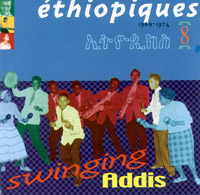
The period from the late 1950s to the 1974 coup d’état is often designated as “Swinging Addis” and constitutes the golden age of Ethiopian popular music. In a few decades, imperial fanfares gave birth to immense orchestras, and the city brimmed with clubs: Stereo Club, Ebony, Axum Adarash. Ethiopians bought 45s as much on the markets as in cinemas4.
The sound is defined by a five-note pentatonic scale, with wide intervals creating what one journalist described as “a sense of non-resolution, like waiting for a stone to touch the bottom of a well without hearing the impact”5. This “dissonance,” combined with asymmetrical rhythms, gives an intensity comparable to American soul.
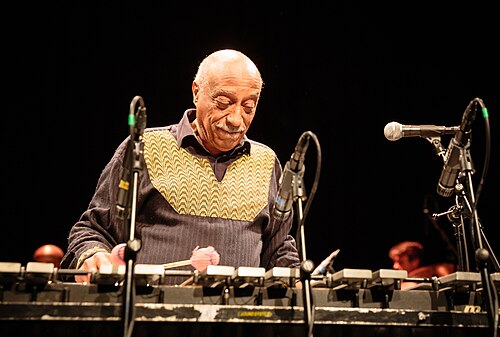
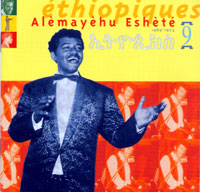
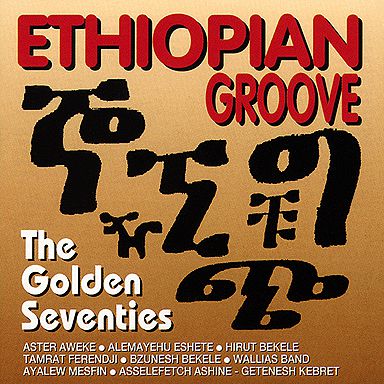
The true architect of this sound is Mulatu Astatke, “father of Ethio-jazz.” Raised in Addis, he studied in London and Boston in the 1960s before returning in 1969. He fused Ethiopian scales (Tizita, Bati, Ambassel — the qenets or traditional modes) with the harmony of American jazz, soul, and Latin rhythms. Vibraphone and electric piano became his signatures6. He recorded Mulatu of Ethiopia in 1972, a foundational album that remained obscure for decades. Amha Records studio, founded by Amha Eshete in 1969, produced more than 100 Ethio-jazz singles in six years7. The major artists of this era — Tilahun Gessesse, Alemayehu Eshete, Bizunesh Bekele, Mahmoud Ahmed, Girma Beyene — recorded dozens of tracks.
The Walias Band — named after a ibex from the high plateaus — became the most prolific studio orchestra, accompanied by polyrhythmic funk inspired by King Curtis8. In 1977, it recorded with Mulatu Tche Belew, one of the rare instrumental albums9.
Did you know? In ten years (1969-1978), Ethiopia produced approximately 500 singles5.
The Derg, censorship and exile (1974-1991)
The 1974 coup d’état and the Derg, the dictatorial regime of Mengistu Haile Mariam, abruptly interrupted this momentum. For seventeen years, orchestras were dissolved, nightlife paralyzed by curfew and paranoid censorship5. Many major artists fled to the United States, Sudan, Saudi Arabia, or Europe: Girma Beyene, Muluken Mellesse, Aster Aweke, Ephrem Tamru5.
Those who remained in the country composed with repression. The sem-enna-werq (“wax and gold”), a tradition of double meaning, allowed hiding a critical message behind a love declaration. Neway Debebe invented this technique in the 1980s, becoming an idol5. Producer Ali Tango — talent scout and pioneer of digital media — produced cassette classics5.
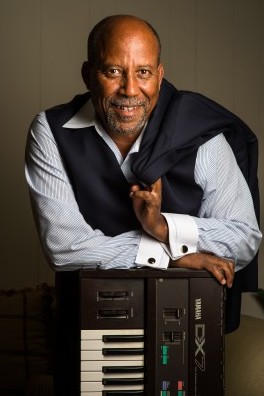
The diaspora continued to make its voice heard. The Walias Band performed in the United States in 1981, playing for Ethiopian refugees. Four members stayed in America and formed the Zula Band; Hailu Mergia, the keyboardist, worked as a taxi driver in Washington while recording cassettes10. One of the most beautiful forgotten stories of African music.
The global rediscovery: from Éthiopiques to renaissance
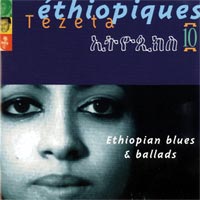
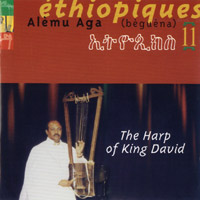
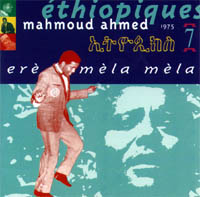
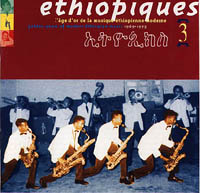
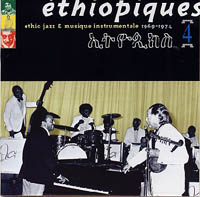
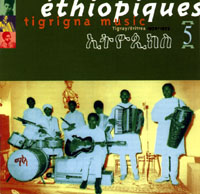
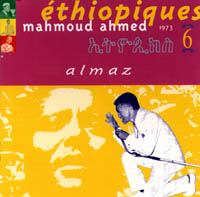
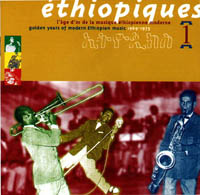
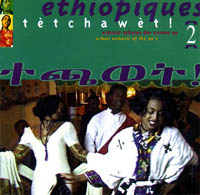
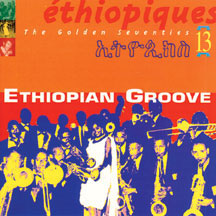
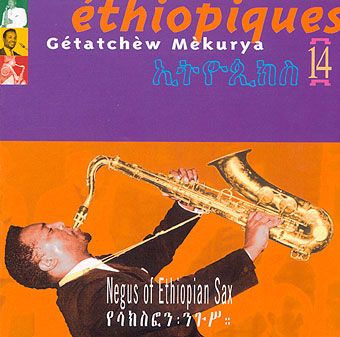
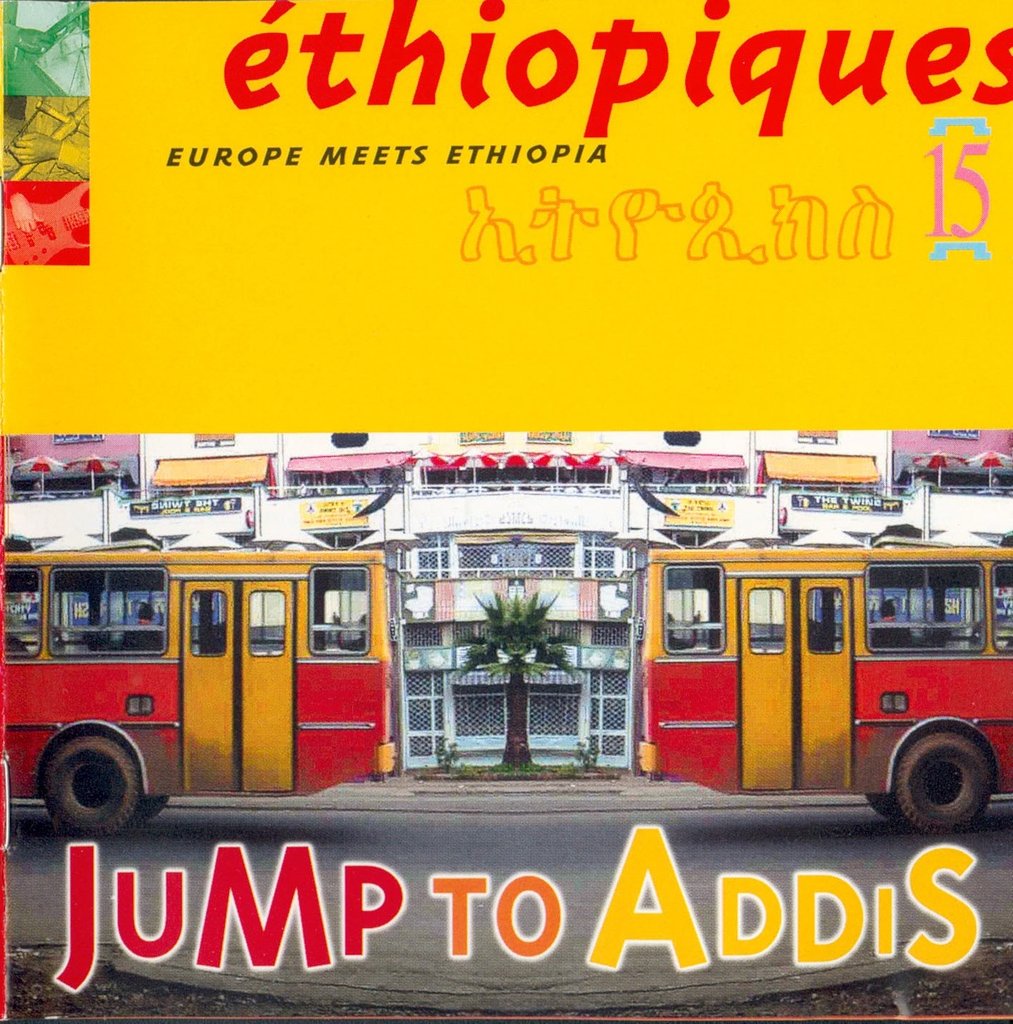
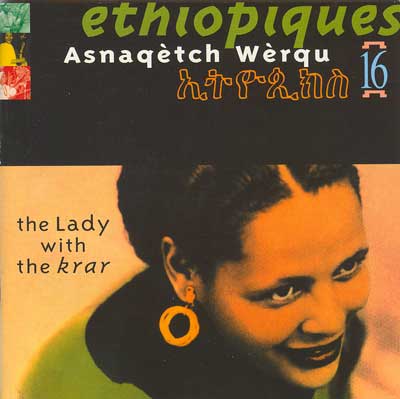
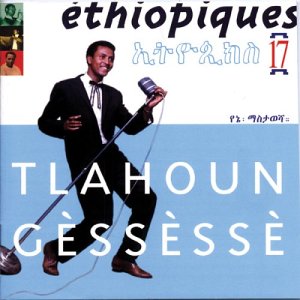
Everything shifts at the beginning of the 1990s with the French Francis Falceto, world music programmer. In 1984, he discovers a vinyl by Mahmoud Ahmed. Fascinated, he travels to Ethiopia and meets the singer in 1985. He reissues Erè Mèla Mèla (1975) on Crammed Discs in 1986, achieving critical triumph11. Driven by this success, Falceto creates in 1996 the series Éthiopiques with Buda Musique: the 32 volumes reissue the treasures of 1950-1975, giving worldwide visibility to Mahmoud Ahmed, Mulatu Astatke, Tilahun Gessesse, Aster Aweke or Getatchew Mekurya12. In 2000, the film Broken Flowers by Jim Jarmusch exposes Ethio-jazz to a new generation13.
From Paris to Cairo, a generation seizes this sound. The Parisian collective Akalé Wubé (2009) explores the repertoire of the 1960s-1970s by playing more than 200 concerts14.
Current heroes and emerging scenes
While the international rediscovery highlighted the figures of the golden age, today’s Ethiopia also counts its own leading stars.
Teddy Afro (Tewodros Kassahun, born in 1976 in Addis-Abeba) is the most important star of the country. His first album Abugida (2001) places him among the major voices of the nation15. Yasteseryal (2005) denounces corruption: five songs banned from the media, but an album that sells over a million copies16. Arrested and imprisoned for 16 months in 2008-2009, he returns to the national stadium of Addis-Abeba in front of 60,000 spectators17. His album Ethiopia (2017) reaches number 1 on the Billboard World Albums chart and sells more than 600,000 copies18. In April 2026, Etorika, a political album so sharp that the government bans its distribution19.
The diaspora also makes itself heard: Aster Aweke (Miami) and Ejigayehu « Gigi » Shibabaw (Montreal, collaborator of Herbie Hancock and Wayne Shorter) embody the two most striking female faces of exile5.
Mulatu Astatke has never stopped evolving. At nearly 80 years old, he releases Tension with the Israeli Hoodna Orchestra20, then Mulatu Plays Mulatu in September 2025 — his first studio album in ten years, and his last work before retirement21.
The Ethiopian scene undergoes a digital transformation: streaming, estimated at 4.61 million dollars in 2023, should reach 7.1 million by 202722. The young generation — Michael Belayneh, Meklit Hadero (co-founder of the Nile Project), Future Pilot A.K.A. — mixes Ethio-jazz, indie rock and hip-hop2324.
Towards a polyrhythmic future
Ethiopia does not need to conquer the world for its sound to be universal: it always has been. From the cloisters of Addis-Abeba to the azmaribets of the capital, from the studios of the golden era to Spotify playlists, what strikes in Ethiopian music is its ability to remain deeply itself — while embracing jazz, funk, soul, reggae and electronic music without ever diluting. Between secular liturgical traditions, censorship and resilience, global renaissance and emerging scenes, Ethiopia has this unique trait: it invented its own musical path, and the world still follows.
Sources and references
-
Songlines, « Rough Guide to World Music: Ethiopia », 17 July 2018. URL : https://www.songlines.co.uk/content/features/rough-guide-to-ethiopia ↩︎
-
Music In Africa, « Popular music in Ethiopia ». URL : https://musicinafrica.net/magazine/popular-music-ethiopia/ ↩︎
-
Songlines, idem. ↩︎
-
The Vinyl Factory, « An introduction to Ethio-Jazz in 10 records », 16 March 2018. URL : https://thevinylfactory.com/features/an-introduction-to-ethio-jazz-in-10-records ↩︎
-
Wikipedia, « Ethiopian Golden Age of music ». URL : https://en.wikipedia.org/wiki/Ethiopian_Golden_Age_of_music ↩︎
-
AllMusic, « Mulatu Astatke — Biography ». URL : https://www.allmusic.com/artist/mulatu-astatke-mn0001784311 ↩︎
-
Wikipedia, « Walias Band ». URL : https://en.wikipedia.org/wiki/Walias_Band ↩︎
-
Music In Africa, « Walias Band ». URL : https://musicinafrica.net/node/6663 ↩︎
-
Last.fm, « Hailu Mergia and the Walias biography ». URL : https://last.fm/music/Hailu+Mergia+and+the+Walias/+wiki ↩︎
-
Wikipedia, « Francis Falceto ». URL : https://en.wikipedia.org/wiki/Francis_Falceto ↩︎
-
Grokipedia, « Francis Falceto ». URL : https://grokipedia.com/page/francis_falceto ↩︎
-
The Vinyl Factory, idem. ↩︎
-
Afro Caribbean Beats, « Akalé Wubé — 2010 ». URL : https://afrocaribbeanbeats.com/en/akale-wube-2010 ↩︎
-
Coda Music, « Teddy Afro — Biography ». URL : https://codamusic.me/artists/teddy-afro/ ↩︎
-
Wikipedia, « Teddy Afro ». URL : https://en.wikipedia.org/wiki/Teddy_Afro ↩︎
-
AP News, « Ethiopia’s star singer Teddy Afro makes plea for openness ». URL : https://apnews.com/general-news-music-401a774eb85b475cae6cc24cda4cf779 ↩︎
-
The Guardian, « Teddy Afro, Ethiopia’s biggest pop star », 13 July 2017. URL : https://www.theguardian.com/music/2017/jul/13/teddy-afro-ethiopias-biggest-pop-star-because-of-our-government-our-country-is-divided ↩︎
-
Addis Go, « Ethiorica - Teddy Afro New Album 2026 », 24 March 2026. URL : https://addisgo.com/2026/03/24/ethiorica-teddy-afro-new-album-2026/ ↩︎
-
AllMusic, idem. ↩︎
-
Music In Africa, « Ethiopia: Mulatu Astatke announces farewell tour with new album ». URL : https://musicinafrica.net/ethiopia-mulatu-astatke-announces-farewell-tour-new-album ↩︎
-
Addis Fortune, « From Cassette, CD Dreams to Cloud Streams ». URL : https://addisfortune.news/from-cassette-cd-dreams-to-cloud-streams ↩︎
-
World Music Central, « Interview with Captivating Ethiopian American Artist Meklit ». URL : https://worldmusiccentral.org/interview-with-captivating-ethiopian-american-artist-meklit ↩︎
-
AllMusic, « Meklit — Biography ». URL : https://allmusic.com/artist/meklit-mn0003282964 ↩︎