Ethio-jazz
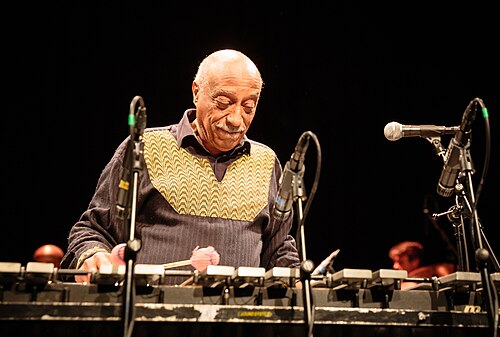
In 1969, Mulatu Astatke returned from America to Ethiopia with an ambitious project: to make American jazz — brass, piano, vibraphone — dialogue with the melodic pentatonic scales of the country’s traditional music. This blend, which he named “Ethio-jazz,” would silence the reservations of a scene still attached to its old modes 1.
A genre born between tradition and modernity
Western instruments only arrived in Ethiopia at the end of the 1920s. After the Ethiopian victory over the Italians in 1896, Tsar Nicholas II of Russia offered Menelik II forty wind instruments — an ensemble that would imprint the sound of the great European orchestra in the imperial court 2. Ethiopian musicians, trained by a Polish choir director, performed the Marseillaise before the emperor 2. In 1923, Kevork Nalbandian organized the first great Ethiopian military band 3. Salons orchestras and small bands then multiplied, importing American jazz via radio and records 2.
In the 1950s, Nersès Nalbandian — an Armenian-origin musician and nephew of the arranger Kevork, who composed Ethiopia, Be Joyful — fused traditional modes with Western instrumentation at the Ethiopian National Theatre 4. This is the foundation of the genre, but Mulatu Astatke is its tutelary figure. “I came up with Ethio-jazz at that period,” Astatke confesses 2. In 1959, the seventeen-year-old left for North Wales to study aerospace engineering, then turned toward music 3. He passed through the Trinity College of Music in London — piano, clarinet, harmony — then to Berklee College in Boston in 1963, the first African student to enter 3. He then settled in New York to practice jazz and Latin music.
“The Belle Époque”: the golden age of the 1960s-1970s
Upon returning to Addis Ababa in 1969, Astatke discovered a cultural scene in effervescence and a very lively nightlife 3. The label Amha Records, founded by Alemayehu Eshete (the “Ethiopian Elvis”), released more than 103 singles and a dozen albums between 1969 and 1975 — the Golden Age of Ethiopian music 1. Famous artists became numerous: Mulatu Astatke, Alemayehu Eshete, Tilahun Gessesse, Mahmoud Ahmed and Getatchew Mekuria 5. The Walias Band formed in 1960, then clubs and ensembles flourished 2. Addis Ababa became “Swinging Addis,” and Duke Ellington performed in the capital in 1973 5.
The sound has a name: the five-note pentatonic scale, characteristic of Amharic music and Orthodox Christianity, blends with jazz riffs — brass swing and vibraphone 1. Alexander Hawkins, an English pianist who was part of Astatke’s ensemble, described this fusion as a “six against four and three against two” through an African rhythmic sensibility, with a minor harmonic twist that recalls the Arab 3. Astatke moreover defended his genre against conservative opposition: “There are tribes in the south called the Derashe. They are surrounded by people who play five tone music but they have created a diminished 12-tone scale. Diminished scales are very important in jazz music especially for improvising” 5.
Did you know? In 2005, the soundtrack to Jim Jarmusch’s film Broken Flowers — played by Astatke and his Ethiopian musicians — introduced Ethio-jazz to a global audience far beyond Addis Ababa 5.
Repression and rebirth
The 1974 revolution that overthrew Haile Selassie also marked the end of the Golden Age. The military communist regime of the Derg (1973-1991), supported by the Soviet Union and hostile to “Westernized” music, closed down clubs and imposed curfews 6. Musicians fled or stopped playing, and Ethio-jazz seemed doomed.
After the fall of the Derg in 1991, the country redeveloped and the genre was reborn. Francis Falceto — a French producer passionate about Ethiopian music — rediscovered and reissued, starting in 1997, the Éthiopiques series on the French label Buda Musique 4. The label includes a discography that put 1960s albums under the spotlight of international press 4. The Guardian reported in 2016 that the genre returned to Addis Ababa bars, with a lively but still niche jazz scene 6.
“Ethio-jazz will never die,” Mulatu Astatke assures 6.
Since the 2000s, the genre has been exported to festivals and global platforms. The Éthiopiques reissues, Rough Guides, and Jim Jarmusch’s soundtrack have given Ethio-jazz renewed international visibility 5. In 2014, Richard Williams of the Guardian described the genre as “the most listened-to Ethiopian music today” and characterized Astatke as one of the most influential composers of 20th-century African music 3.
Amha Records and the Éthiopiques series: a precious discography
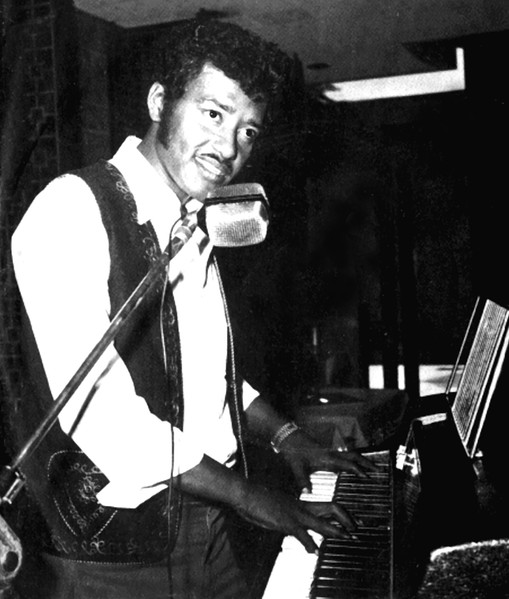
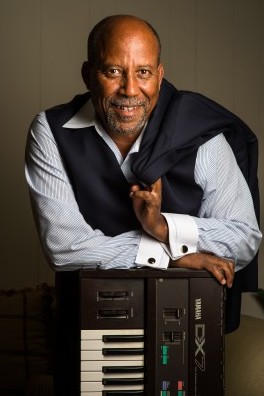
Amha Records, co-founded by Alemayehu Eshete, produced over 103 singles and a dozen albums between 1969 and 1975 1. The repertoire features Astatke, Tilahun Gessesse, and Hailu Mergia — a generation that redefined what an Ethiopian jazz orchestra is 2. The Walias Band, led by Hailu Mergia and formed in 1960, played non-stop in hotels and clubs due to high demand 2.
Francis Falceto rediscovered this discography in the 1990s. On the French label Buda Musique, he released the Éthiopiques series — a collection of albums that updates recordings from the 1960s and 1970s 4. According to Falceto, without Amha Records or Kaifa Records — two Ethiopian labels from the period — there would have been no Éthiopiques 4. The series opens with the foundational album Mulatu of Ethiopia by Mulatu Astatke, released in 1972 4.
The Éthiopiques label also rehabilitated lesser-known artists: the Orthodox spiritual singer Emahoy Tsege-Mariam Gebru, who is difficult to classify as either classical or jazz — her music incorporates qañat scales into her improvisations 4. Albums like Ere Mela Mela (1975) by Mahmoud Ahmed, with the Ibex Band, or recordings of Orthodox Amharic singers occupy the same intermediate space 7. The series Éthiopiques 4: Ethio Jazz 1969-1974 is considered an indispensable milestone for the genre 4.
Instruments and influences: a sound that crosses borders
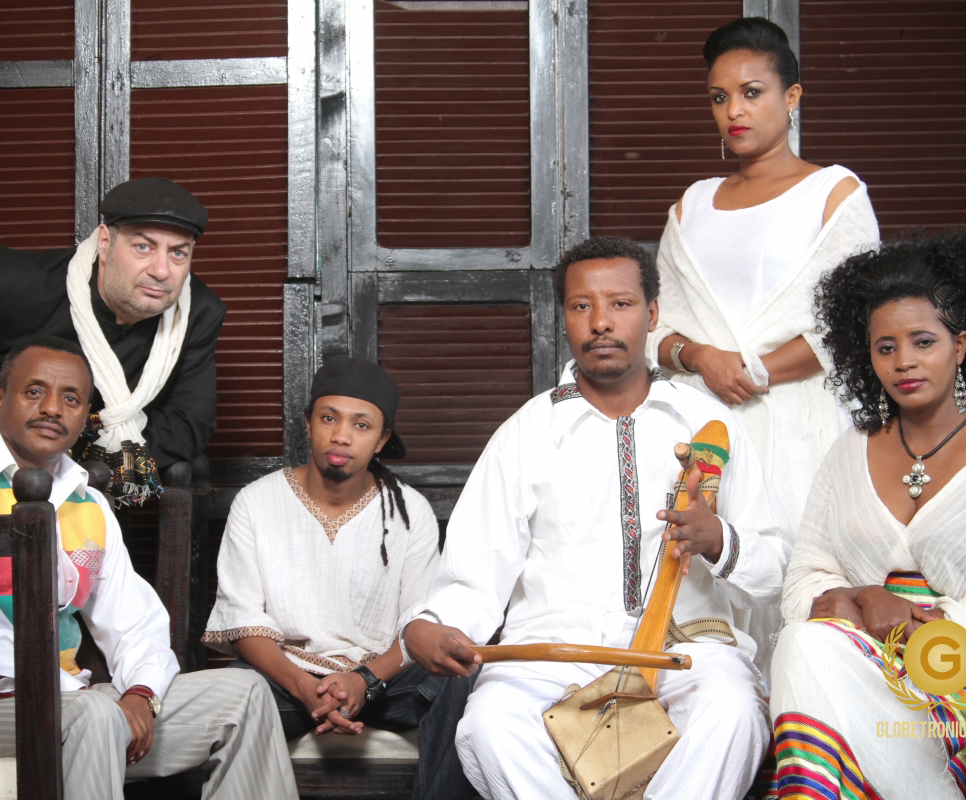
The genre draws from several musical sources. Beyond the vibraphone and saxophones, Ethio-jazz incorporates the washint — an African tribal flute whose sound resembles snake charmers — and the begena, a bowed lyre 7. The masenqo — a double-headed drum — and the krar, traditional bowed lyres, complete the panorama 7. Orthodox Christian vocalises and azmari (traditional minstrels) add a narrative dimension 7.
The next generation — groups like Meleket in Addis-Abeba or local producers working with the Éthiopiques label — continues to evolve the sound 6. Today, Ethio-jazz remains a music that combines science and mysticism: pentatonic scales inherited from the Ethiopian Middle Ages, twisted by a pianist and vibraphonist trained in Boston 1. The Guardian reported in 2016 that Astatke created a personal radio program to “pump out Ethio-jazz” for seven years 6.
Sources
-
Wikipedia, « Ethio-jazz ». https://en.wikipedia.org/wiki/Ethio-jazz ↩︎ ↩︎ ↩︎ ↩︎ ↩︎
-
Wikipedia, « Ethiopian Golden Age of music ». https://en.wikipedia.org/wiki/Ethiopian_Golden_Age_of_music ↩︎ ↩︎ ↩︎ ↩︎ ↩︎ ↩︎ ↩︎
-
Richard Williams, « Mulatu Astatke: the man who created ‘Ethio jazz’ », The Guardian, September 5, 2014. https://theguardian.com/music/2014/sep/05/mulatu-astatke-man-created-ethiopian-jazz ↩︎ ↩︎ ↩︎ ↩︎ ↩︎ ↩︎
-
Discogs, « Ethio-Jazz Essentials: 10 Albums That Define the Genre ». https://discogs.com/digs/music/essential-ehtio-jazz ↩︎ ↩︎ ↩︎ ↩︎ ↩︎ ↩︎ ↩︎ ↩︎
-
World Music Net, « New Album: Ethiopian Jazz ». https://worldmusic.net/blogs/news/new-album-ethiopian-jazz ↩︎ ↩︎ ↩︎ ↩︎ ↩︎
-
Oliver Gordon, « Notes from Ethiopia: the jazz revival in Addis Ababa », The Guardian, April 1, 2016. https://theguardian.com/travel/2016/apr/01/jazz-revival-addis-ababa-ethiopia-ethio-jazz ↩︎ ↩︎ ↩︎ ↩︎ ↩︎
-
African Music Library, « Understanding Ethio-Jazz and its Enduring Legacy ». https://africanmusiclibrary.org/blog/understanding-ethio-jazz-and-its-enduring-legacy ↩︎ ↩︎ ↩︎ ↩︎